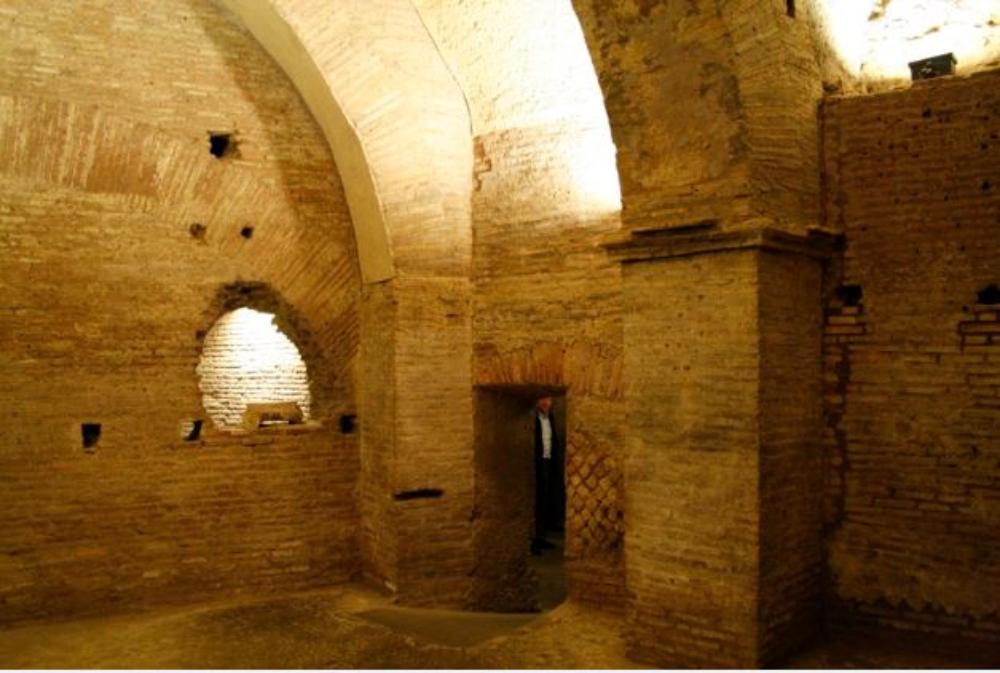
Il Argentine Theater Museum in Rome is divided into three sections:
- the first, topographical, documents the transformations of the urban area where the Theater was built;
- the second includes remains of the ancient structure and previous decorations of the Theater: four fragments of the oldest preserved velarium (ceiling), with putti and flower garlands (18th-19th century); two Pompeian-style wall paintings (late 19th century); the final cartoon and five original studies for the curtain depicting the “Nymph Egeria advising Numa Pompilius”; two preparatory drawings for the Apollo Theater curtain, all works by Cesare Fracassini (1838-1868), a famous Roman painter. Also of notable interest: a caricature of Nicola Zabaglia by P.L. Ghezzi (1674-1755); an ancient white fir truss from the original theater roof; an 18th-century wooden drum for raising the curtain and scenes; low reliefs by A. Biagini (1926), dating to the reconstruction by Marcello Piacentini.
- The subject of the third section is theater life, illustrated with stage costumes from “The Bandits”, photos of posters, drawings and portraits of singers, actors and dancers (including the famous Fanny Essler), from the first opera performed “Berenice” (1732), to 20th-century stage productions.
Part of the material exhibited in the Argentine Theater Museum in Rome reproduces originals preserved at the Burcardo Library, the Capitoline Archive, the Municipal Print Cabinet and the Museum of Rome (Palazzo Braschi).
Finally, of particular interest is the reproduction of the painting by G. Paolo Pannini depicting the Theater during the celebrations of the wedding of the Dauphin of France and Maria of Saxony (Paris, Louvre Museum).
The Museum’s spaces are completed by a panoramic terrace with an exclusive view of the temples of the sacred area of Largo Argentina.