The Path of the Provincial Archaeological Museum of Salerno
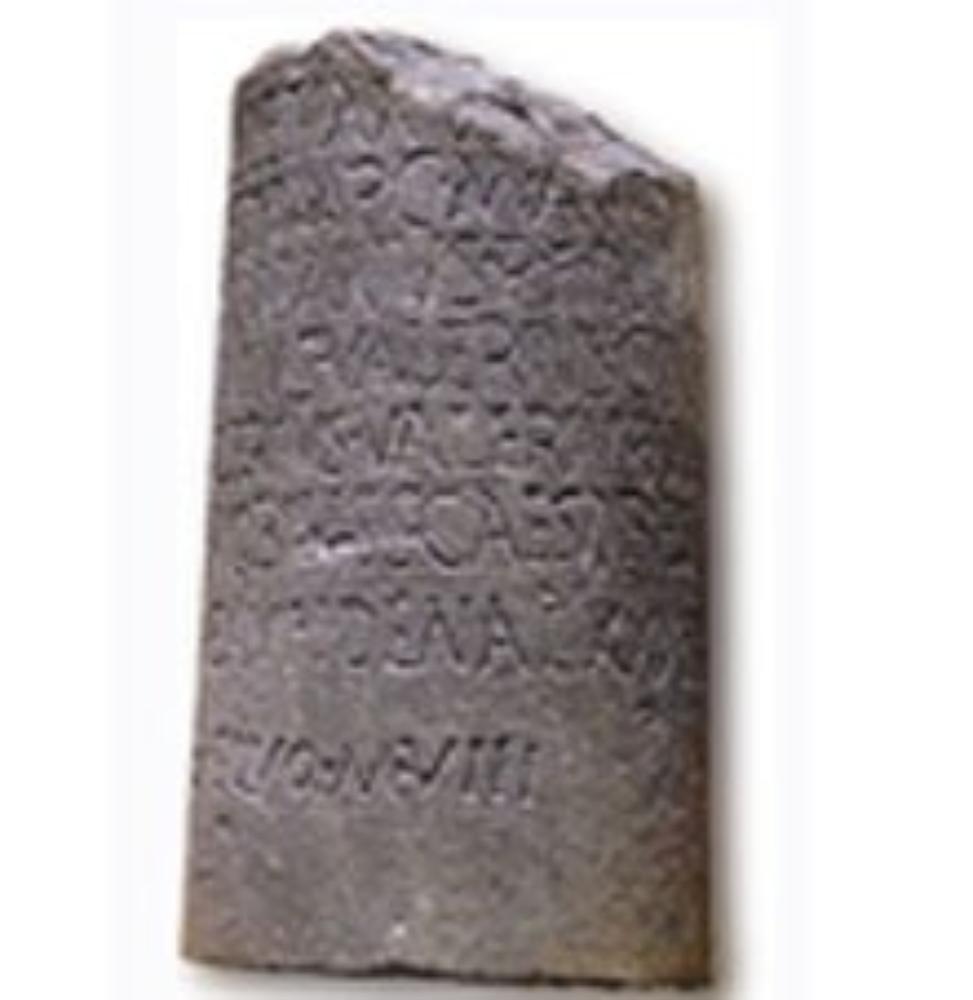
The path of the Provincial Archaeological Museum of Salerno begins at the Lapidary, which occupies the outdoor spaces in front of the Museum entrance and the adjacent viridarium, where statues, figurative reliefs, and honorary bases are displayed, mostly from Roman Salerno, uncovered as early as the Seventeenth Century.
Lower Floor of the Provincial Archaeological Museum of Salerno
The visit continues inside the lower floor, with a chronological and topographical exhibition of the entire Salerno territory, integrated with new sites and artifacts recovered from deposits from old excavations and donations since 1928.
The prehistoric section includes materials from both the Paleolithic and Neolithic periods from the caves of Polla, Pertosa, Palinuro, Molpa, and Caprioli, as well as from the Eneolithic period, from the area of Fratte, the oldest settlement in the municipality of Salerno. The Iron Age is documented by Villanovan artifacts (9th-8th century BC), from Pontecagnano and Sala Consilina.
The inhumation culture, such as that of Oliveto-Cairano in Salerno, is evidenced by the burial goods from the 8th-6th century BC, while the so-called “orientalizing” style, characterized by ceramics with geometric decoration, is attested by artifacts from Arenòsola at the mouth of the Sele river.
The exhibition continues with the Greek period, which documents the culture and exchanges between the Magna Graecia centers of the Tyrrhenian and the Ionian seas. Enriching the typical male and female costumes from various sites in Salerno is a collection of amber necklaces and other jewelry, accompanied by ivory and glass paste, with pendants shaped like female heads or silenuses, dating back to the 5th and 4th centuries BC, as well as numerous Samnite belts and beautiful bronze helmets from various periods.

Upper Floor of the Provincial Archaeological Museum of Salerno
The upper floor houses materials coming from the city of Salerno, ideally linking back to the Lapidary section, from the emergence in the 6th century BC of the ancient center of Fratte, a suburb northeast of Salerno, to the 5th-6th centuries AD, the late antique phase of Roman Salernum, founded as a colony in 194 BC. Exhibited are funeral goods coming from the coastal area: oil lamps, vases, and tombstones relating to a period extending to the 4th century AD, and a beautiful bronze head of Apollo, found in the waters of the Gulf of Salerno in 1930, which became the symbol of the Provincial Museums of Salerno. The exhibition is completed by a very rich numismatic collection.
The San Benedetto Complex
The Provincial Archaeological Museum of Salerno is located within the San Benedetto complex, built between the 7th and 9th centuries on the plateau called “Hortus magnus”, on the eastern walls of the defensive system commissioned by Arechi II. In 930, the monastery attained the rank of abbey. Important historical figures were hosted within its walls, such as Abbot Desiderius, future Pope Victor III, and Gregory VII, who died here. Over the years, the monastery changed from Benedictines to Olivetans following Napoleonic laws; it was suppressed in 1807 and turned into a military district, while the church was used as a Royal Theater before being returned to the Curia a century later. Currently, several parts of the Romanesque quadriportico and the Renaissance loggia of the “Castelnuovo Reale”, belonging to the palace of Queen Margherita of Durazzo, have been preserved.
Information about the Provincial Archaeological Museum of Salerno
Via San Benedetto, 28
84122 Salerno (Salerno)
Phone: 089.231135
Email: [email protected]
Website: https://www.museoarcheologicosalerno.it
Opening Hours
The Museum is open every day except Monday, from 9:00 AM to 7:30 PM.