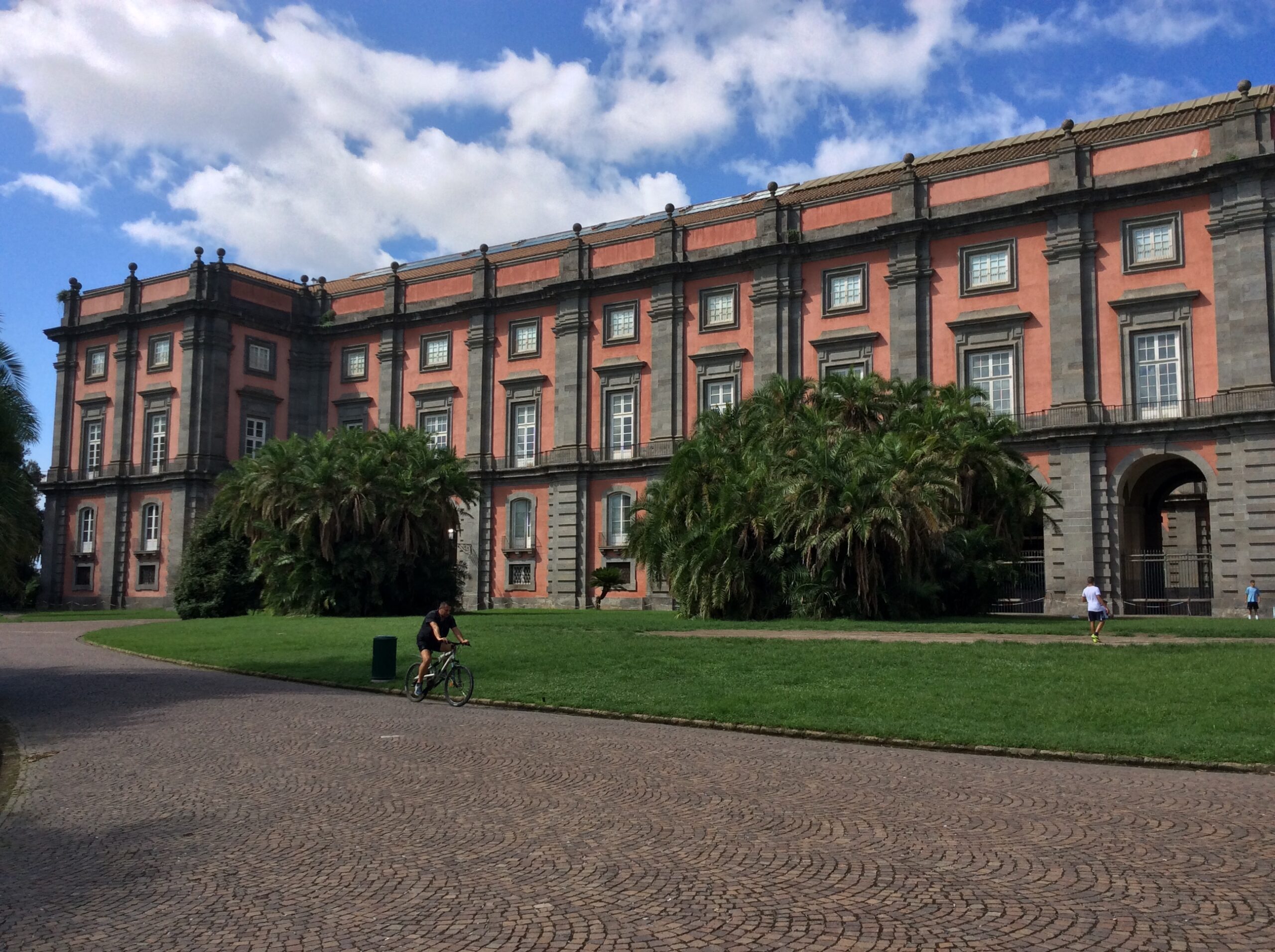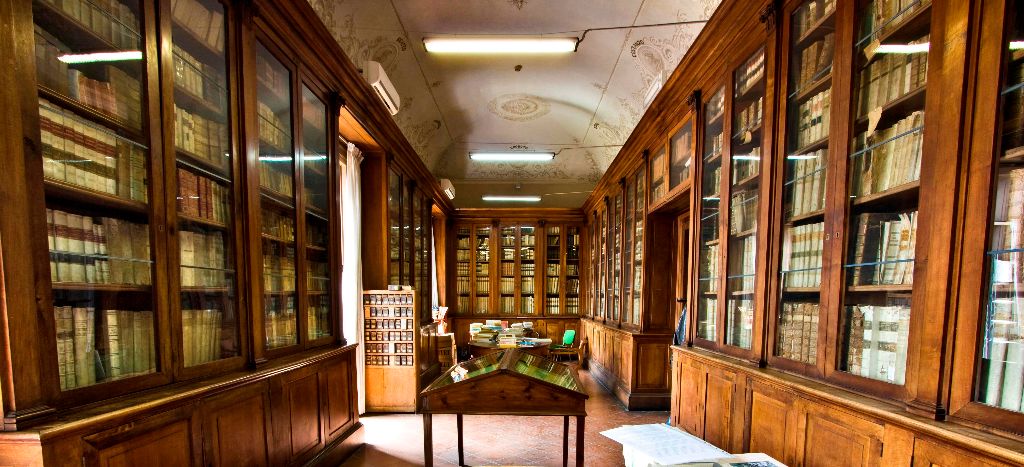


Within the perimeter of the Park of Capodimonte there are sixteen structures including residences, small villas, artisan factories, warehouses and churches, as well as fountains and statues, hunting devices, gardens and orchards and a cemetery, that of the Capuchins of the Hermitage.
The history of the Park with the Royal Palace of Capodimonte begins with the ascension to the throne of Charles of Bourbon, on May 10, 1734 and with his ambitious program of a system of properties directly administered by the Crown called “royal sites”. Capodimonte, high and breezy, overlooking the entire gulf and visible from much of the city, was considered a suitable place to host the royal residence.
The fencing works of the hunting estate were already completed in 1736. Access was through the Middle Gate which led to the large semicircle from which the fan of avenues started.
Historical tradition has always assigned to Ferdinando San Felice and Domenico Antonio Vaccaro the design of this spectacular layout, but more recent hypotheses attribute it to the Roman Antonio Canevari. Certainly, however, San Felice intervened in 1743 for the restructuring of the Royal Porcelain Factory and two years later for the construction of the Church of San Gennaro at the end of the first broad avenue of the fan.
Naturalistic scenographies, statues, fountains together with walled gardens could not be missing in a royal forest where however vegetation zoning was functional to the types of hunting practiced by the king, so densely wooded areas with holm oaks, chestnuts, hornbeams and elms were followed by shrubby areas with myrtle, olive and laurel, as well as clearings and nets. Large areas were then cultivated to feed domestic animals and game, enclosed in special fences and enclosures.
Products of the forest and land were partly used for the needs of the court and partly sold. In 1738 work began on the construction of the Royal Palace in the most panoramic area of the site, called “Spianato”.
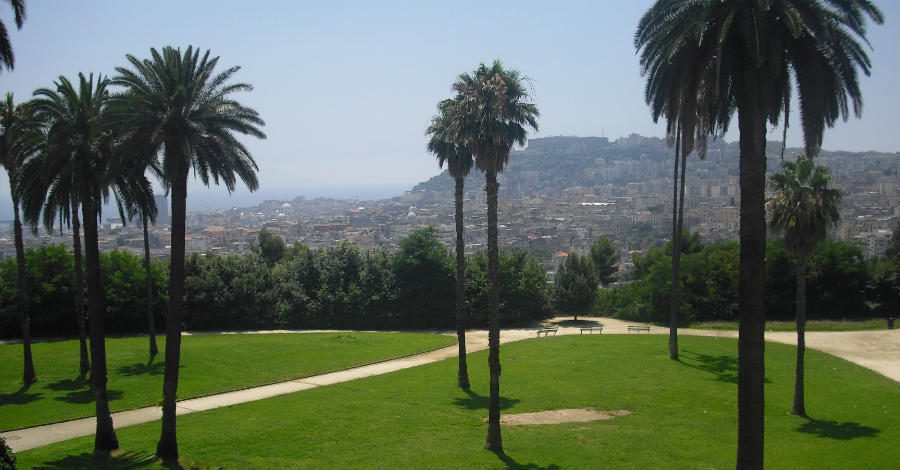
Palace and Forest, originally completely separate, became a unified and autonomous complex with respect to the city only during the French decade, when a perimeter wall was built around the Spianato along which the Main Gate on the Ponti Rossi road and the Small Gate on the road to Miano were opened.
An important innovation was represented by the new road designed by engineer Romualdo De Tommaso, the Napoleon Boulevard, today Amedeo di Savoia: inaugurated in 1809, it connected in a ‘straight line’ the area of the Museum with Capodimonte, crossing with a bridge the Sanità valley and overcoming the Spaccata mountain with the spectacular solution of the Roundabout, created by Niccolini between the second and third decades of the century.
In the Park, Ferdinand I had the Hermitage of the Capuchins built from 1817 and began the first “English style” redesign works of the green areas to adapt them to the new taste that had already invaded all of Europe for some decades. The Savoia restored hunting activities in the Forest and modified the design of the areas adjacent to the Palace and the Princes’ Villa.
Information about the Park of Capodimonte
Via Miano, 4 80145 Naples – Tel. 081.7410080/081.5808278
Opening hours Museum Capodimonte and park
The Capodimonte Museum is open every day except Wednesday from 8:30 am to 7:30 pm. The last admission is at 6:30 pm. The closure operations of the Museum and visitor exit procedure begin at 7:00 pm. The museum is closed every Wednesday, January 1st and December 25th. The Capodimonte Forest is closed on December 25th, January 1st, and on Easter Monday, April 17th.