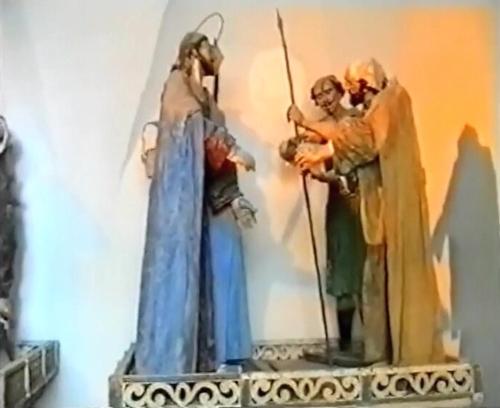


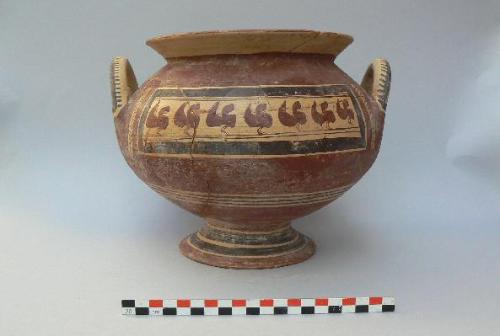


“Il Museo civico del Territorio Santa Parasceve di Ginosa, houses a vast archaeological heritage found in the city and attributable to different eras. Some archaeological research has in fact revealed human settlements dating back to the Middle Paleolithic, in an advanced phase of the Mousterian culture. Dating back to the 6th-2nd century B.C. is the Peucetian culture, from which countless artifacts come, such as Apulian kraters, epichyses, kyathoi, etc. The existence of a Roman municipium, the ancient Genusia, is also attested, probably located in the Piana della Madonna Dattoli, from which some artifacts come including a tabula patronatus, dated 395 A.D. In the late ancient age, the city began to populate near the banks of the ravine close to the rock villages of Casale and Rivolta, from which Laertine-made majolica would derive. At the end of the 11th century, the Norman domination led to the construction of the castle and the Benedictine monastery of Santa Parasceve, to which the period pottery shards belong of unglazed ceramics, glazed ceramics, and ceramics called ‘double bath’.
Information about Museo civico del territorio Santa Parasceve
Corso Vittorio Emanuele “Palace of Culture”, 95
74013 Ginosa (Taranto)
(+39) 099.8291213
[email protected]
https://www.concadellegravine.museum
Source: MIBACT”