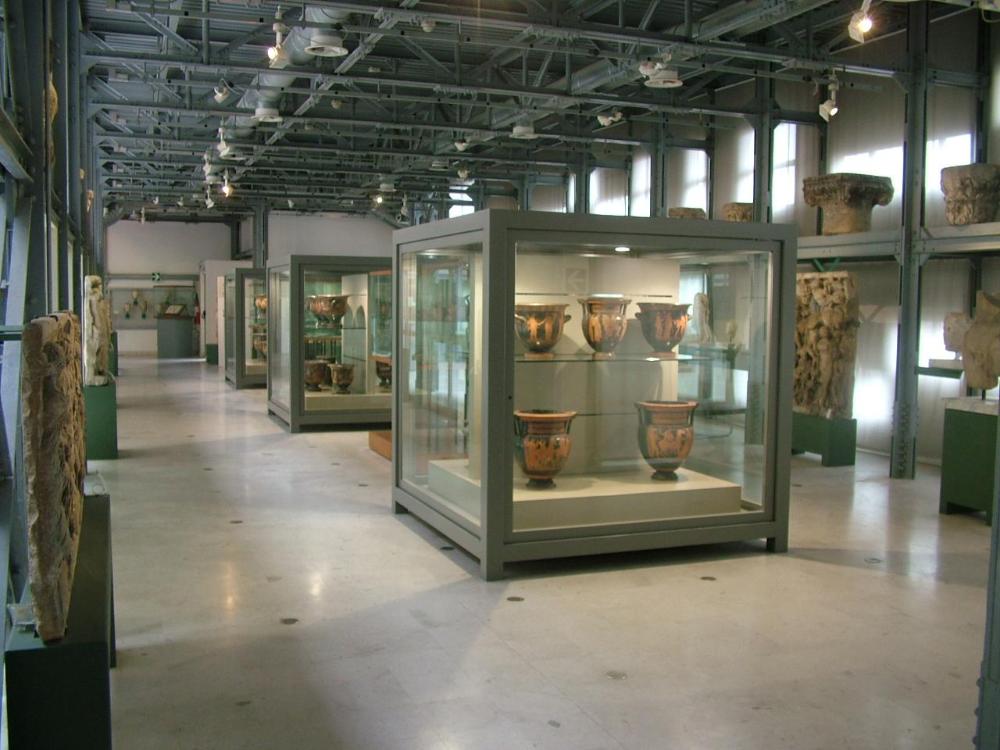


Established by Arch. Gaspare Cervantes immediately after the Council of Trent for the training of the clergy, the “San Matteo” Diocesan Museum of Salerno was expanded and renovated over the centuries until its current neoclassical appearance of the early decades of the 19th century. Passing through the entrance door of the museum, one enters a spacious courtyard. Here, on the ground floor, are the storage rooms and the Directorate, while the exhibition rooms open on the first floor. The rich artistic heritage includes artifacts ranging from the Middle Ages to the 20th century.
After the 1980 earthquake, the renovation of the premises began, and in 1993 the exhibition was expanded with a section of panel paintings created between the Fourteenth and Sixteenth centuries and with a room dedicated to the sixteenth-century painter Andrea Sabatini. Currently, the reorganization of the exhibition spaces is underway: the Museum can offer visitors only a few works, from the Middle Ages to the 20th century, placed in three large rooms.
The Art Collection
The collection consists of works of art mainly from the cathedral of Salerno. In the first room is the precious cycle of ivories, 67 pieces of local production from the first half of the 12th century with scenes mainly from the Old and New Testament, whose most accredited purpose is as an altar frontal.
Exultet
Stands out the famous ivory cycle with scenes from the Old and New Testament (12th century), an altar frontal, according to the most accredited restoration, and the eleven sheets of the parchment roll of the Exultet (13th century) illustrating the Easter Proclamation. The paintings, mainly on panel and canvas, date from the 13th to the 20th century, although the most represented centuries are the Seventeenth and Eighteenth centuries with the collection coming from the Legacy of Marquis Giovanni Ruggi D’Aragona (1870). They offer a sample of the most representative contemporary currents of the varied regional panorama with particular attention to the Salernitan Andrea Sabatini.
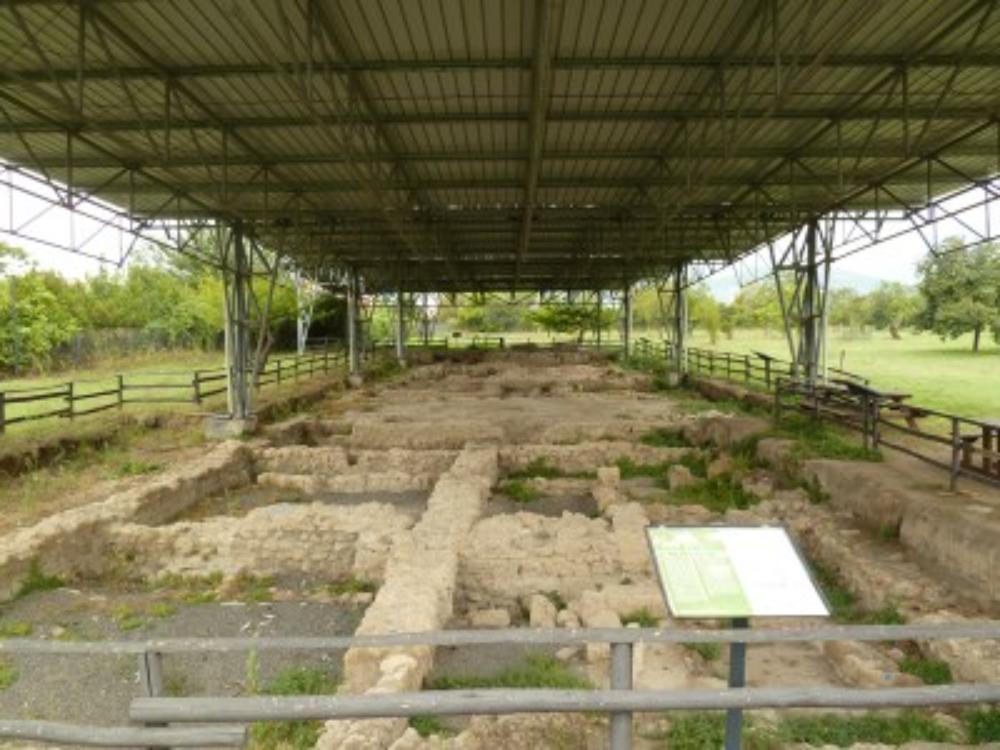
The Museum also boasts a substantial numismatic collection, including 923 coins, from the Magna Graecia age to the Norman period, already displayed in showcases, and a papal medal collection. There are also precious Codices (from the 11th century), some beautifully illuminated (13th-century Pontifical), parchments (13 degrees from the Salerno Medical College), Cinquecentine and Seicentine. The collections are enriched by some sculptures (marble and wooden), mosaic plutei (12th century) from the Lower Choir of the Cathedral, goldsmith works, a lapidary, and various archaeological finds from the Roman and early medieval period.
Pontifical Book
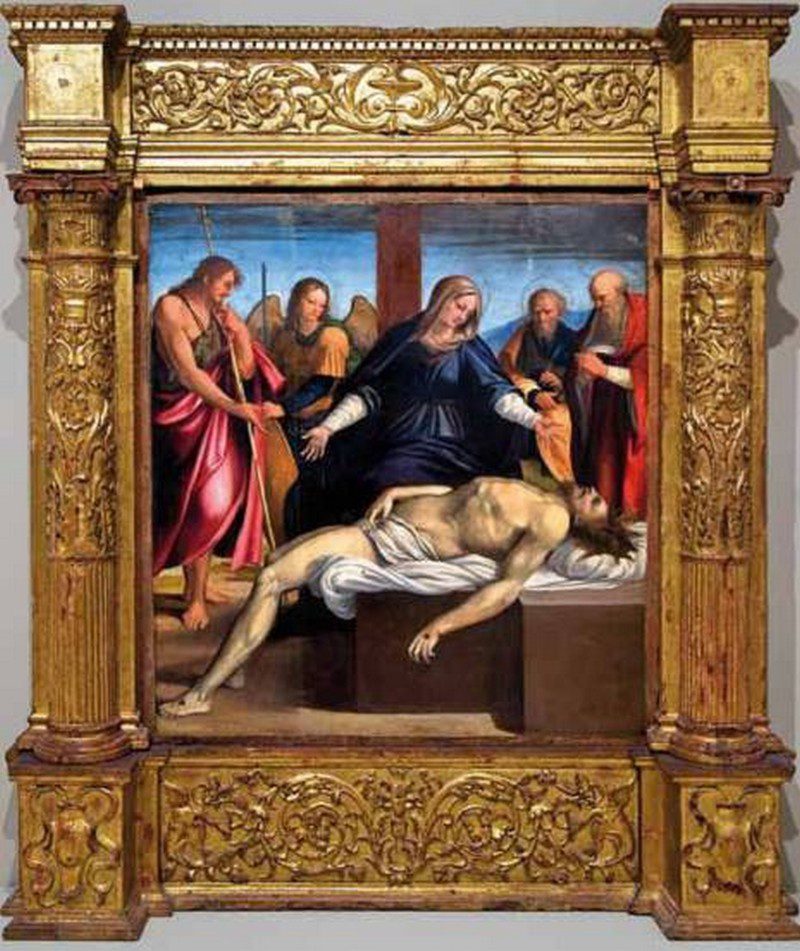
Also the Pontifical Book, of Bolognese craftsmanship, made for the Salernitan cathedral in 1180, is entirely illuminated. There are also a wooden crucifix of Byzantine era and the so-called Cross of Robert Guiscard, a reliquary from the end of the 1000s with the teeth of Saints Matthew and James the Lesser and a fragment of the Holy Cross. The panel paintings, coming both from the cathedral and from various churches in the Diocese, offer a picture of Campanian culture between the 14th and 16th centuries: notable are the Crucifixion by Roberto D’Oderisio, the only signed work by the Neapolitan painter of Giottesque influence; the Coronation of the Virgin attributed to the so-called Master of the Coronation of Eboli; and the Saint Michael the Archangel by the Veronese painter Cristoforo Scacco, from the second half of the 15th century; the early Mannerist triptych with Madonna and Saints by the Salernitan Vincenzo De Rogata; the complex 16th-century paintings of the so-called Master of the Franciscan Polyptychs, by Bartolomeo da Pistoia and, above all, Andrea Sabatini, to whose paintings, all depicting the Mother of Christ, the third room is dedicated.
The Devout Counter-Reformation Painting
The devout Counter-Reformation painting is represented by the canvas with The Mystic Marriage of Saint Catherine of Siena and the splendid Madonna of the Rosary by Francesco Curia, while from the seventeenth century the Saint Gemiano Penitent and Saint Peter by Jusepe De Ribeira are noteworthy. The painting depicting Saint Philip baptizing the eunuch, the latest acquisition of the Diocesan Museum, recalls landscape suggestions derived from Domenichino’s painting, while the paintings by Nicola Vaccaro and Nicola Malionconico stand as crossroads of Giordaneschi influences and the new eighteenth-century artistic-compositional trends.
Since 2006 the relics have increased with the collection donated by the late Director Mons. Arturo Carucci and arranged in two adjoining small rooms. In the Directorate, an archive and a library with about 4000 titles available upon request are temporarily housed.
In the bright corridors leading to the rooms, part of the numismatic collection ranging from the Magna Graecia to the Mint of Salerno has been temporarily placed. The collection is enriched by works of goldsmithery, a lapidary, and some archaeological finds from the Roman and early medieval ages.
Information on the Diocesan Museum “San Matteo”
Largo Plebiscito, 12 ,
84121 Salerno
Phone: 089.239126
Opening hours of the Diocesan Museum San Matteo
From 9:00 am to 1:00 pm; from 3:00 pm to 7:00 pm.
Closed on Wednesdays
Ticket prices for Diocesan Museum San Matteo
Adults 2.00 euros
Students (of all levels and grades) 1.00 euro