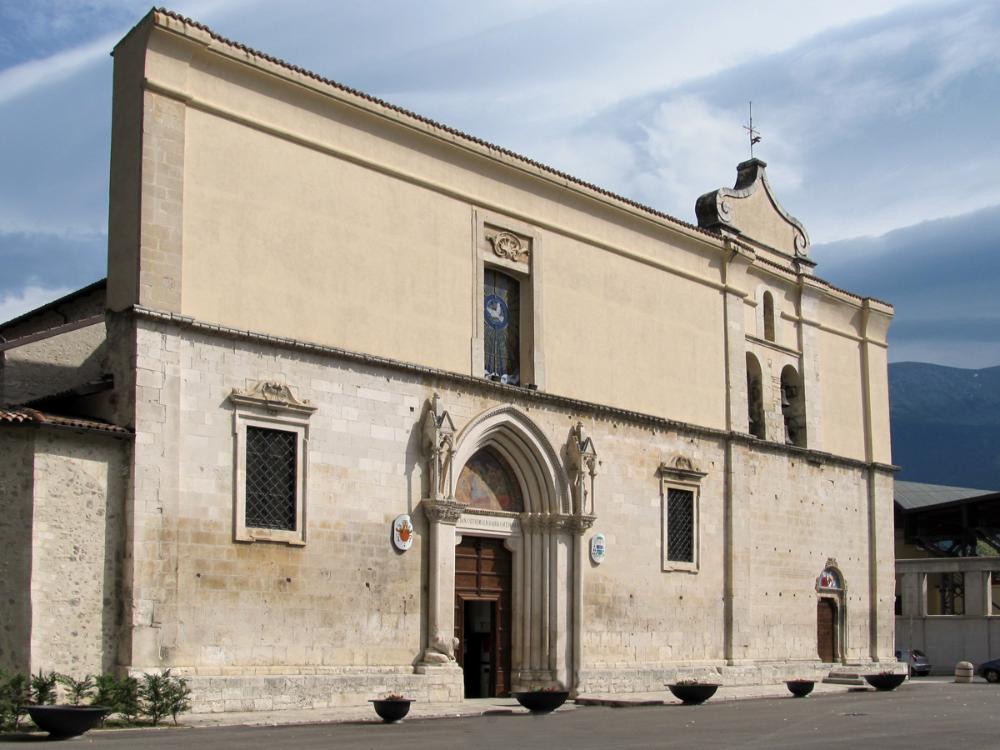


A small record-breaking territory, that of the Teramo Apennines. A wonderful treasure chest of nature, history, and hospitality still very little known and well worth discovering and savoring down to its most intimate folds. Not everyone, for example, knows that here nest the highest peaks of the Apennines (the Corno Grande of the Gran Sasso-Monti della Laga), the southernmost glacier in Europe (the Calderone), the most imposing Bourbon Fortress of the Old Continent (that of Civitella del Tronto) and no less than five of the most beautiful art cities in Abruzzo: Campli, Castelli, Atri, Teramo, and Civitella del Tronto. To this is added a dense array of archaeological assets, ranging from Neolithic caves to medieval hermitages; of very ancient and characterful villages; of festivals and traditions that have stood the test of time; of “natural gyms” (horse trails, rapids for rafting, trekking and mountain bike paths…) for those who love sport and outdoor life; of farm holidays with sincere and genuine hospitality; of absolutely unique food and wine products (from lamb to Marchigiana beef, pecorino cheeses, ventricina sausage, Solina soft wheat bread, sweet pizza and bocconotti pastries, the Montepulciano wine from the Teramo Hills…), which have earned the province of Teramo the title of the region’s gourmet haven.
From an environmental viewpoint, one of the most spectacular corners of the Teramo Apennines is found in the Laga and they are the Gole del Salinello, a limestone canyon shaped by the rapids and waterfalls of the stream, watched from above by the golden eagle, which lives here undisturbed, and by the ruins of Castel Manfrino, a fortress of ancient origins, rebuilt first by the Lombards and then by the Swabians, which, halfway up the canyon walls, controlled the ancient communication route. In such a harsh environment, in medieval times, numerous hermitages began to nest, which time has left intact and which are an integral part of the landscape and territory. From the bottom of the Gole there is even a small path, requiring climbing experience, which climbs up to the Hermitage of Santa Maria Scalena; while from Ripe, a hamlet of Civitella del Tronto, there is an easy and pleasant walk leading to a cave, already a place of worship in the Neolithic, which from the Middle Ages onwards became the Hermitage of Grotta Sant’Angelo.
But beautiful also are the trails that climb Monte Foltrone, the “roof” of the Mount Campli, and Monte Girella, which marks the summit of the so-called Montagna dei Fiori. Although they are lower than the Monti della Laga and the Gran Sasso, these peaks certainly deserve a walk: from up there, on clear days, the eye can even catch the coastline and the chain of the Monti Sibillini.
And then there is the horse trail, one of the highlights of the Gran Sasso-Monti della Laga Park. A large loop running all around the Gran Sasso massif, enriched by a network of shorter circuits, for a total of about 300 km of trails, which retrace those used by farmers to reach the cultivated fields at altitude. The track develops on all three sides of the park (Teramo, L’Aquila, and Pescara areas) and is served by equipped rest areas for the shelter of horses and riders. One of these is the Complesso Paladini, in the municipality of Crognaleto, equipped with a guesthouse with 50 beds, a restaurant, an information point, and a stable that can host up to ten horses.