


What to see in Poland
La Polonia confina a sud con la Slovacchia e la Repubblica Ceca. A nord-est con la Lituania e la provincia russa di Kaliningrad. Il versante nord è bagnato dalle fredde acque del Mar Baltico e vivacizzato dai grandi porti di Danzica e Stettino.
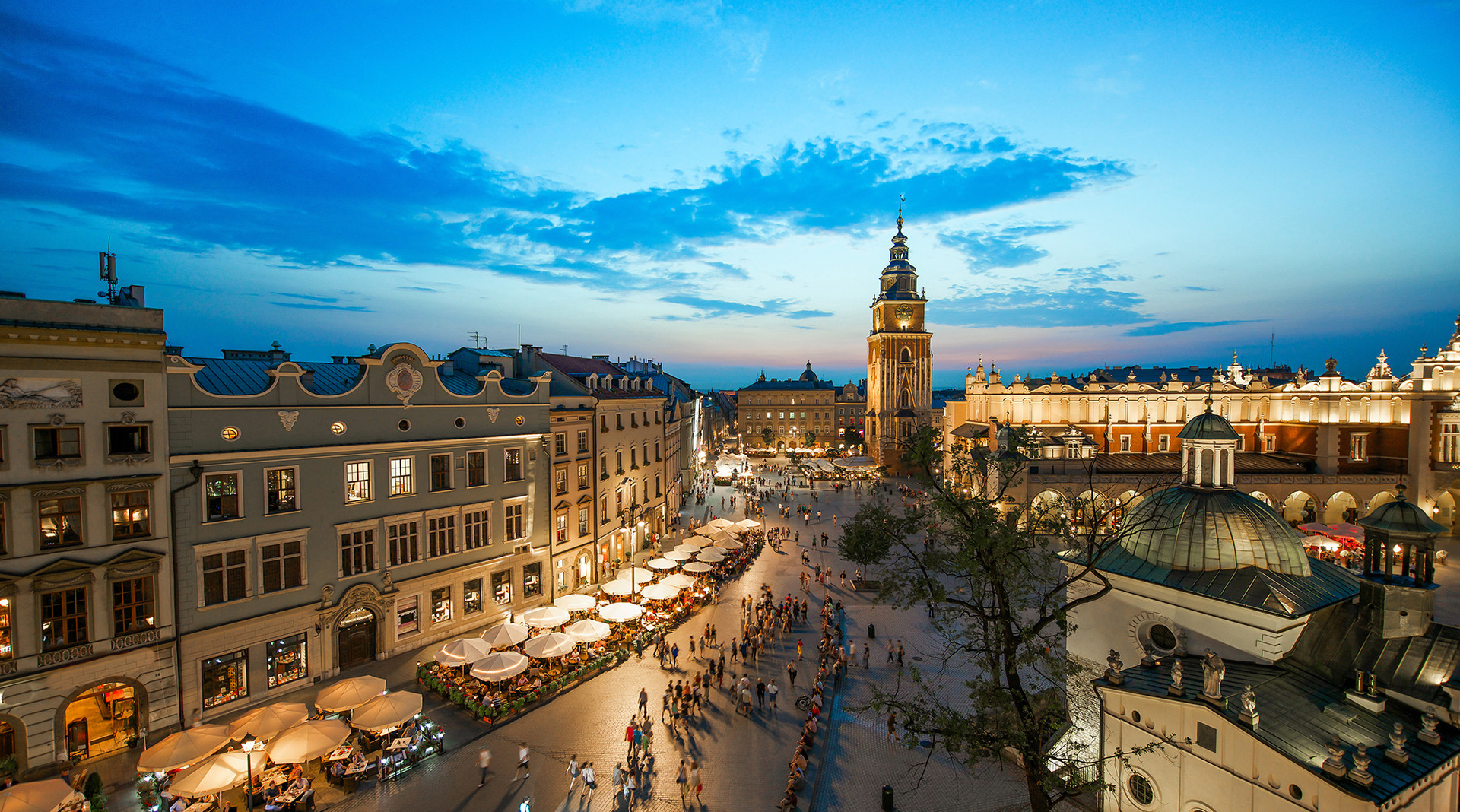
L’interno della Polonia, dal Baltico ai Carpazi, non è altro che una pianura sconfinata. Una pianura che si increspa a sud-ovest, in prossimità dei Sudeti, siglando colline dal profilo dolce e garbato. Mentre a nord-est, si apre il Distretto dei Laghi, una regione scarsamente popolata e anche poco sviluppata dal punto di vista economico e industriale. Quasi tutti i corsi d’acqua, di cui il Paese è ricco, sboccano nel Mar Baltico, a cominciare dai due principali, l’Oder e la Vistola, che bagna Warsawia, la capitale della Polonia e l’incantevole Cracovia.
What is the weather like in Poland
Latitude and geographical location of Poland give it a decidedly northern climate and not very generous in terms of temperatures. Summer is very short, two, at most three months; winter is harsh with heavy snowfall; the middle seasons, spring and autumn, are windy, humid, and rainy.
Poland is today a parliamentary republic, an integral part of the European Union since 2004, although it still retains its original currency, the zloty. It is also a country in continuous development and modernization, with an economy based on market laws and free competition. In recent decades, much energy has been spent reforming and privatizing strategic sectors such as coal, steel, energy, railways, and transport.
Poland and tourism
Tourism has also received a good boost, trying to enhance a historical, monumental and cultural heritage among the oldest in Europe. It should not be forgotten that Poland boasts a millennia-old history, whose peak was in the 16th century, when, under the Jagiellonian dynasty, it was one of the richest, most cultured and powerful countries. Poland was also the homeland of the first written constitution of the Old Continent, dated 1791, called the Polish May Constitution.
Poland Fact Sheet
- Country: Poland
- Area: 312,685 km²
- Capital: Warsaw
- Population: 38,230,080 inhabitants
- Language: Polish, Belarusian, German, Ukrainian
- Religion: Catholics 90.7%, non-religious/atheists 7.9%, Orthodox 1.4%
- Form of Government: Republic
- Main Cities: Radom, Sosnowiec, Krakow, Wrocław
Information about Poland
- Currency: new zloty
- International dialing code: 0048
- International vehicle registration code: PL
- Driving lane: right
- Entry documents: for stays up to three months, Italian citizens only need a valid identity card. For children under 15, a passport is required, or a photo registration in the parents’ passport.
- Required vaccination: No
- Electric current: 220V
- Unit of measurement: metric decimal
- Time zones: No
- Fixed-date holidays: May 3rd Constitution Day, November 11th Independence Day (achieved in 1918 after being divided by Russian, Prussian, and Austrian rule)
- Climate: The continental climate is characterized by hot summers and rather harsh winters. Generally, central Poland is the driest region, unlike the mountain areas which are marked by abundant precipitation. Summer is usually warm, but often interrupted by heavy thunderstorms.
- Average temperatures: 8.4°C (-3°C in winter, 19.5°C in summer)
- Transport: in Warsaw it is convenient to get around on foot but buses are also widely used and frequent.
- Airports: Warsaw, Lodz, Krakow, Wroclaw