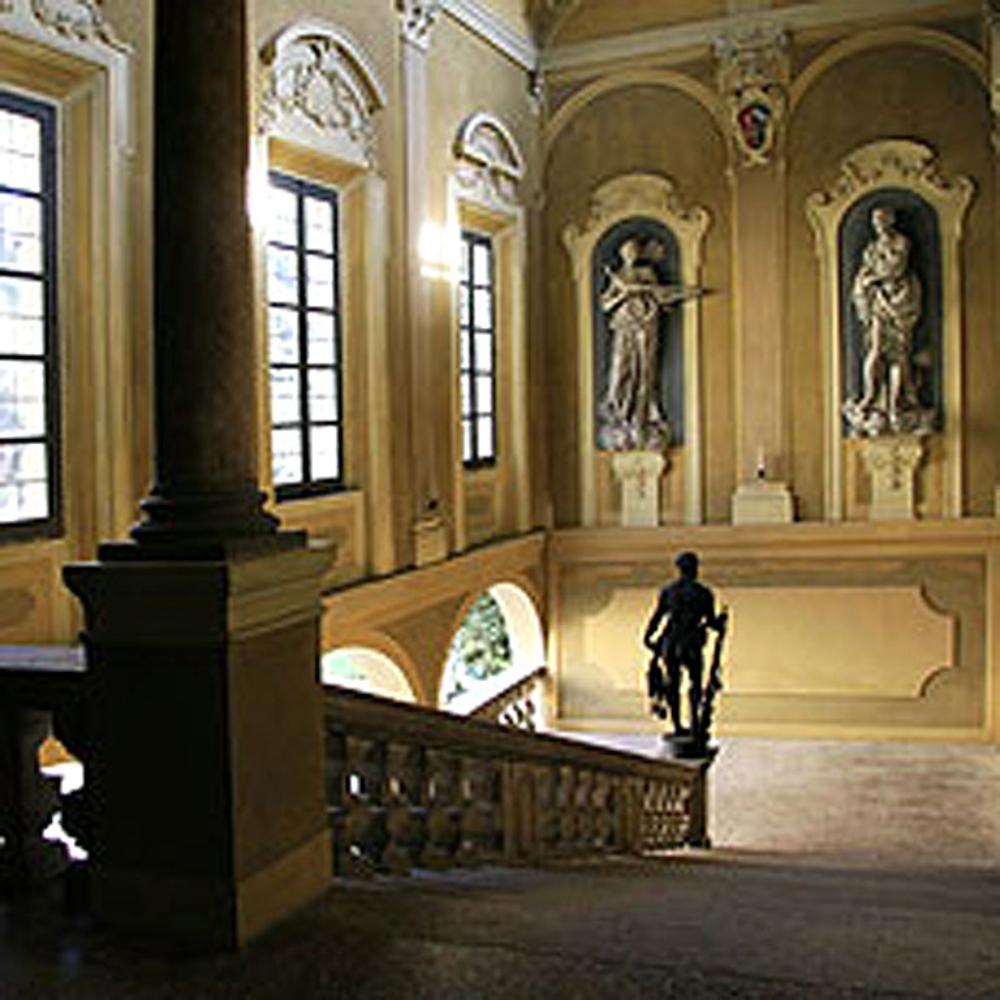
Nel Archiepiscopal Museum of Ravenna materials from the ancient Ursine cathedral (4th century), destroyed in the eighteenth century, are preserved. The “Lapidary Hall,” as the museum was originally called, contains materials of various types and different origins: Roman gravestones from the classiaries, sculptures and architectural fragments, capitals, mosaics, steles, sarcophagus fronts, a headless porphyry statue depicting a victorious emperor from the 5th century.
The museum also houses the very famous Maximian’s chair, one of the most celebrated ivory works known, crafted by Byzantine artists of the 6th century. On the first floor, the itinerary is chronologically set between Early Christian and Byzantine collections, starting from the very Lapidary Hall of Farsetti and the adjacent room, where the organization of the materials re-proposes the original consistency but with a chronological distribution of the finds. The route now also includes two previously unpublished eighteenth-century small rooms decorated with fine stuccoes.
Among the exhibited finds, of notable importance, the marble liturgical calendar, the Ambon of Adeodatus with an inscription from the year 597, coming from the church of Saints John and Paul, the marble chapel of Saints Quiricus and Julitta, from the first half of the 5th century, with reliefs on all four fronts; silk fragments and liturgical vestments and the chasuble of Bishop Angelopte, dating back to the 12th century. The museum route continues in the archiepiscopal chapel, also called the Oratory of St. Andrew or St. Peter Chrysologus, built by the will of Pietro II, bishop of Ravenna from 491 to 519. It is preceded by a small apse with a barrel vault covered with mosaics, as well as the sail vault of the 6th century; the side lunettes are frescoed by the 16th-century Ravenna painter Luca Longhi.
From the oratory, you access the Salustra Tower, likely a remnant of the homonymous Roman gate from the 1st century A.D. Here is kept the chair of Bishop Maximian, a masterpiece of ivory sculpture made by artists influenced by Alexandrian and Byzantine styles.
On the second floor of the palace is the Archiepiscopal Archive, where about 13,000 parchments dating from the 7th century are preserved, six papyri, including the pontifical diploma of Paschal I (819) and a miniated codex by Giulio Clovio. Some works of art are displayed in the rooms, including a ‘Madonna with Child’ by Baldassarre Carrari and the ‘Bust of Cardinal Capponi’ by Gian Lorenzo Bernini.