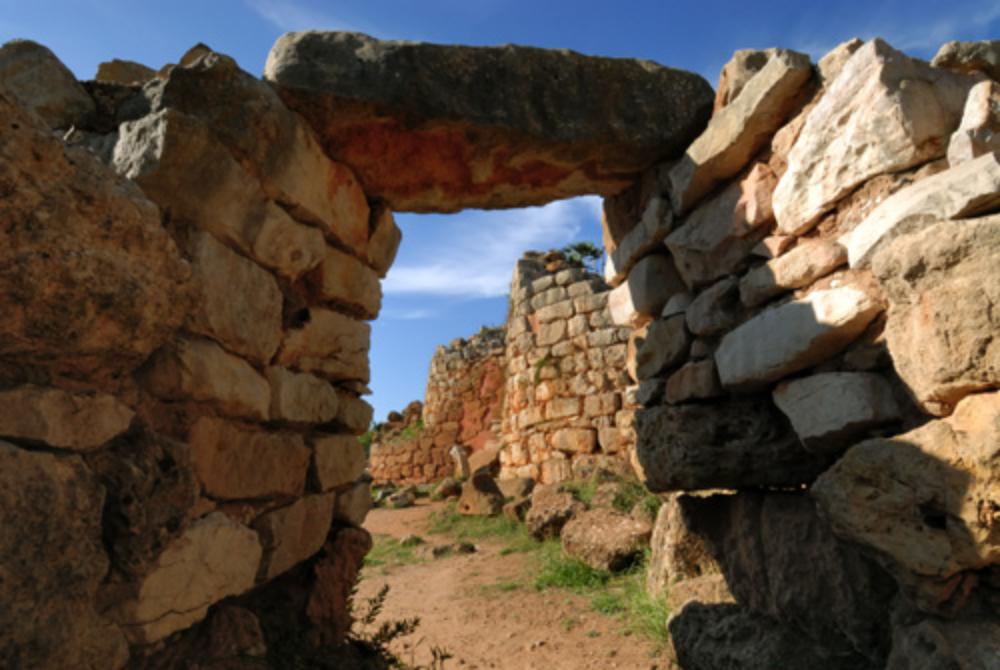


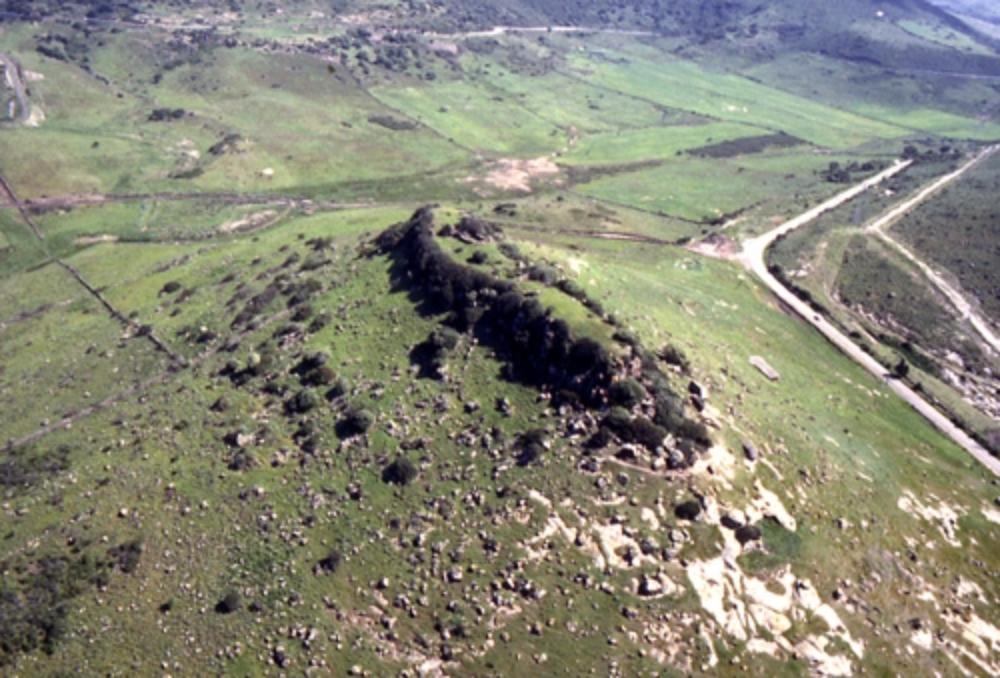

La necropolis of Santu Pedru is located on the slope of the eponymous hill, in a commanding position overlooking the fertile plain below. It consists of about ten tombs of the domus de janas type (literally “houses of the fairies” or “house of witches”), carved into reddish trachyte rock and tuff, featuring an uncovered access corridor (dromos) and a multi-chamber floor plan, that is, with multiple rooms. Inside, they reproduce architectural and decorative elements of the dwellings of the living (steps, bases, frames, lintels, semicircular ceilings) and are adorned with ritual elements such as false doors, symbolizing the impenetrability of the world of the dead, bull horns, symbolizing strength, fertility, and an apotropaic element, and traces of red ochre paint, the color of blood and regeneration. Tomb I, called the “tomb of the tetrapod vases” – due to the discovery of two ceramic vases with four perfectly preserved feet – is the most important one as it represents one of the best examples of large and refined domus de janas. Tomb VIII preserves traces of its transformation, in the Early Middle Ages (7th century), into a rock church dedicated to Saints Peter and Lucia. Nearby is an arcosolium tomb (burial within a niche topped by an arch), from the Roman period. On the summit of the hill stands the nuraghe Santu Pedru, a single-tower structure made with roughly hewn blocks of trachyte, around which are traces of an ancient village. The area was frequented from the Late Neolithic (Ozieri Culture, 3300 BC) to the medieval age (6th-7th century AD) due to favorable territorial conditions which, rich in water, promoted livestock farming and agriculture.
Information on the Santu Pedru Archaeological Area
,
07041 Alghero (Sassari)
329 4385947
[email protected]
https://www.coopsilt.it
Source: MIBACT