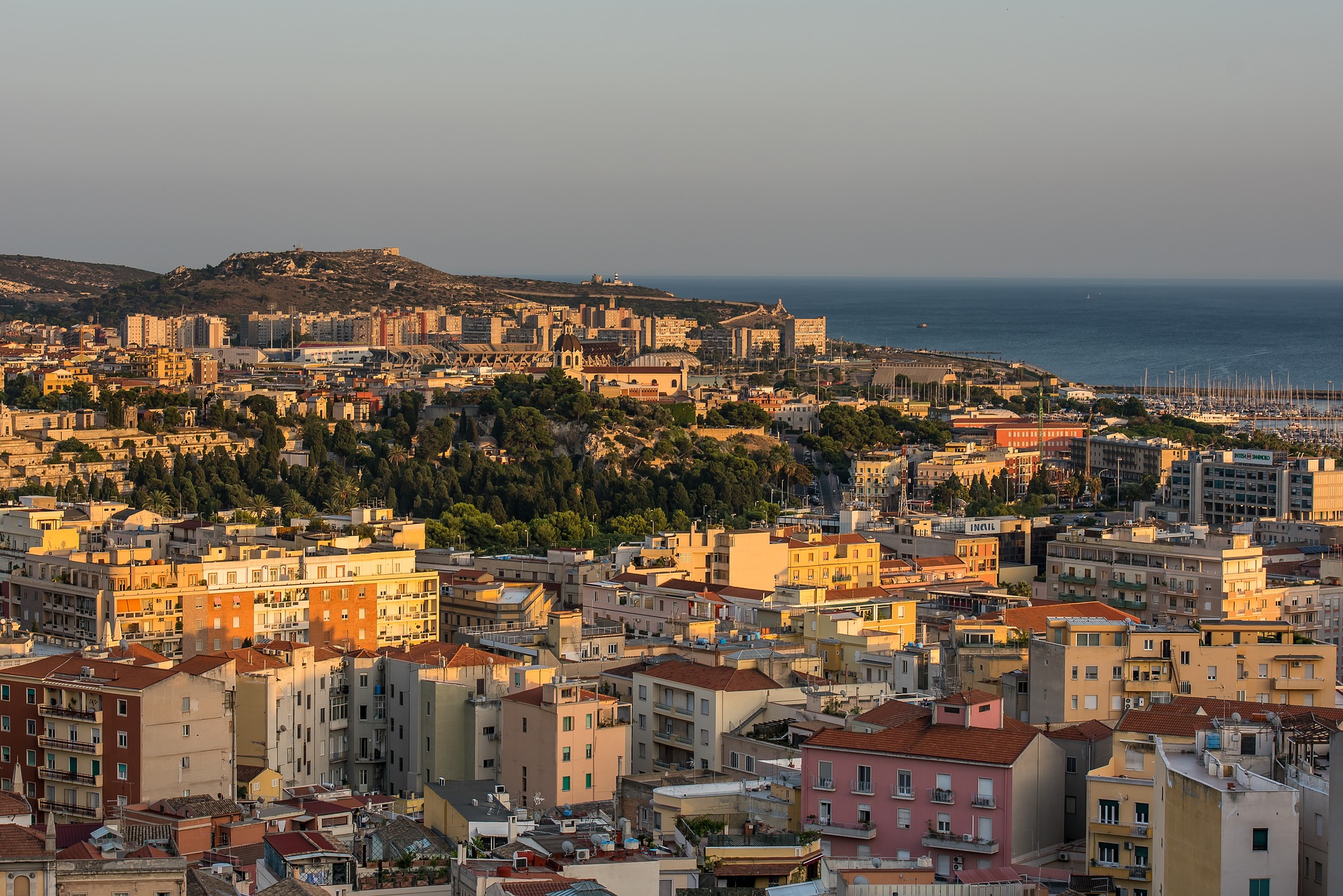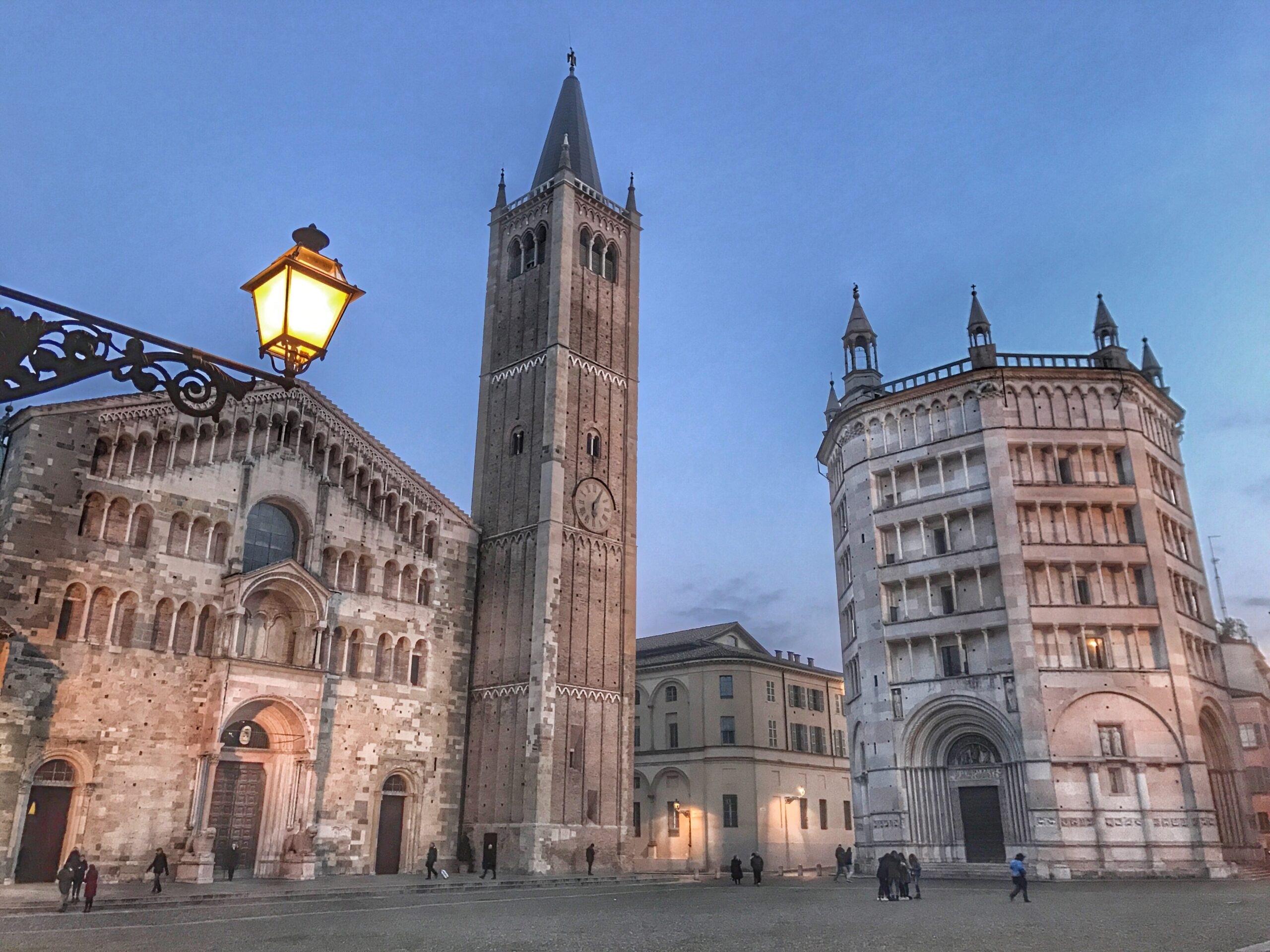


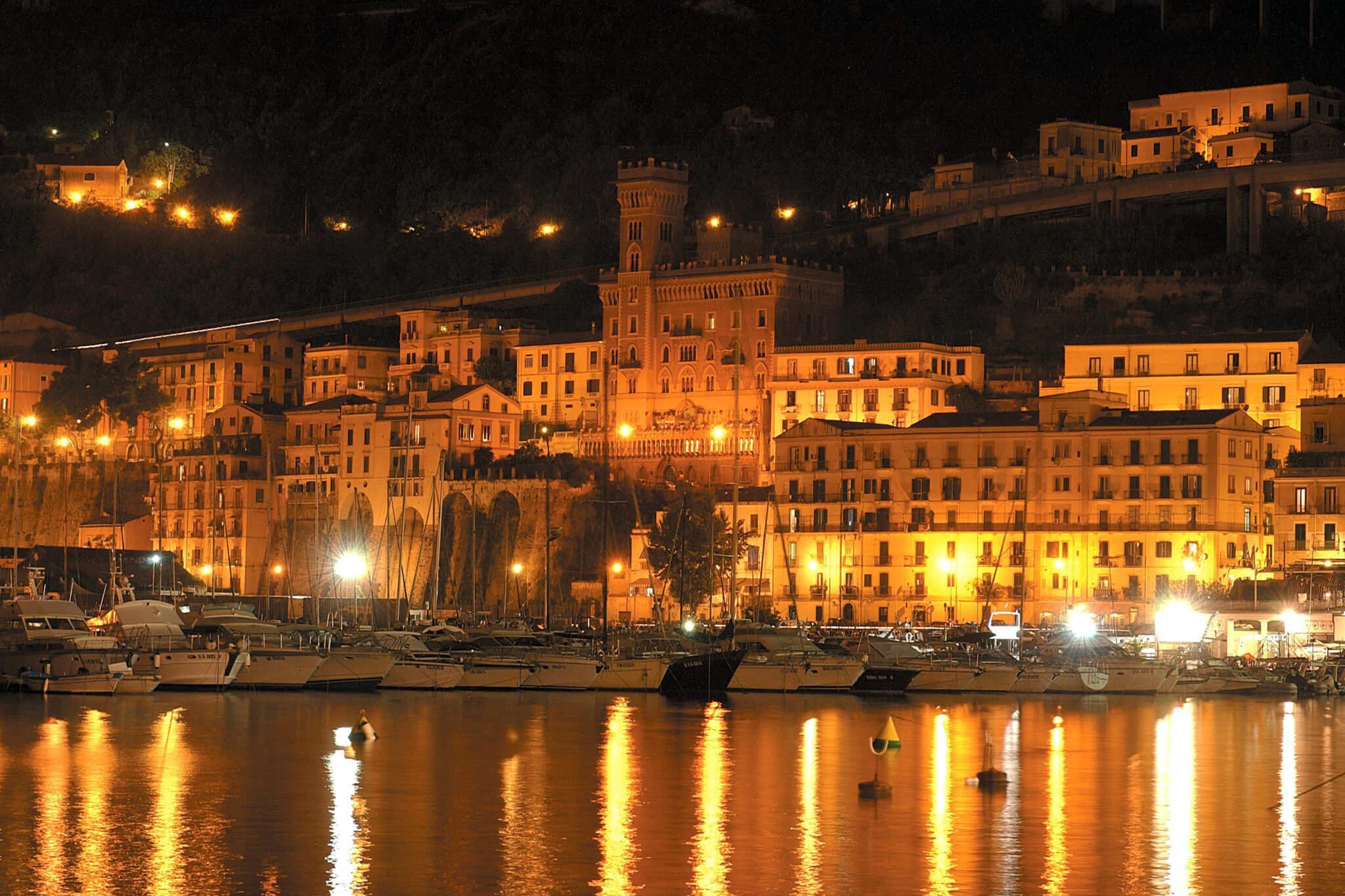

Salerno has experienced a true tourist boom, especially in recent years. Terminus of Italo and Frecciarossa trains, lately the city appears very lively and full of attractions. Salerno has a very large province, the biggest in Campania. The Amalfi Coast, the Cilento, the Vallo di Diano, the Sele plain, and the archaeological area of the ancient Greek city Paestum represent the crowning glory of the entire province of Salerno.
- Salerno what to see
- Salerno: cultural points of interest
- 1 The Salerno Cathedral
- 2 The Diocesan Museum of the Salerno Cathedral
- 3 The Provincial Archaeological Museum of Salerno
- 4 The Salerno Museums
- 5 Creative City Museum
- 6 The Arechi Castle
- 7 Fratte Archaeological Area
- 8 San Pietro a Corte Monumental Complex
- Salerno Tourism what to see
- 9 The historic center of Salerno: medieval neighborhoods
- 10 Verdi Theater of Salerno
- 11 The Villa Comunale of Salerno
- 12 The Minerva Garden: botanical garden of the Salerno Medical School
- 13 The Trieste Seafront
- 14 Salerno illuminations: Luci D’artista
- 15 How to get to Salerno
- What to do in Salerno
- 16 What to do in Salerno and surroundings
- 17 Where to eat and what to eat in Salerno
- 18 Where to sleep in Salerno
Salerno was dominated by the Lombards, particularly administered by duke Arechi II. In the 9th century “the Salerno Medical School” was the first and most important medical institution at the European level. Salerno also saw the domination of the Normans and then the Swabians, before yielding to the Spanish. The Gulf of Salerno was the scene of the allied landings (Operation Avalanche) during the Second World War, in September 1943. Let’s see what there is to see in Salerno.
Salerno what to see
Salerno is a splendid seaside town. The alleys of the old town still preserve the characteristics of the fishing village. It is an ideal destination, both in summer and winter. Thanks to the mild climate because it is located by the sea, the old town of Salerno and its Trieste waterfront, among the longest (and most beautiful) in Italy, during the hottest months and the Christmas holidays, are packed with people. Salerno is also called “Garden City” thanks to the public green spaces that grow year by year. For some years (since 2006) Salerno has hosted a mega attraction during the Christmas period: Luci d’Artista also known as the Salerno Lights.
Salerno: cultural points of interest
1 The Salerno Cathedral
The Salerno Cathedral was built in the 11th century when the city became the capital of the Norman kingdom. The discovery of the relics of Saint Matthew, patron saint of Salerno, also present on the city’s coat of arms and banner, dates back to the same period. The Salerno Cathedral underwent a major renovation in the 18th century, especially inside. Outside the Cathedral stands a bell tower with Arab influence (12th century). The Porta dei Leoni, reachable via a staircase, opens onto the atrium, whose style is also influenced by Arab design. The Cathedral has a classic three-nave structure with mosaics, such as that in the apse, with Byzantine influence. On the sides of the central nave, a series of chapels housing art treasures and tombs. At the beginning of the left nave is the tomb of Queen Margaret of Durazzo dating back to the 15th century.

2 The Diocesan Museum of the Salerno Cathedral
The project for a Diocesan Museum of the Salerno Cathedral dates back to 1935 by Mons. Arturo Capone, member of the Primatial Chapter. Important is the series of illuminated manuscripts from the 13th-14th century, including the Exultet, a long parchment roll from the 13th century, embellished with extremely fine miniatures, which was unrolled by the deacon during the Holy Saturday liturgical ceremonies. The museum is located in the former Archiepiscopal Seminary of Salerno, also formerly home to the Salerno Medical School.

3 The Provincial Archaeological Museum of Salerno
At the rear of the Cathedral is the San Benedetto convent complex, since 1927 the home of the Provincial Archaeological Museum of Salerno. Inside the museum, spread across two floors, are prehistoric artifacts from excavations throughout the province and a permanent exhibition of the Campanian Etruscan center of Fratte. One area is entirely dedicated to artifacts from ancient Salernum, a Roman colony founded in 194 BC. In the Gulf of Salerno, in 1930, a bronze head was found and is displayed in this museum.

4 The Salerno Museums
The city of Salerno hosts several other very interesting museums. Among them, the Virtual Museum of the Salerno Medical School, the Roberto Papi Museum linked to the Salerno Medical School located in the Palazzo Galdieri on Via Trotula de Ruggiero, and the Alfonso Tafuri ceramic collection.
5 Creative City Museum
The Creative City Museum of Salerno is a dynamic center for experimentation, exhibition, and documentation of ceramics. It is located at Via Ogliara, 127/143 and sits in a region historically characterized since the Middle Ages by the extraction, export, and processing of clay. Unique sites such as the fascine kilns, which survived in full activity until the 19th century, can be visited. Two of these have been restored and are periodically activated according to the same 19th-century ritual. The old municipal earth warehouses have become the museum’s headquarters and around it various urban furnishings have been created, as well as a series of exhibition events (biennials, experimental exhibitions) regularly featuring artists, architects, and associations.
6 The Arechi Castle
The Arechi Castle has Roman-Byzantine origins and overlooks the city of Salerno. Located on a hill, facing the Gulf of Salerno, the Arechi Castle was expanded by the Lombard prince Arechi II because it was important in his defense strategies and as a sea outlet for the kingdom. The castle was also expanded during the Norman, Angevin, and Aragonese periods. One wing of the castle displays recovered materials and is often used for exhibitions or conferences. The Medieval Monumental Complex of Salerno contains the castle with the historic section and some halls where conference events and private ceremonies can be held, the Nature Park, the Medieval Museum, the Multimedia Museum; moreover, it houses the headquarters of the Provincial Wine Cellar of Salerno and a characteristic refreshment point.
The Arechi Castle is open every day from 9:00 am to 2:00 pm and from 4:00 pm until one hour before sunset (Tel. 089.481014).

7 Fratte Archaeological Area
The Fratte archaeological area extends over 4,500 square meters and is entirely open and enclosed by walls. It preserves the remains of the Etruscan-Samnite settlement and necropolis. It is arranged as a park with the most substantial remains of the uncovered structures left visible. The Fratte archaeological area is located on the northeastern outskirts of the city of Salerno, along the Irno river, in the current Fratte district, near the hamlets of Cappelle and Matierno. The area is about one kilometer from the A2 exit of Salerno-Fratte and is served by city buses and the Fratte Villa Comunale train station.
8 San Pietro a Corte Monumental Complex
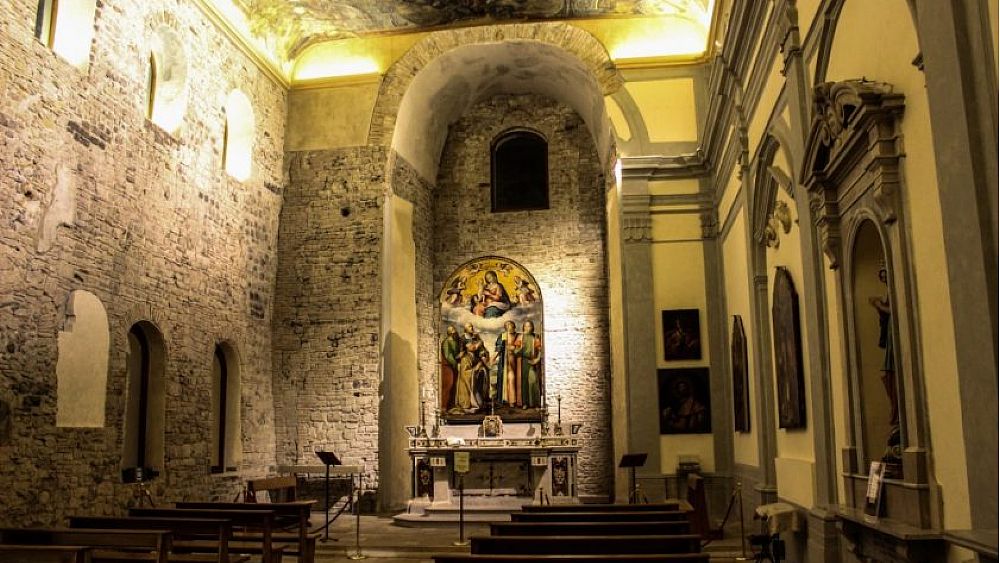
This is a complex founded by the Lombards. The San Pietro a Corte monumental complex was commissioned by the Duke of Benevento, Arechi II, who in 774, after the defeat of the Northern Lombards by Charlemagne, moved his residence from his city, then the capital of the duchy, to Salerno. Between the 13th and 16th centuries, a chapel dedicated to Marian worship was created. It was one of the seats of the Salerno Medical School.
Salerno Tourism what to see
9 The historic center of Salerno: medieval neighborhoods
The historic center of ancient Salernum was located between the Fusandola stream (“Portacatena”), the beach, the hill of Arechi castle (“Monte Bonadies”), and the historic climb to Carmine (near “Portanova”). The ancient city was divided into four historic districts: Curtis Dominica, Locus Veterensium, Orto Magno, and Plaium Montis. The historic center of Salerno retains its medieval origins. Narrow streets, churches, and palaces of Lombard and Norman origin characterize this part of the city that originates from the well-known Via dei Mercanti which begins at the Arch of Arechi dating back to the 8th century.
10 Verdi Theater of Salerno
The Verdi Theater of Salerno was built on an Italian-style plan with 71 boxes, an orchestra pit, and a gallery. The theater is municipally owned and is mostly used for opera or classical music performances. It was designed shortly after the Unification of Italy in 1863, following the closure of the San Matteo Theater (about 20 years earlier), but it was only inaugurated in 1872. After restoration following the 1980 earthquake, the theater was reopened in 1997. The Verdi Theater has a capacity of about 610 seats. It is located in the old town area of Salerno, next to the Villa Comunale.

11 The Villa Comunale of Salerno
The Villa Comunale of Salerno was designed by architect Casalbore at the end of the 18th century. Historically, it was one of the main linking areas of the ancient city with other urban centers located to the northeast, foremost among them the capital Naples. Famous is the fountain of Don Tullio, or the fountain of Aesculapius, built at the end of 1790 for passersby. Over the years, the Villa Comunale has been enriched with other monuments dedicated to prominent historical figures and botanical species, becoming a meeting and gathering place. In recent years, the Villa Comunale has been expanded and has seen the addition of new monuments, all decorative. The Villa Comunale is connected to the Verdi Theater by a pedestrian walkway. Since 2006, it has hosted the Enchanted Garden of Luci d’Artista, the illuminations that decorate the entire city during the Christmas period.
12 The Minerva Garden: botanical garden of the Salerno Medical School
In the area between the Villa Comunale and the Arechi Castle, lies this splendid botanical garden used by the Salerno Medical School: the Minerva Gardens. The botanical garden remains open all year round with varying afternoon hours depending on the season. In February, the Minerva Gardens are open only in the morning, from 9:30 am to 1:00 pm. The Minerva Gardens host various educational activities and can be visited with a guide. The entrance fee is 3 euros with group discounts. Children under 6 years of age are free, as well as tourist guides.

13 The Trieste Seafront
The Trieste Seafront of Salerno is one of the longest (and also one of the most beautiful) in Italy. It originates from Piazza Amendola, where the Villa Comunale, the Verdi Theater, the City Hall, and the Prefect’s office are located. The Salerno seafront, dotted with palm trees, borders the sea on one side and is flanked by elegant buildings on the other. The seafront is a reference point for the city. From here, it’s possible to walk safely (the path is wide and pedestrian) and enjoy the beautiful view of the Gulf of Salerno and Vietri sul Mare, which marks the beginning of the Amalfi Coast. Along the Seafront route, you come across the well-known Piazza della Concordia and the city’s marina (which contrasts with the commercial port further north), from where boats depart for the Amalfi Coast.
14 Salerno illuminations: Luci D’artista
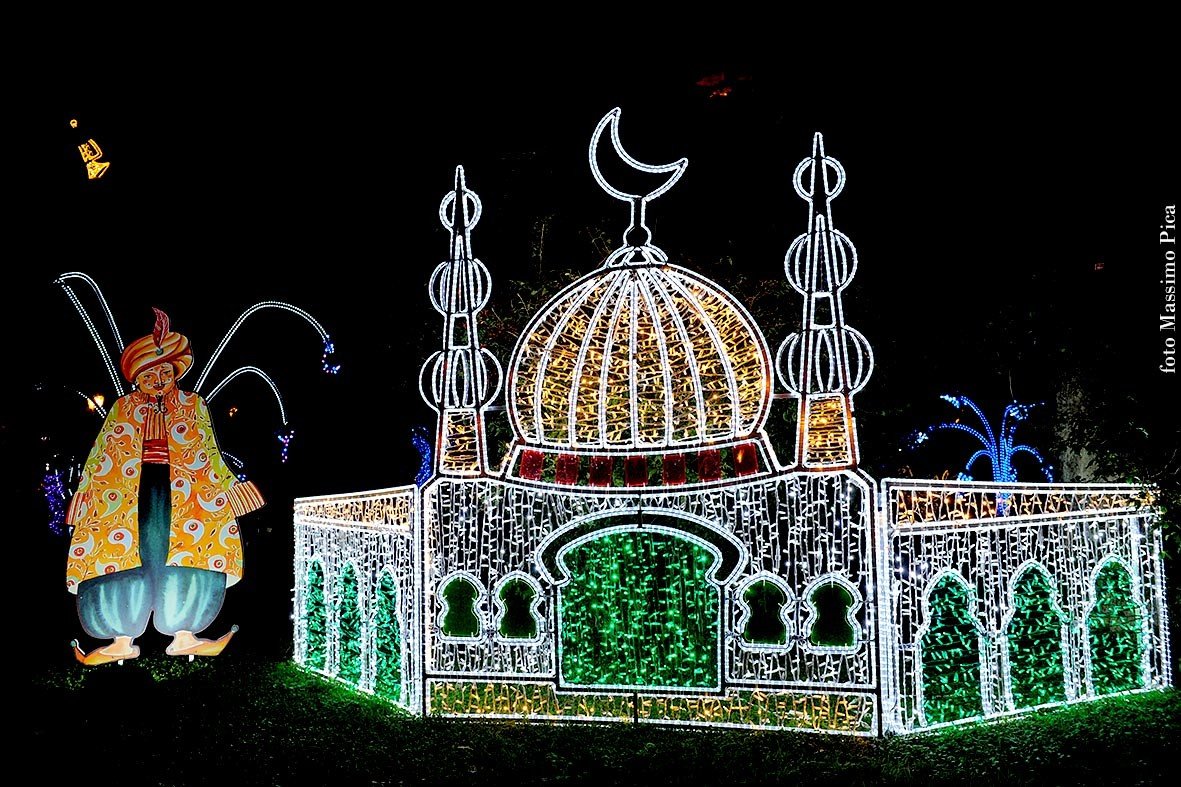
Salerno Luci d’artista. The historic center of the city of Salerno and some connected areas are decorated with special illuminations whose theme changes every year. Following what already happens in Turin, in Salerno the event has become a major attraction to the point that the city fills up with tourists and excursionists during this period. The Luci d’Artista every year is enriched with collateral events that integrate well with the usual Christmas period ones. The event begins at the start of November and ends at the beginning of January, just after Epiphany.
15 How to get to Salerno
Salerno is well connected by motorway, rail, air, and sea. By car, from the North: A1 Naples – Salerno: exit Vietri sul Mare or Salerno; A30 Caserta – Rome: exit Fratte/Salerno center; from the South: A2 Salerno-Reggio Calabria: exit Fratte/Salerno center; A2 Salerno Reggio Calabria: exit Pontecagnano towards Fratte/Bypass: exits from the Industrial Zone to Fratte. By train (Salerno station): also fast trains (Italo and Frecciarossa). By ship: daily connections from the Port of Salerno to Messina, Catania, Palermo, Olbia, Tunis, Malta, and Valencia. By air: Naples Capodichino airport 50 km away; Salerno Costa d’Amalfi airport (about 20 km).
What to do in Salerno
16 What to do in Salerno and surroundings
Salerno is a very lively city. The alleyways of the historic center and the seafront are always full of people, especially in the good season. And from Salerno, there are connections to the Amalfi Coast which represents the noble province of the city of Arechi.
17 Where to eat and what to eat in Salerno
The city offers a wide choice of food and wine experiences. Salerno cuisine is a descendant of Campanian cuisine. Therefore, tasty first courses based on fish as well as pizza, which can also be chosen with a filled edge (almost always ricotta), are popular. In the streets of the historic center, especially in summer, it is possible to eat fried fish served in cardboard cones. A true delicacy representing Salerno street food. The historic center of Salerno also teems with venues with varying offers.
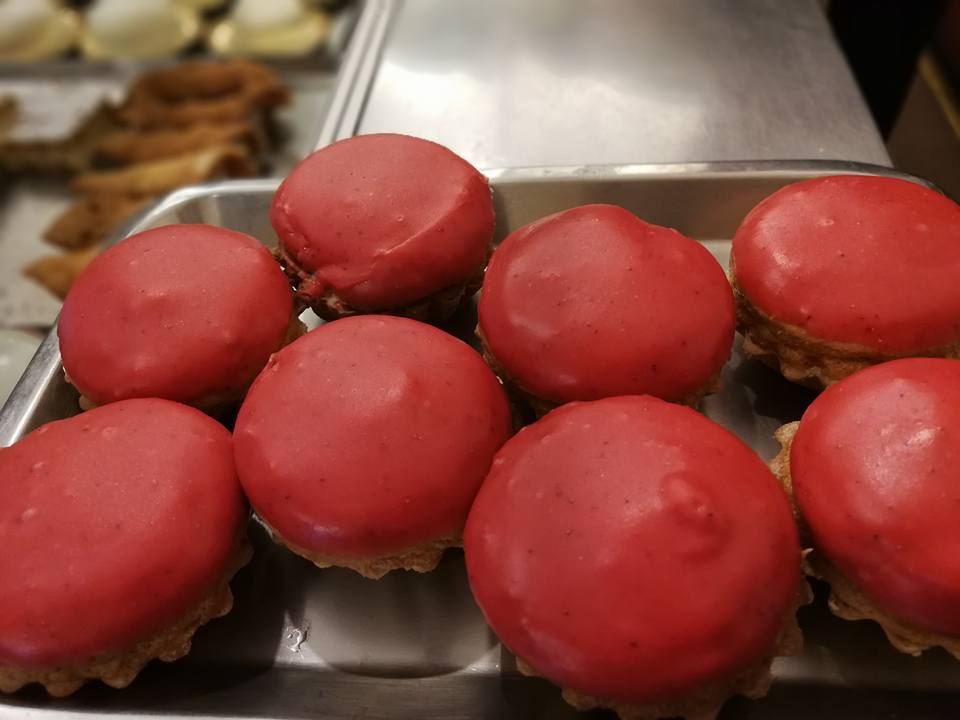
A typical sweet of Salerno is the “Cardinal’s Scazzetta” (the cardinal’s galero). It originated in 1920 in the Ancient Dolceria Pantaleone on Via Mercanti 7. Mario Pantaleone is the owner of the ancient confectionery whose structure was once a chapel dedicated to Saint Antonello, deconsecrated by Murat in 1807.
Also exquisite is the “scarola stuffed pizza” whose recipe is derived from the Campania tradition. Another Salerno specialty is the brioche with ice cream. A specialty found in many ice cream shops (Bar Nettuno, on the seafront at number 136, is recommended).
18 Where to sleep in Salerno
The city offers various accommodation options. From the most economical B&Bs and holiday homes to hotels also located on the seafront. Salerno is a city where sleeping is not expensive even if in the summer period and especially during the “Luci d’Artista” event, in the Christmas period.