

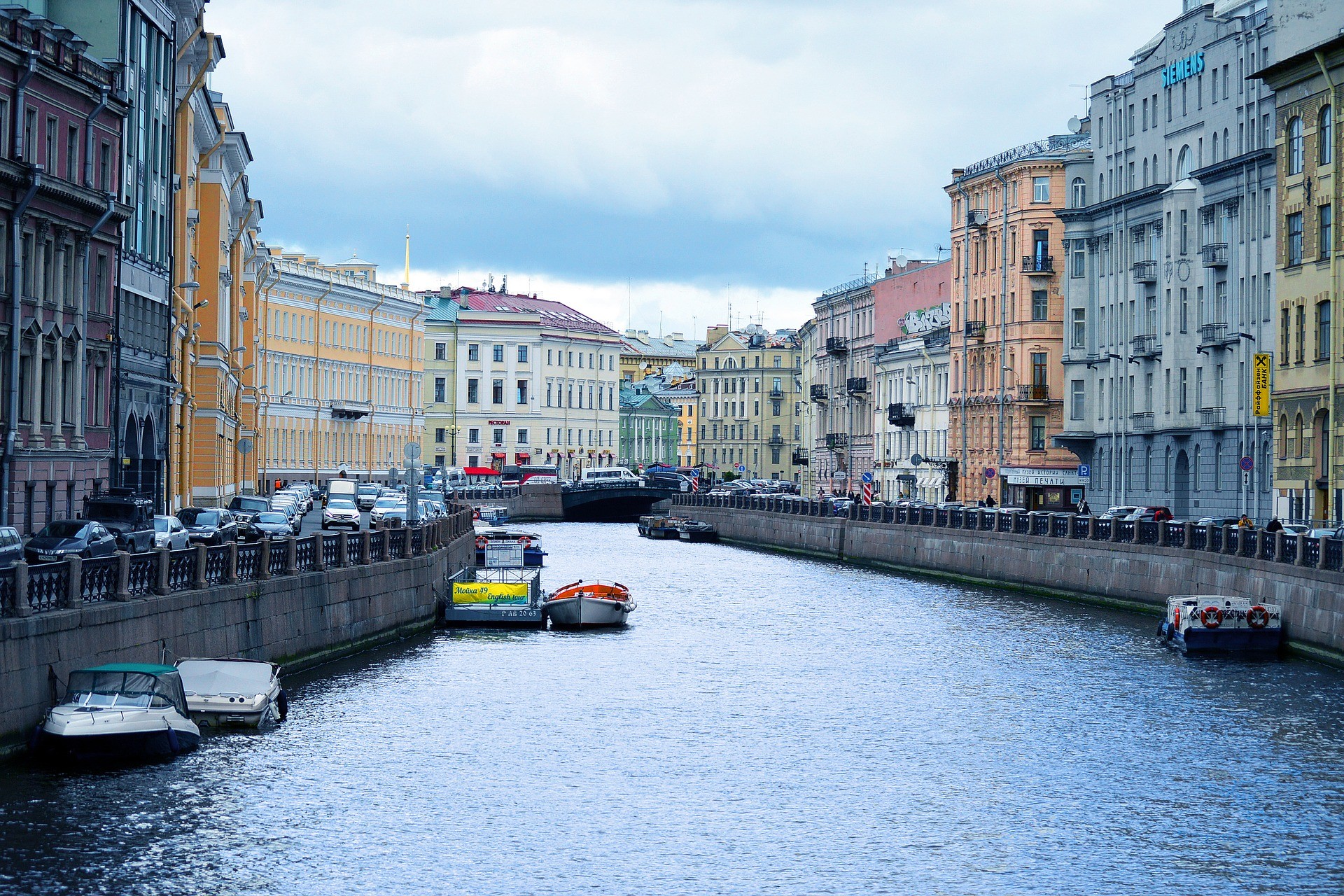

St. Petersburg, Russia. This is Russia’s second most important city after Moscow: once the residence of the tsars, it boasts an immense artistic heritage and is home to one of the world’s greatest museums. Despite its relatively young age, the city is architecturally rich and a top recommendation for art lovers. Throughout its history—marked by wars—it has changed names, from Leningrad to Petrograd, before returning to its current name, St. Petersburg.
Cultured, open, lively, and refined, St. Petersburg, the former capital of all the Russias, is like a dream set at the mouth of the Neva: a river that, before flowing into the Baltic, passes under countless bridges and nourishes the intricate network of canals that give the city its resemblance to Venice. Each spring, it offers a unique spectacle as massive blocks of ice from Lake Ladoga float toward the sea.
This spectacular city’s historic center is a UNESCO World Heritage site. Today, it shows little sign of World War II, when then-Leningrad withstood a three-year Nazi siege. St. Petersburg now offers a vibrant scene: elegant avenues, broad boulevards, palaces ranging from Baroque to Art Nouveau—many designed by Italian architects. If you’re wondering what to do in St. Petersburg and what to visit, this brief guide will give you some ideas.
10 Things to Do and See in St. Petersburg: Top Attractions
1 What to See in St. Petersburg in One Day
From world-class museums like the Hermitage—which rivals the Louvre or Uffizi for its number and quality of masterpieces—to fashionable shops, galleries, bars, and restaurants. The city is a sought-after, trendy destination.
A stroll down Nevsky Prospekt, the city’s most iconic and elegant street, immerses you in beauty and affluence. Side streets add to the charm with markets, cultural happenings, boutiques, and shopping galleries. The list of monuments to visit is almost endless, starting with the famous Hermitage—considered by many the world’s top museum. Originally established by Catherine II, Empress of all the Russias, the Hermitage has been continually expanded and now comprises a huge collection spanning every artistic era. Experts say it would take six years to see it all.

St. Petersburg: What to Do & Places to Visit
Among the many sights in St. Petersburg, here are a few you simply can’t miss from your list of “what to visit in St. Petersburg“.
2 Hermitage Museum & Winter Palace
The Hermitage in St. Petersburg is one of the world’s largest and most important museums, with over three million artworks from various historical periods. Originally the residence of the tsars, it was later converted into a museum. The Hermitage features the world’s largest and most significant painting collection: from Caravaggio and Van Gogh to Kandinsky. The Winter Palace, the city’s most iconic building and the tsars’ winter residence, is part of the museum complex.

3 Church of the Savior on Spilled Blood
No visit to St. Petersburg is complete without seeing the Church of the Savior on Spilled Blood. Built between the late 19th and early 20th centuries, it stands on the spot where Tsar Alexander II was assassinated, which gave the church its name. Marvel at its onion domes, intricate enamel decorations, and stunning mosaics and stained glass.

4 Nevsky Prospekt
Nevsky Prospekt: this is the most famous street in all of Russia. The historic center is built around this vibrant boulevard, which bustles with life by day (no matter the weather) and comes alive again at night as the heart of St. Petersburg’s nightlife.
There really are countless things to see in St. Petersburg. The city is packed with must-see landmarks, far too many to mention. We suggest taking the St. Petersburg Metro to easily travel between districts, helping you make the most of your time and visit as much as possible.

5 Other Must-See Sights in St. Petersburg
Beyond the Church of the Savior on Spilled Blood—whose domes are reflected in the Neva—you’ll find architectural gems like the St. Nicholas Cathedral and St. Isaac’s Cathedral; the Alexander Column; the Monument to Peter the Great, who founded the city in 1703 on Dekabristov Square; the Mariinsky Theatre Palace; the Russian State Museum and the Russian Ethnographic Museum; the Peter and Paul Fortress; and many more.