


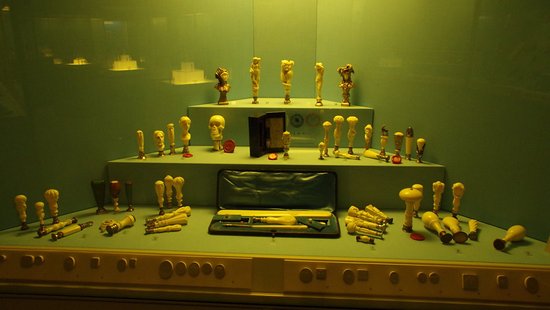


The Seal Museum was opened to the public in 2000 on the first floor of the Palazzina delle Arti, a neo-medieval building from the 1920s designed by Franco Oliva in the city center. The collection on display is the private seal collection of the couple Lilian and Euro Capellini, donated a few years ago to the Municipality of La Spezia. The Museum offers visitors the most complete sphragistic collection ever assembled. It consists of about one thousand five hundred seal matrices and impressions, dating from the 4th millennium BC to the present day.
The seals come from Mesopotamia, Egypt, Pre-Columbian America, China, Japan, and areas of Islamic influence. The most representative section of the Museum consists of European and North American material. The exhibition is organized in chronological and geographical order, starting from specimens of the 4th millennium BC, from Egypt, and then from the Roman imperial era. The period between the 18th and 19th centuries is the most important for seal production. Many were created by French masters, including the Art Nouveau crystal and glass seals made by René Lalique. There is also a presence of ecclesiastical seals from the 14th to the 19th century. In the second room, gold seals are displayed, including works by the tsar’s jeweler, Fabergé. Finally, in the third room, there are seals produced in the East from the 4th century BC to modern times.
Information about the Seal Museum
Via del Prione, 236
19100 La Spezia (La Spezia)
0187/778544
[email protected]
https://www.laspeziacultura.it
Source: MIBACT