1 Berlin Wall, Germany
The Berlin Wall, built in 1961 as an anti-fascist protective barrier, was erected to prevent people from crossing from West Berlin into East Germany.

2 Hadrian’s Wall, Great Britain
Commonly known as “Hadrian’s Wall“, this stone barrier was constructed in the 2nd century AD by the Roman emperor Hadrian to protect against invasions by the Picts.

3 Kalasasaya Wall, Bolivia
The Kalasasaya Wall stands at the archaeological site of Tiahuanaco in Bolivia. Many believe its structure served as a precise stone calendar, marking solstices, equinoxes, and the divisions between winter and summer periods.

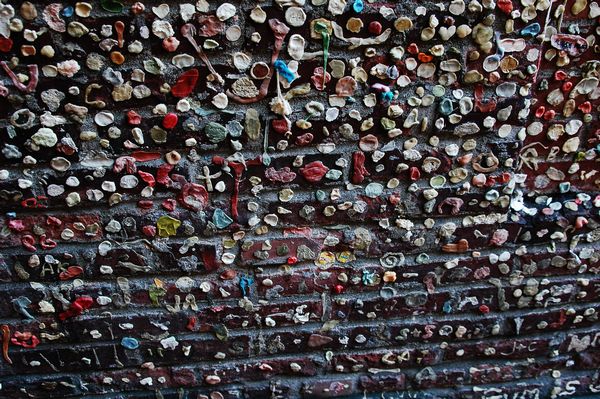
4 Gum Wall, United States
Located in Seattle, the Market Theater Gum Wall has no historic or political significance—it’s simply an alley where the walls are covered in used chewing gum.
5 Great Wall of China, China
Declared a UNESCO World Heritage site in 1987, the Great Wall of China was built under Emperor Qin Shi Huang to defend against neighboring invasions. Modern surveys estimate its total length at about 21,000 kilometers.

6 Western Wall, Palestine
Dating back to the time of the Second Temple in Jerusalem, this retaining wall is also known as the “Wailing Wall” because people observing worshipers at prayer often mistook them for weeping.

7 Mexican Border Wall, Mexico/USA
Built as a border barrier between San Diego in California and Tijucana in Mexico, this so-called “Wall of Shame” was designed to stem illegal immigration and trafficking of arms and drugs.

Frontera Playas de Tijuana, jj.figueroa, CC BY 2.0
8 Moroccan Wall, Western Sahara
Also called the Western Sahara Wall, this concrete barrier was built to shield Morocco from attacks by the Polisario Front.

The wall and moroccan soldiers at sight, Saharauiak, CC BY-SA 2.0
9 Belfast Peace Line, Northern Ireland
The Peace Lines are a series of walls in Northern Ireland designed to separate Catholic and Protestant neighborhoods.

Tourists on peace line, RobinAKirk, CC BY 2.0
10 Walls of Constantinople, Turkey
Also called the Theodosian Walls, they are regarded as some of the most imposing ancient military structures ever built. Their purpose was to defend the city of Constantinople.