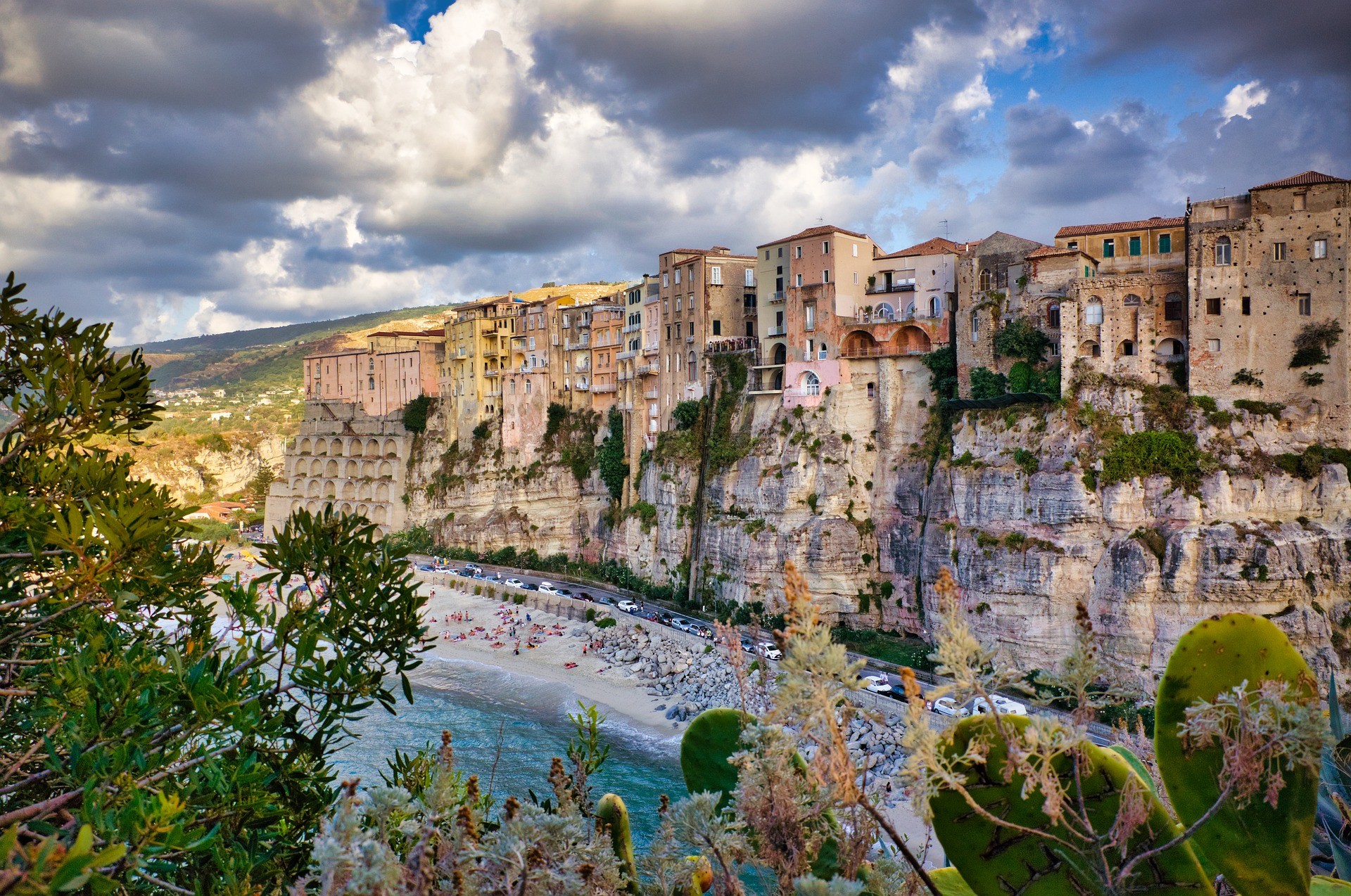

Lungo la tyrrhenian coast of Calabria, in the province of Vibo Valentia, lies Tropea, a location known for its sea and beaches. Tropea stands high along the Briatico coast and has also been awarded the title of “village of villages”. The coast of Tropea is rich in inlets and coves, as well as semi-submerged caves.
It welcomes refined tourists who love beautiful beaches and crystal-clear sea. However, Tropea also hides much more, starting from its historic center and its delicacies such as the famous “red onion of Tropea” with its long shape and sweet taste.
1 Historic Center of Tropea
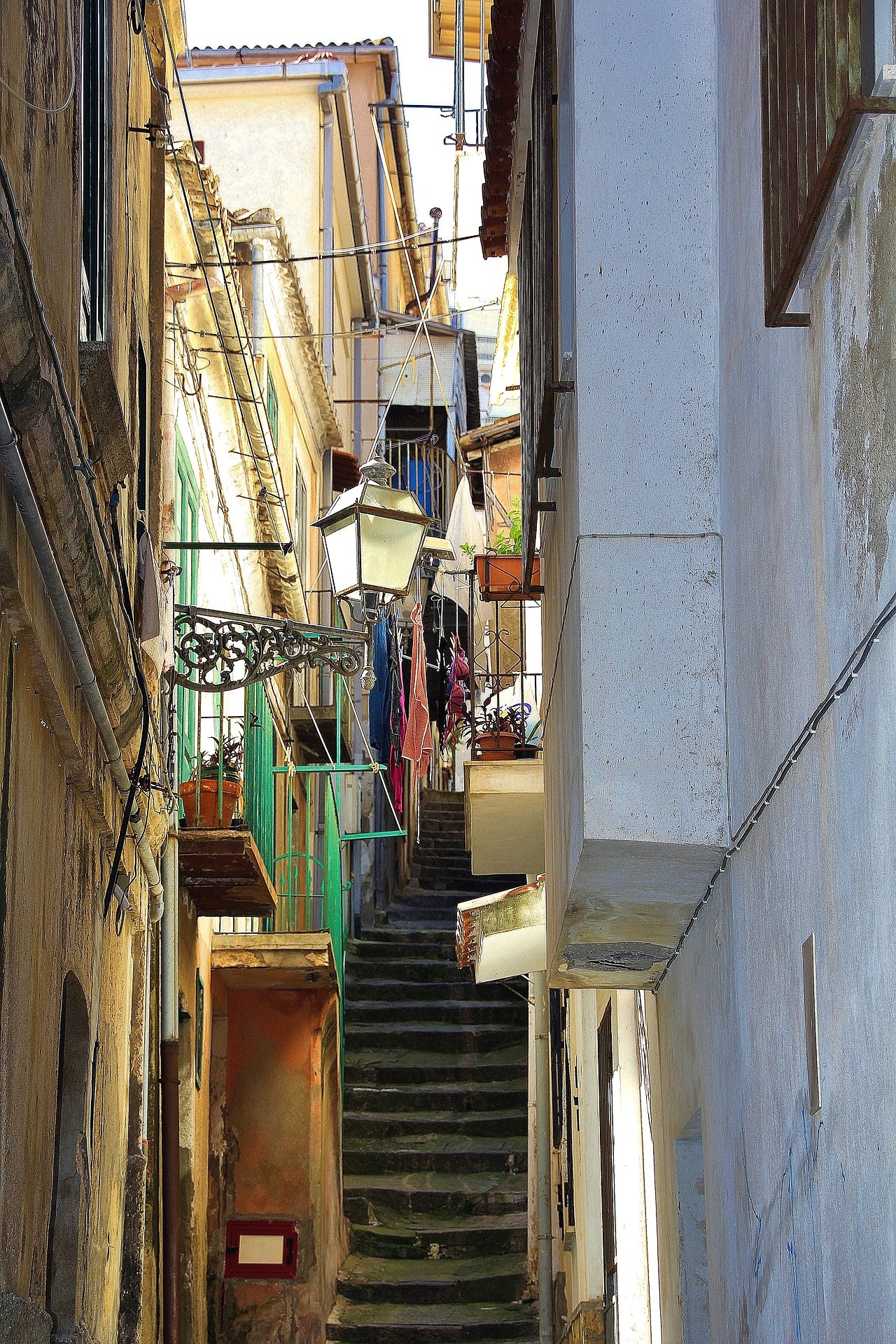
The town of Tropea is a succession of streets and alleys, and its historic center is a place you absolutely must explore. You can take advantage of a few hours to dive into the heart of the Calabrian city, which features architecture with distinctive Arab and Norman signs as well as Baroque influences. To visit the historic center of Tropea, it is advisable to park in Piazza Vittorio Veneto and then venture into Corso Vittorio Emanuele, the street where most of the shops and bars are located. From here, you can follow the various alleys that open up, eventually reaching the Cathedral, which dates back to the 1100s with a porch from a later period (around 1300). In Duomo square, there are three interesting buildings: Palazzo D’Aquino, Palazzo Zinnato, and Palazzo Barone. In Piazza d’Ercole, along the main street, is the tourist office of the Calabrian town.
2 Port of Tropea
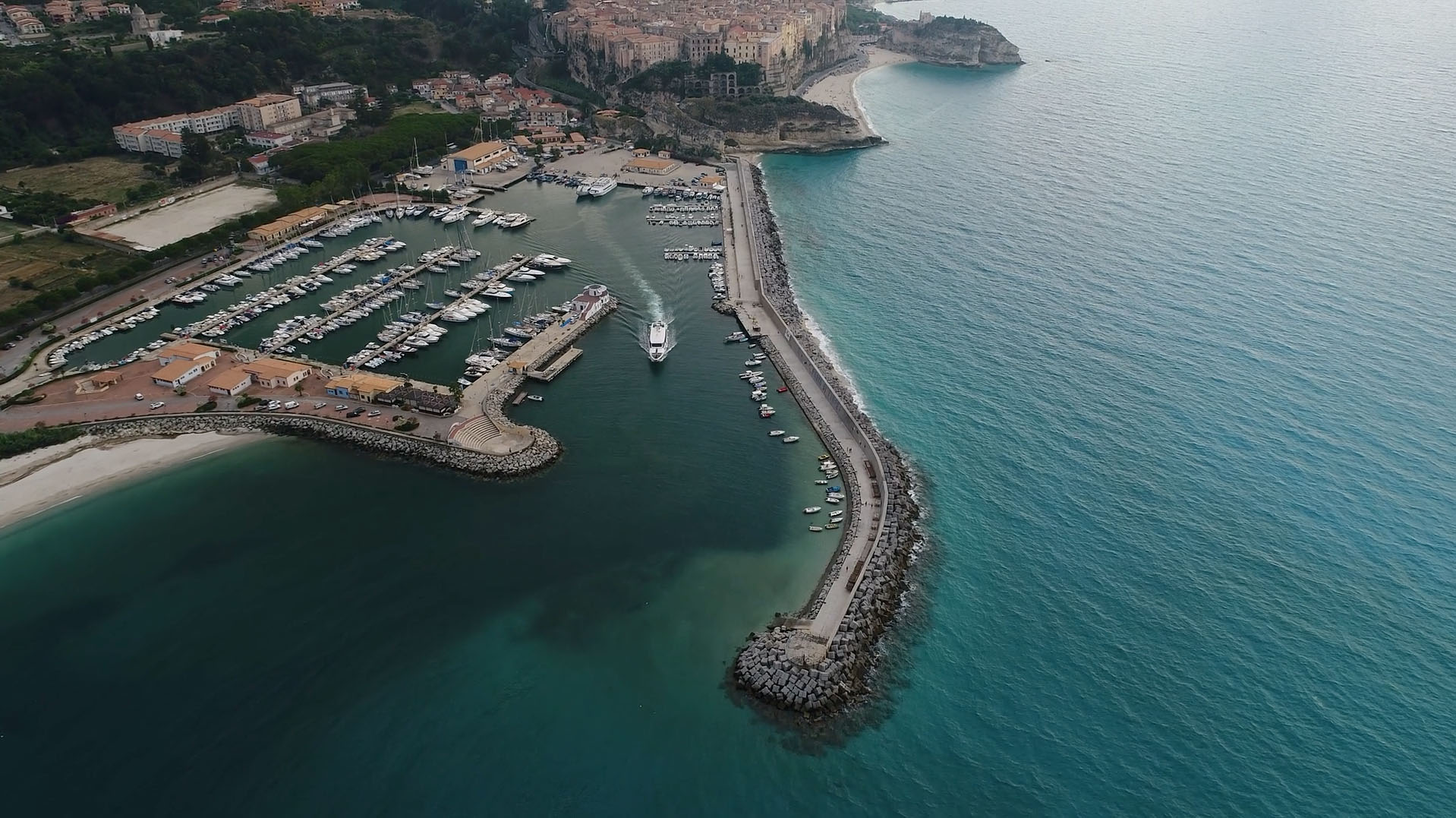
At the end of the course, in piazza Migliarese, you can enjoy the view of the port and the sandy beaches on both sides. From here you can see the Eolian Islands which you can reach also with a boat rental in Tropea, in the small harbor that has 600 boat berths and is located at the foot of the cliff.
3 Beaches of Tropea
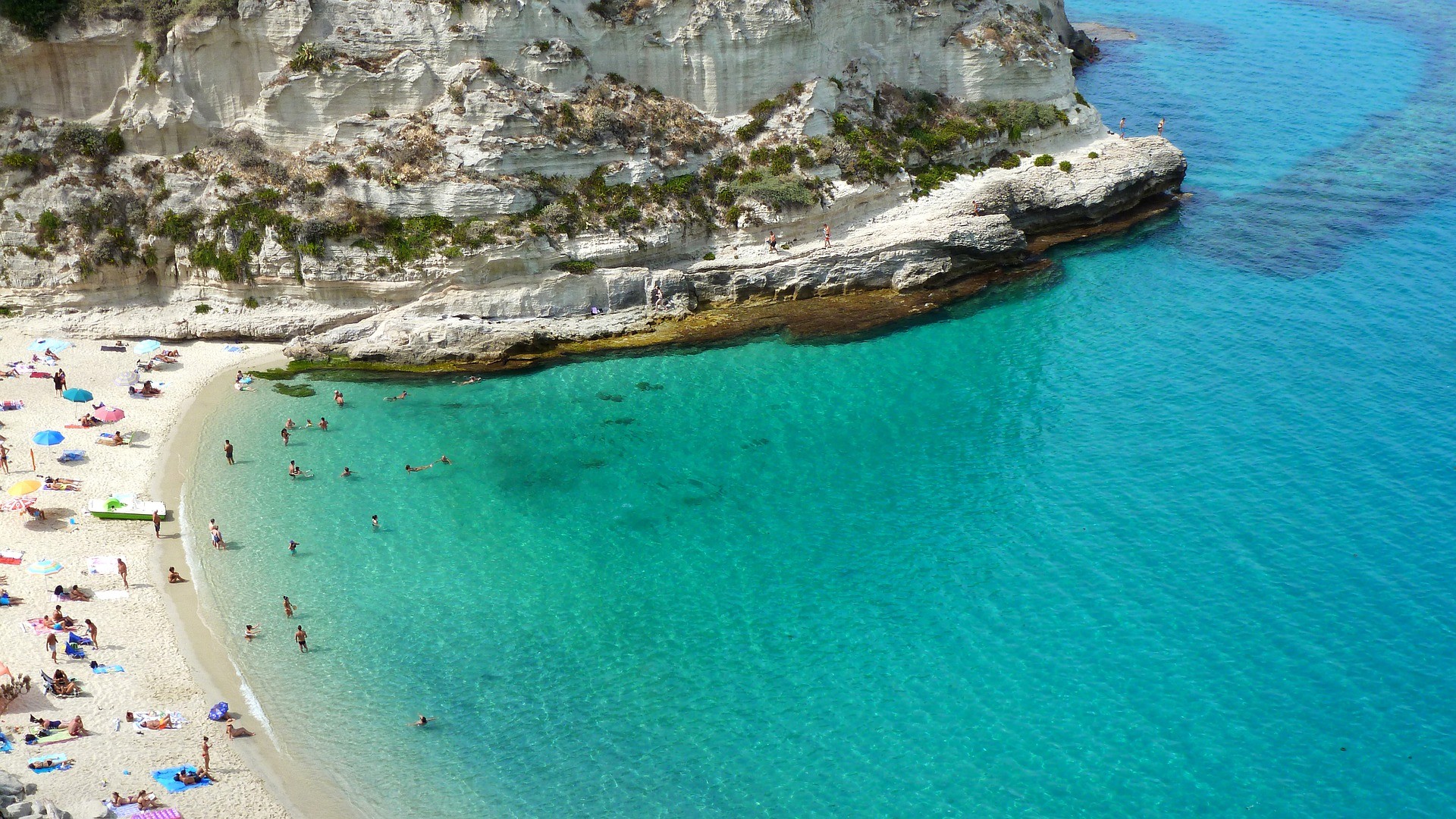
It is unquestionable that the Tyrrhenian Calabrian town is known above all for its beaches and crystal-clear sea. Along the Coast of the Gods, of which Tropea is a part, there are coves, caves, descents, and stunning viewpoints. The sea of Tropea presents shades that are sometimes blue, sometimes green, and sometimes turquoise. A variety of colors that delights anyone looking out over this place. The beaches of Tropea can all be reached via stairs and descents starting from different points in the town: Cathedral, Convent, Borough District, and Galluppi Square. Among the most beautiful and well-known beaches of Tropea are:
- Rotonda Beach, outlined by the San Leonardo rock;
- Linguata Beach;
- Convent Beach, also called Marina dell’Isola;
- Cannone Beach;
- Occhiale Beach;
- Isola Bella Beach;
- Passo Cavalieri Beach;
- Palombaro Cave.
5 Beaches near Tropea
- The beaches of Parghelia (Michelino, La Grazia, etc.) 2 km from Tropea;
- The bay of Riaci, the Petri du Mulino beach and Scalèa, 2 km from Tropea;
- The beaches of Zambrone (Paradise of the South, seafront), 5 km from Tropea;
- The Formicoli beach 4 km from Tropea;
- The Torre Marino beach 7 km from Tropea;
- The Praia i Focu beach in Capo Vaticano, 9 km from Tropea;
- The Tono beach in Capo Vaticano, 9 km from Tropea;
- The Grotticelle bay in Capo Vaticano, 10 km from Tropea;
- The Santa Maria bay in Capo Vaticano, 10 km from Tropea.
6 Cathedral of Tropea
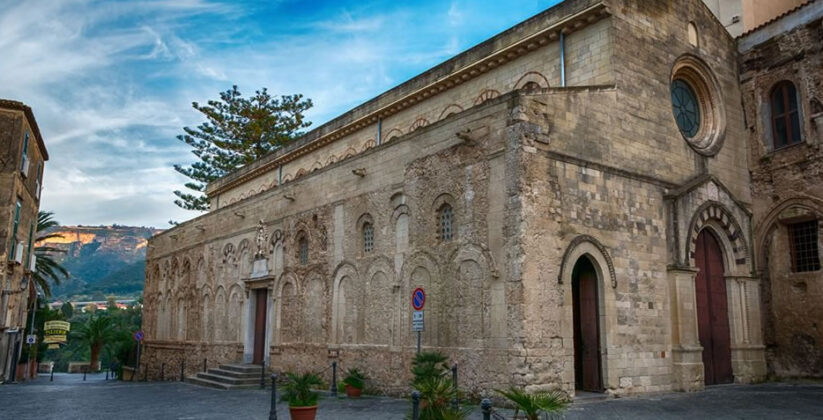
The Cathedral of Tropea is dedicated to Maria Santissima di Romania. It dates back to the Norman era although it has been repeatedly altered and restored in more recent times, particularly after the devastating earthquake of 1783. The part of the apse was rebuilt. It has three naves and several valuable works such as the Madonna del Popolo, a statue from 1555 made by Fra’ Agnolo da Montorsoli (right apse) or the Byzantine image (14th century) of the Madonna di Romania, protector of the city, framed in silver and placed on the main apse. In the left apse, instead, is the Madonna della Libertà, a votive offering from the city for the non-sale to the Ruffo princes.
7 Sanctuary of Santa Maria dell’Isola
The Sanctuary of Santa Maria dell’Isola rises on the small hill of the same name overlooking the sea. It was originally a Benedictine monastery. The sanctuary has undergone numerous transformations over time, particularly the portico, later walled up to enlarge the nave, and the upper floor to accommodate the monks. The staircase connecting the sanctuary was built around 1810. The facade was rebuilt after the 1905 earthquake. The suggestive location of the sanctuary makes this place very visited.

8 Diocesan Museum of Tropea
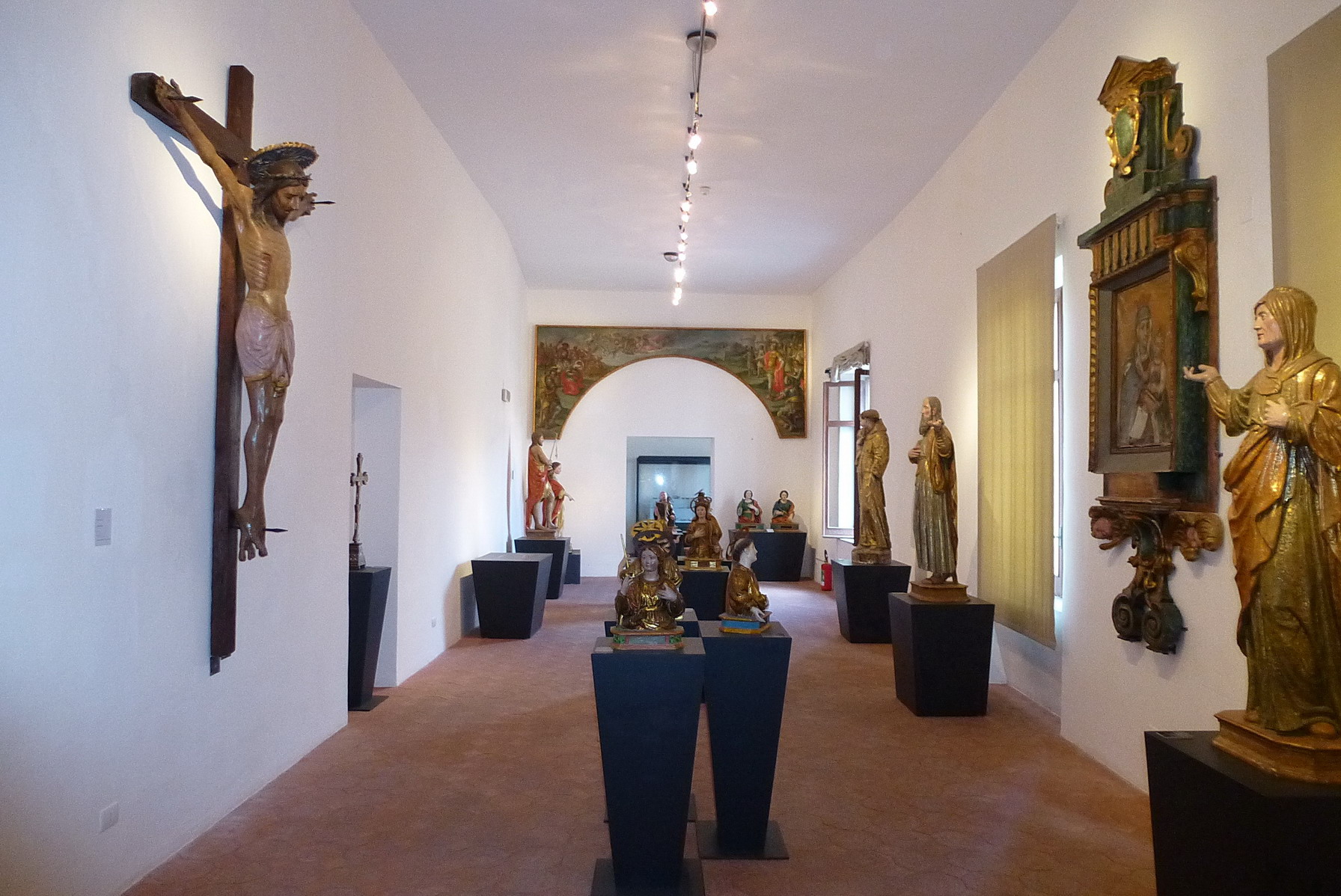
The main core of the works displayed at the Diocesan Museum of Tropea comes from the Cathedral and covers a chronological span from the 14th century to the 19th century. Among the oldest testimonies is the 15th-century pastoral staff in gilded silver and enamels and a 16th-century icon depicting the Mother of Consolation. The museum also houses a rich art gallery consisting of a group of 18th-century works of Neapolitan culture and a significant heritage of sacred silverware intended for celebration and devotion. Of particular value is the sculpture made in silver, three-dimensional and full-figure, depicting St. Domenica (1738), a work by the Neapolitan Francesco Avellino.
9 Ancient Crafts Museum of Calabria
The Ancient Crafts Museum of Calabria features a curious collection of moving figurines that reproduce ancient crafts, completed by photographic documentation of the various artisanal activities. Over 80 animated figurines, both men and women, as they might have been in the early 1900s, engaged in working the fields, milk, wool, weaving, and craftwork (potter, shoemaker, blacksmith, farrier, and stonemason). There is also a Science and Technology Exhibition section, where numerous pieces related to the most important inventions and discoveries that contributed to the technical-scientific progress of the last century are present, such as: fax machine, television, telegraph, refrigerator, sewing machine, and others.
10 What to eat and where to sleep in Tropea
When it comes to cuisine, Calabria is very rich in ingredients and delicious dishes. Tropea, moreover, has the advantage of being known for its sweet onion, red in color and elongated in shape. The Tropea onion has very ancient origins and can now be found in various Italian dishes. A Tropea onion omelette or a salad with fresh onion are just some of the many ways to enjoy it. Being a seaside town, the cuisine of Tropea draws from the Calabrian coastal cuisine, based on fish and enriched with chili pepper.
Tropea offers a wide range of hotels and non-hotel accommodations. From resorts, B&Bs, holiday homes to guesthouses and hotels. In short, there is a wealth of choice. It’s just a matter of budget and taste.