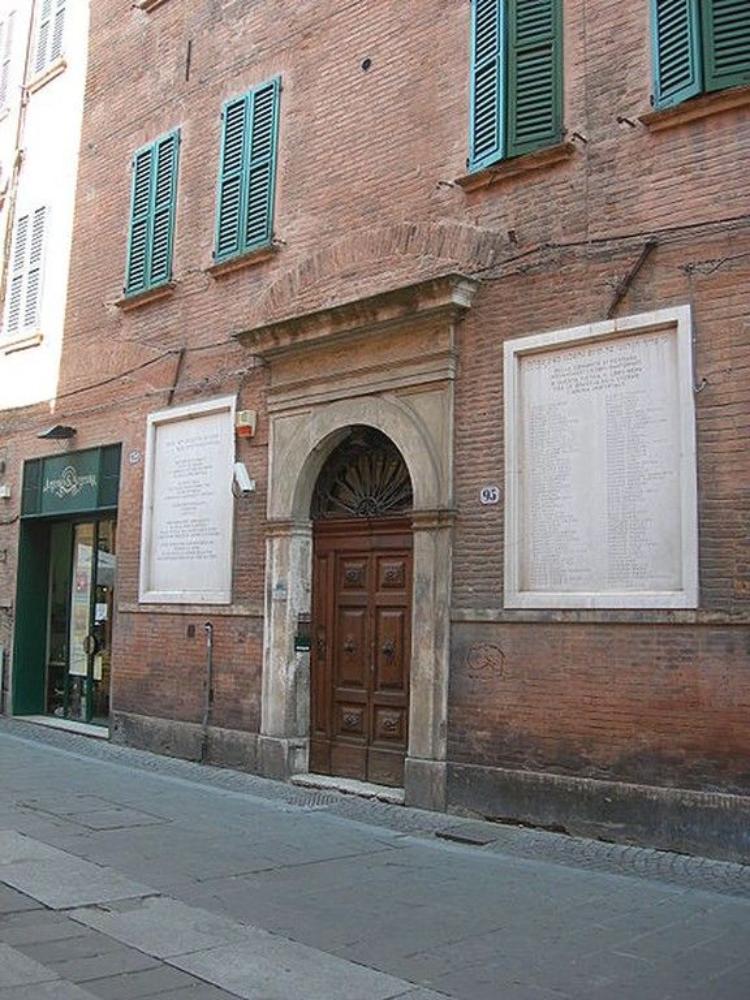


The archaeological collection of the Museo di Rimini, arranged by Luigi Tassini in 1844, and the art gallery, founded in 1924. Equipped with modern educational and informational services, the museum preserves materials from archaeological excavations and findings, demolished buildings, deposits, and donations that document the history of Rimini and its territory. The first core of the civic collections was the lapidary, arranged in 1981 in the inner courtyard of the college under the care of Giancarlo Susini and Angela Donati. It consists of 68 inscriptions from the 1st century BC to the 4th century AD.
In addition to important funerary steles and honorary bases, it includes architectural fragments and elements of notable building interest, such as the inscription concerning the paving of Rimini’s streets promoted by Gaius Caesar. The archaeological section of the Museo di Rimini unfolds starting from the basements of the Jesuit College, where in about forty rooms the entire history of Rimini is revisited, from the first evidence of Homo erectus found on Covignano hill, to the founding of Ariminum in 268 BC by the Romans and the development of the city in the republican and middle-imperial age.
The path then continues with an in-depth look at the historical evolution of Rimini in the imperial era, during the 2nd and 3rd centuries AD. To the varied and beautiful series of Roman mosaics, including the famous “boats” mosaic from the domus of Palazzo Diotallevi and the “Anubis” mosaic, are added the very rare polychrome glass paste panel depicting fish and the richest surgical kit of antiquity, both discovered in the nearby Domus of the Surgeon which, recently museumized, constitutes the natural external continuation of the museum itinerary.
The journey of the Rimini Museum
The museum route unfolds in about seventy rooms spread over three floors. The historical-artistic section of the Rimini Museum, with around five hundred works on display, allows a comprehensive visit to the Rimini artistic journey from the 14th to the 19th century, beginning with the famous 14th-century school represented by Giuliano and Giovanni da Rimini and their pupils. The Malatesta period is evoked by the famous Pietà by Giovanni Bellini (1460) and the equally well-known altarpiece of St. Vincent Ferrer by Ghirlandaio (1494), followed by works of Benedetto and Bartolomeo Coda, (such as the altarpiece by Benedetto Coda Madonna with Child and Saints, and The Last Supper by Bartolomeo Coda) Bagnacavallo, Mastelletta, Salvator Rosa, Guercino, Cagnacci, Maffei, Piazzetta, Marchetti, Pittoni, and Bigari.
A section of the Rimini Museum is dedicated to the 19th-century Rimini painter Guglielmo Bilancioni; two rooms are reserved for the drawings, paintings, and graphic works of René Gruau, an artist who worked with the greatest tailors including Dior, Chanel, Givenchy, and Balenciaga. Among the testimonies of local history are also notable the nine tapestries that adorned the municipal halls, woven in Antwerp in the 18th century on cartoons by A. van Diepenberk; the famous “Saracen” used in 17th-century jousts; and the series of coats of arms (16th-17th centuries) from the most important city palaces along with other stone fragments.
The importance of the city of Ariminum, the earliest Roman foundation in Emilia-Romagna, is perfectly highlighted in the archaeological section of the Rimini Museum by a succession of themes that provide a comprehensive presentation of the city, its relations with the mother city Rome, its political-social organization, its flourishing economy, and the equally flourishing productive activities.
An extraordinary selection of materials from the Rimini Museum documents its forms of craftsmanship, recalls domestic environments with the related furnishings, equipment, and precious utensils presented through objects from the wealthy city domus, exalts the relationships maintained by the port city with the sea and the trade with the East and Africa, reconstructs forms of public and private worship, and presents some major urban architectural evidence like the amphitheater.
Finally, an absolutely prominent place is deserved by the reconstructions related to the Surgeon’s Domus, of which facsimiles of some rooms are presented to the public: the medical office, the bedroom, the dining room with furniture, flooring, decorations, and furnishings confirmed during the archaeological excavation. The domus was indeed equipped with precious apparatus such as mosaics, plasters, and colorful and precious wall decorations. As is known, the investigations conducted there also allowed the recovery of the surgeon’s nearly complete professional kit, which represents a fundamental material and cultural testimony of medical practice in antiquity. Overall, the domus constitutes a rare case of a complex ambulatory that combines the doctor’s residence with rooms intended for reception, consultation, and patient care, as well as spaces used for preparing medicines. Source: MIBACT
Information about the Rimini City Museum
Via Tonini, 1, 47921
Rimini
Tel.054121482
Email: [email protected]
Hours: Tuesday to Saturday 8:30 am-1 pm and 4 pm-7 pm Sunday and holidays 10 am-12:30 pm and 3 pm-7 pm