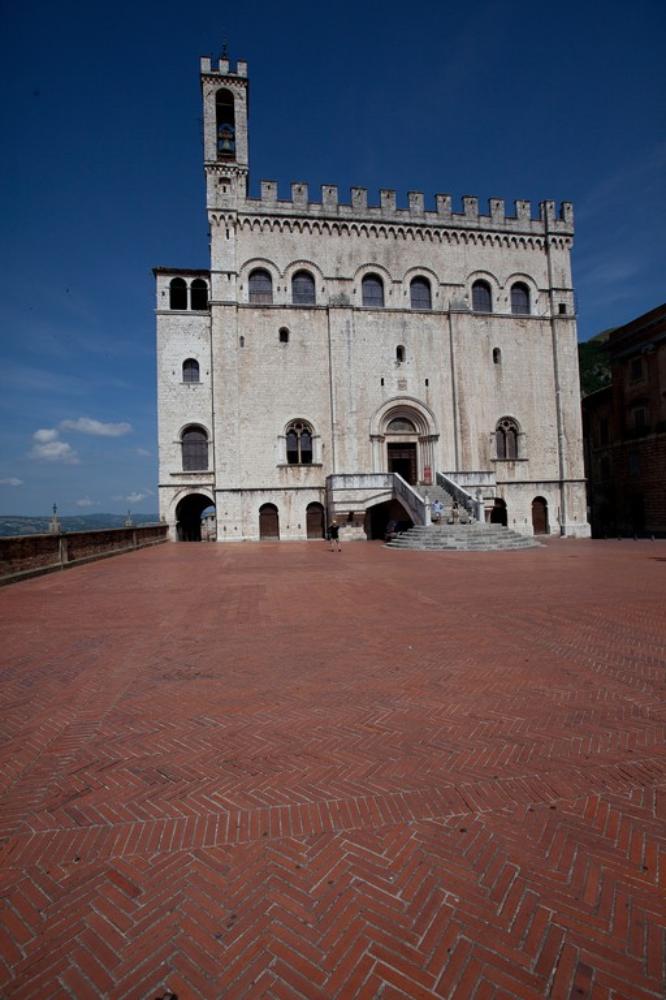


Палаццо деи Консоли, хорошо видимый издалека, расположен в историческом центре Губбио. Фасад здания выходит на Пьяцца Гранде — висячую террасу, которая была политическим сердцем города в XIV веке.
В здании размещается Гражданский музей, где можно увидеть Евгубинские таблицы — ценное бронзовое свидетельство умбрского языка.
Дворец был построен между 1332 и 1349 годами по проекту Анджело да Орвието (упомянутого в надписи над входной аркой) при участии Маттео ди Джованнелло, прозванного Гаттапоне.
План здания прямоугольный, а высокая готическая постройка подчеркивается вертикальными колоннами, разделяющими фасад на три отдельные части.
Первый этаж занимает портал, к которому ведет веерообразная лестница; в тимпане находится фреска Бернардино ди Нанни д’Эуджениа с Мадонной с Младенцем между Иоанном Крестителем и святым Убальдо (1495). Картина была значительно переделана в XVI веке Бенедетто Нуччи. По обе стороны от портала расположены два симметрично размещённых бифорных окна.
На втором этаже шесть полностью симметричных окон, над которыми проходит зубчатый карниз, объединяющий арки.
Дворец венчают зубцы, украшенные стрельчатыми арками; колокольня возвышается с левой стороны.
Правая сторона и задняя часть, видимые с Виа деи Консоли, сохраняют формы, очень схожие с фасадом. С левой стороны было пристроено ещё одно строение — портик, спускающийся к Виа Бальдассини.
Весь второй этаж занимает зал Аренго, покрытый великолепными сводами, в котором также размещена часть городской коллекции каменных памятников.
Палаццо деи Консоли, как и незавершённый Палаццо Преторио, был построен в первой половине XIV века в период бурного расширения города. Действительно, возникла необходимость в общественном здании, достойном экономической и политической мощи, которой Губбио тогда обладал в регионе. Поэтому была оставлена прежняя Platea Communis в верхней части города, а немного ниже создана великолепная висячая площадь — центр, который должен был объединять все районы, но в то же время находиться вне их границ, чтобы стать нейтральной связующей точкой в политической жизни.
Информация о Палаццо деи Консоли
Piazza Grande, 1
06024 Gubbio (Perugia)
0759274298
[email protected]
https://www.comune.gubbio.pg.it
Источник: MIBACT