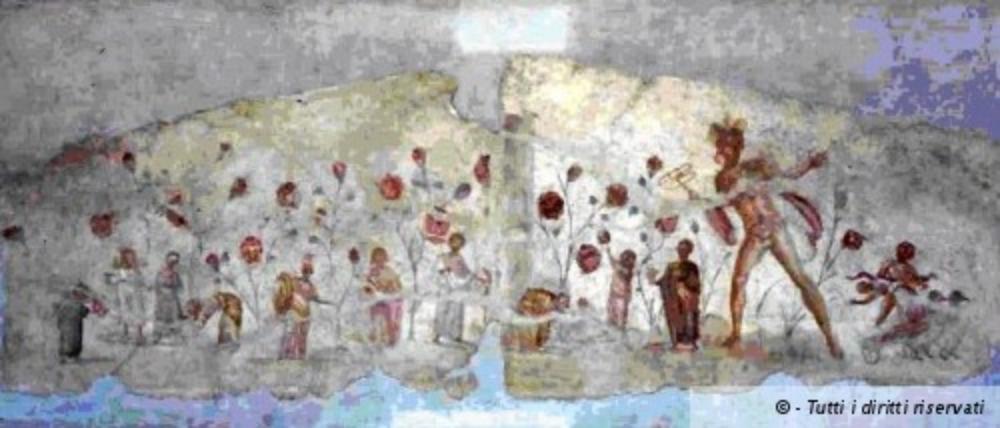
E’ ormai accertata l’identificazione di Castel d’Asso con l’antica Axia citata da Cicerone nell’orazione Pro Caecina. La città, già esistente in epoca arcaica, come dimostra il rinvenimento di alcune terrecotte architettoniche databili al 550-530 a. C., che richiamano gli analoghi e ben più noti esemplari di lastre rinvenute ad Acquarossa, fiorì soprattutto a partire dal IV secolo a. C., come centro minore del territorio tarquiniese. Nel III a. C. viene sottomessa, come tutta l’area, al dominio romano, ma, grazie alla sua posizione tra la via Clodia e la via Cassia, continua a godere di una certa prosperità.
From the early imperial age the decline begins, until the abandonment of the site in late antiquity, to be inhabited again in the early Middle Ages. Along the north side of the valley in front of the medieval castle there is a considerable number of tombs with a façade on three levels; the necropolis was in use from the second half of the 4th to the middle of the 2nd century B.C. Among the most famous are the Large Tomb, so called for its large proportions and famous for the exceptional three entrance doors; with a roof externally carved with tiles on the under-façade space, the Orioli tomb, of the half-die type with under-façade space, datable between the mid-3rd century B.C. and the mid-2nd century B.C. or the Tetnie tomb, a family known in Vulci.
Information about the rock-cut Necropolis of Castel d’Asso
Directions from S.P. Tuscanese,
01010 Viterbo (Viterbo)
https://www.provincia.vt.it/cultura/etruschi/homepage.html
Source: MIBACT