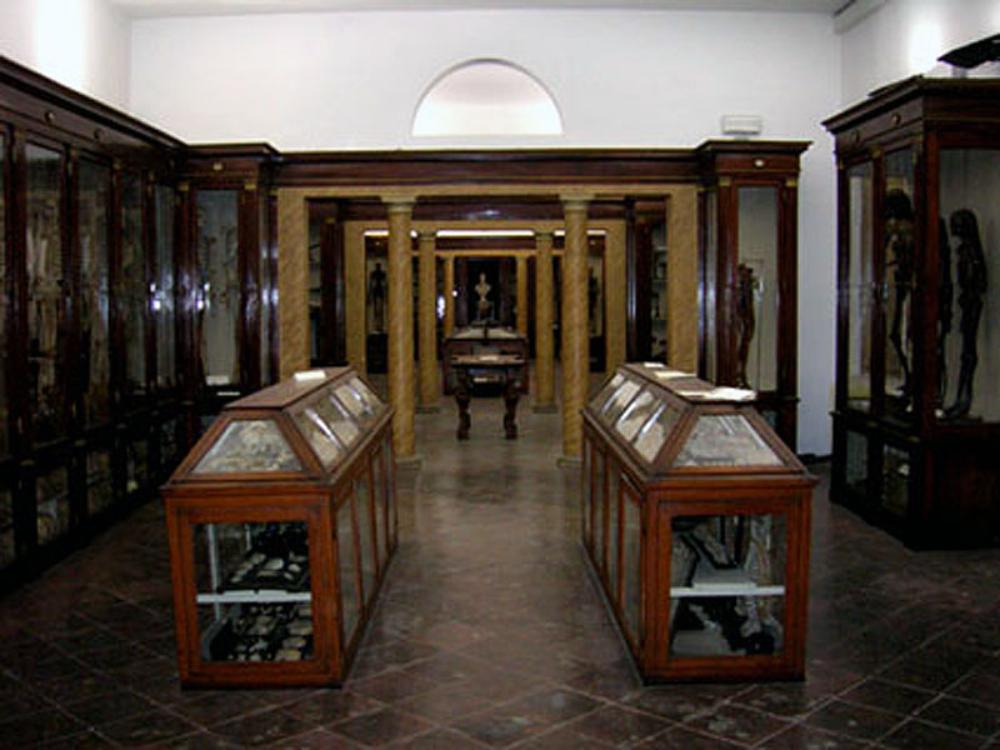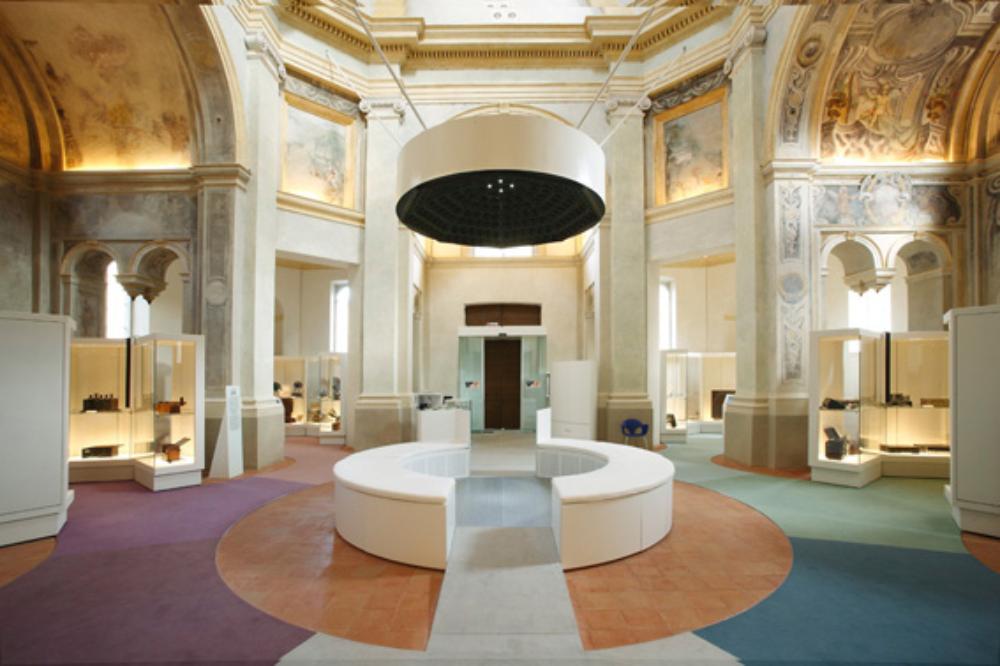


Istituted in 1974 as the Museum of Romagnola Peasant Civilization, it owes its origin to the deposit made by the local artist Mario Bocchini of a large collection of ethnographic materials, subsequently acquired by the municipal administration of Cesena, arranged inside the Femmina Tower of the Malatesta Fortress. Until the mid-1980s, the museum preserved the initial setup in a reconstructive form of the places and functions of peasant work, largely in line with the cultural orientations of the Cesena collector. A general reorganization of the various collections then began, aimed at representing, also with appropriate educational supports, the different production cycles such as those of wheat, corn, and hemp. The permanent exhibition on vine and wine, on the top floor of the tower, is particularly effective. The museum’s heritage, supplemented by donations from local collectors, consists of over two thousand objects mostly from the Cesena area and other parts of Romagna, chronologically attributable to the late last century and the first half of the twentieth century. Among the most interesting ancient ‘pieces’ are a Roman-era stone grain beater, an 18th-century grape press, and votive ceramics from the 17th century to the last century. Notable is the exhibition of images, drawings, paintings, and photographs.
Information about the Museum of Agricultural History
Via Ordelaffi, 8,
47521 Cesena (Forlì-Cesena)
0547355727
iat@comune.cesena.fc.it
https://www.cesenacultura.it
Source: MIBACT