


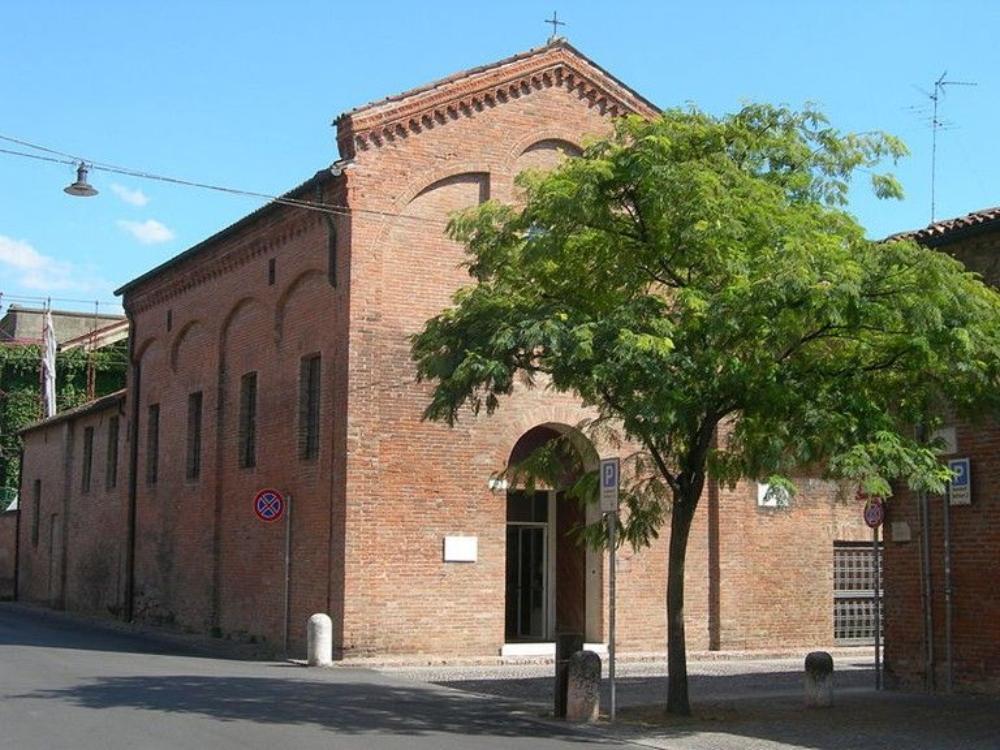

Costituisce the oldest museum institution in Ferrara and was inaugurated in 1735 at Palazzo Paradiso by the will of the Marquis Ercole Bevilacqua. Since 1984 it has been located in the former Church of Santa Libera. The original core of the collection, composed of ancient marbles scattered across the city and territory, and sometimes reused in places of worship, as in the case of the sarcophagus of Annia Faustina coming from the church of S. Stefano, has been enriched over time following the 18th-century donations of Baruffaldi, Scalabrini, Riminaldi and thanks to more recent acquisitions, including the sarcophagus of Aurelia Eutychia, certainly one of the most significant examples of the Cisalpine region. In addition to local materials, inscribed marbles of various origins are added, an eloquent sign of the collecting taste of the House of Este. The exhibition route opens with the inscriptions donated by Ercole d’Este and Ercole Bevilacqua, respectively the stele of the Caesii and that of Antonia Valeria. It continues with a topographical itinerary made up of funerary monuments, stelae, sarcophagi, and boundary stones. Among the displayed stone materials are the sarcophagus of the Aurelii, returned from Voghenza, the altar of Fronto, and the boundary stone of Octavius, coming from the Po di Primaro. Finally, the documents referring to the Po di Volano and the core of the stelae of Gambulaga are interesting.
Information about Musei civici di arte antica – Lapidario civico
Via Campo Sabbionario,1,
44121 Ferrara (Ferrara)
0532 641 78
arteantica@comune.fe.it
Source: MIBACT