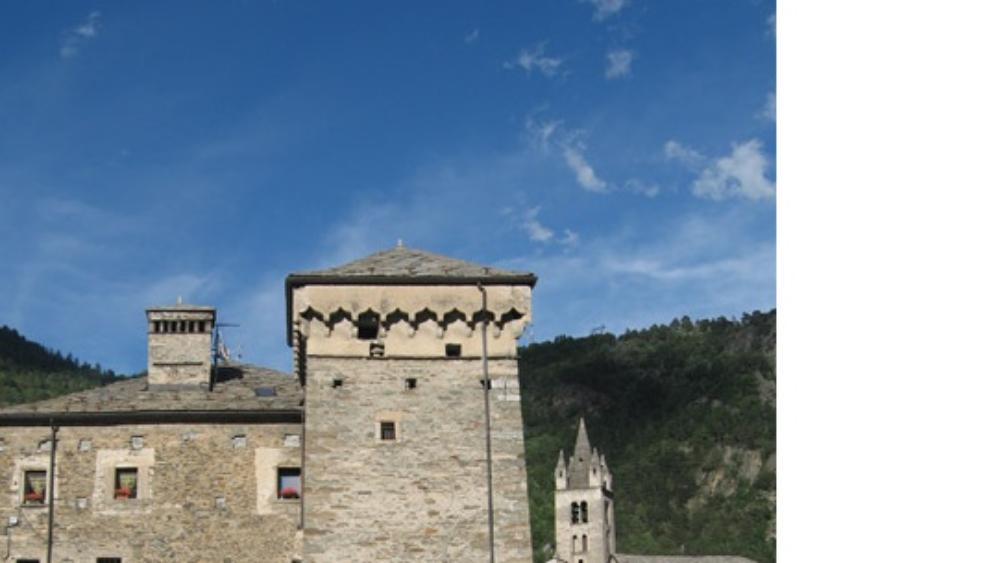


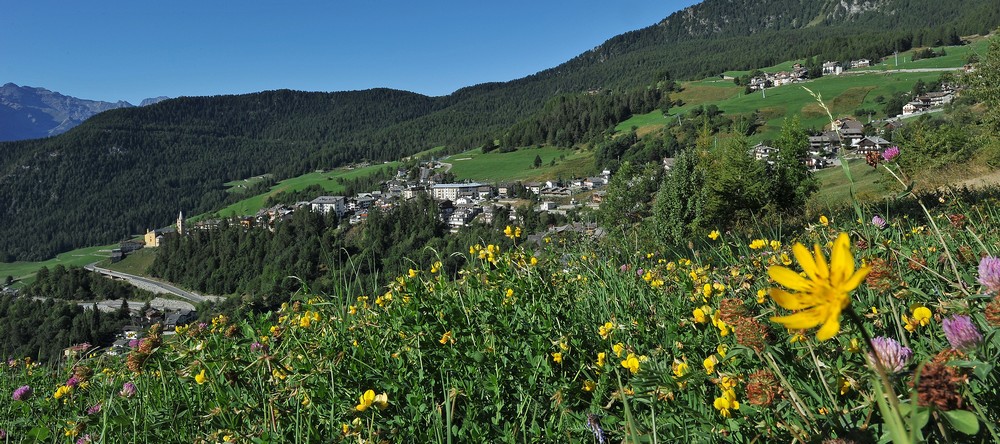

The village of Torgnon is located at 1,489 meters above sea level and consists of 22 hamlets scattered between the valley and high positions. It is one of the places in the Aosta Valley that experiences tourism both in summer and winter thanks to winter sports. The area’s accommodation facilities are typical of mountain areas. They range from luxurious hotels with an attached SPA to rural farm stays, from family B&Bs to apartments for families. The cuisine of Torgnon features traditional dishes such as the well-known cold cuts to the delicious “Valdostane tiles”.
What to visit in Torgnon
The Petit Monde Museum of Torgnon
Although Torgnon is primarily chosen by snow enthusiasts or summer hikers, the town also has unique attractions such as the “Petit Monde Museum”. It is a rural village with houses from the 15th to the 18th century completely restored. In these villages there was a school, cheese was produced, cultivation took place, clothes were sewn, meat was processed, bread was baked, and animals were raised. The museum, which is almost entirely outdoors, is open every day in July and August, while during other periods it can only be visited by appointment (tel. 0166/540213 or email: biblioteca@comune.torgnon.ao.it). To reach the “Petit Monde Museum,” simply exit at the Chatillon-Saint-Vincent tollbooth and head towards Cervinia). Then leave the regional road at Antey-Saint-André and continue towards Torgnon and the panoramic road.
Museum of Sacred Art
Next to the parish church, in the chapel of the Immaculate Conception, is the Museum of Sacred Art which houses a Christ at the column from the mid-1300s, a statue of Saint James (not in very good condition) dating back to the 1400s, a chalice holder from the 1300s. Inside the museum, there are also statues of the Madonna with Child and Saint Martin.
Church of Saint Martin
This is the parish church of Torgnon which dates back to around the 15th century although the current structure is from the 19th century. The style of the church, dedicated to Saint Martin, is neo-Gothic and it features in its main nave a large crucifix of German school dating back to the 16th century.