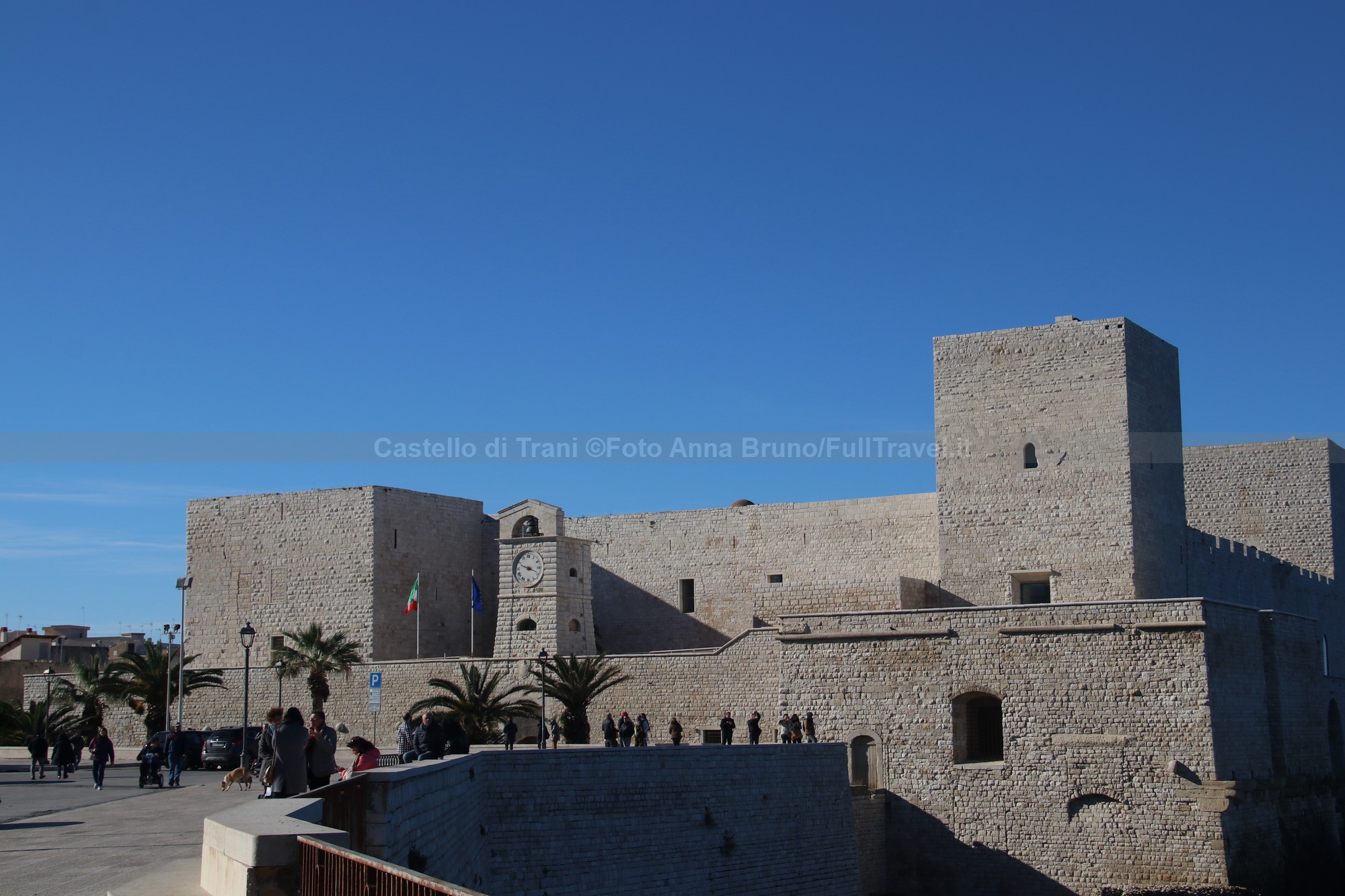


The central courtyard of the Castle of Trani preserves traces of a loggia, demolished in the 16th century, where some carved corbels, depicting Adam and Eve and the Annunciation, proclaim the impartiality of imperial justice towards the subjects of Trani, Jews and Christians.
In 1533 the castle was adapted by Emperor Charles V for the use of firearms, fortifying the southern front according to the design of the Spaniard Fernando de Alarcon.
Seat of the Sacred Royal Audience of the Land of Bari from 1586 to 1677, it was used as a prison from the mid-1800s until 1974.