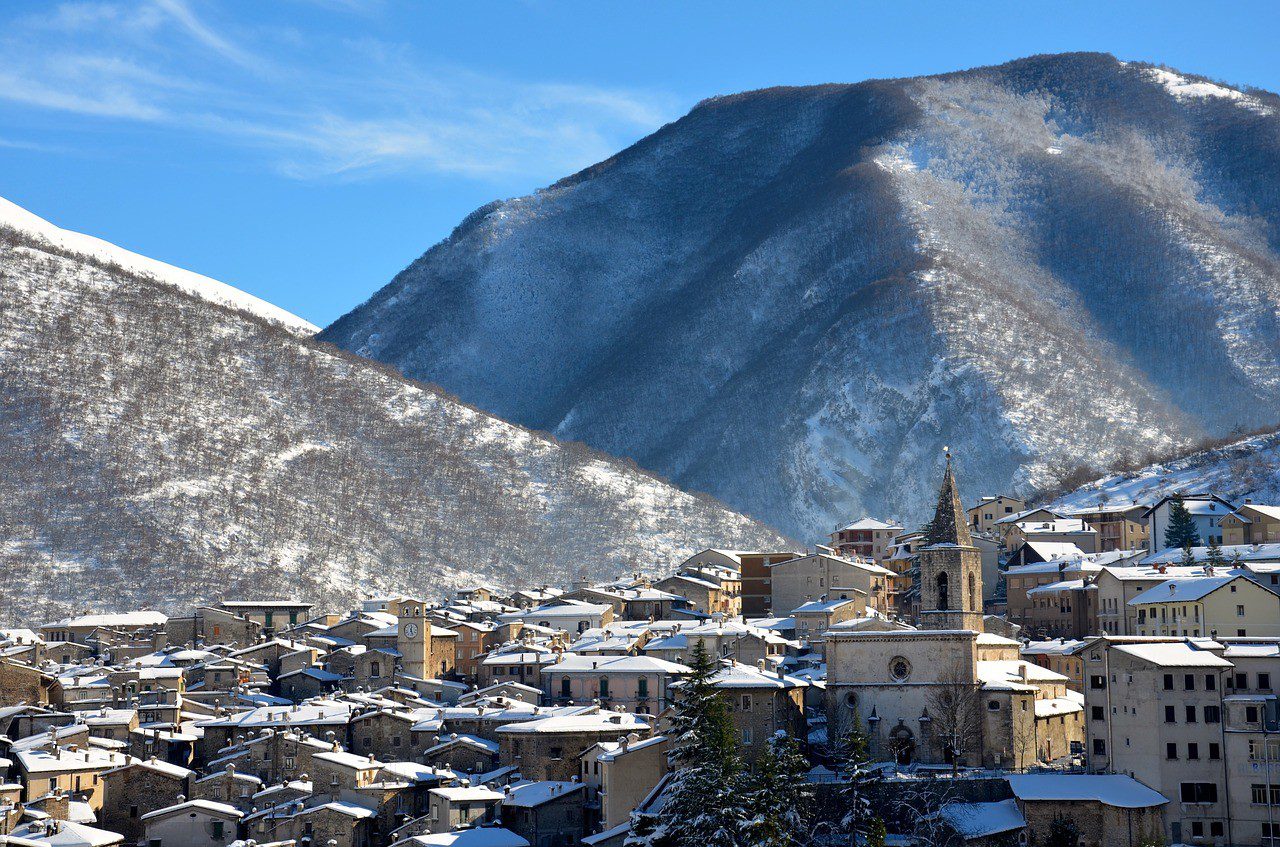
Le montagne con le cime innevate d’estate si innalzano per oltre 2.500 m, su borghi medievali da cartolina. Un piccolo paradiso per gli amanti della natura, della pace e dell’escursionismo. Ma l’Abruzzo è una destinazione che farà innamorare anche gli amanti del mare: 130 km di litorali sabbiosi e soleggiati rendono questa regione affollatissima in alta stagione. Per non parlare delle varie città d’arte e di storia come Sulmona, L’Aquila, Vasto, Chieti o Teramo.
Non dimentichiamo i borghi, l’Abruzzo ne conta 23 classificati tra i più belli d’Italia: Castel del Monte, Opi, Pacentro, Scanno, Villalago, Anversa Degli Abruzzi, Civitella del Tronto, Castelli, Pietracamela e Rocca San Giovanni sono piccoli paesi che non lasciano indifferenti.
La tradizione gastronomica è poi la ciliegina sulla torta di un paese che ha trasformato gli arrosticini abruzzesi di pecora in un simbolo nazionale.
Nel gennaio 2016, l’HuffingtonPost ha citato l’Abruzzo nel suo articolo “I 12 migliori posti al mondo dove vivere o andare in pensione”. Se per ora devi accontentarti di un viaggio, ecco i luoghi imperdibili in Abruzzo.
Mountain and ecotourism
With about twenty locations equipped for winter sports, Abruzzo is a tourist destination where it is nice to spend your holidays outdoors.
Abruzzo is one of the greenest regions in Europe and can boast three national parks on its territory: the Abruzzo, Lazio and Molise National Park, the Gran Sasso and Monti della Laga National Park, and the Maiella National Park. Other locations allow for cycling, trekking, horseback riding, canoeing, rafting, birdwatching such as in the Sirente Velino regional park as well as in dozens of protected areas.
Discover the locations of Scanno, Ovindoli, Pescasseroli, Tagliacozzo, Roccaraso, Campo Imperatore, Campo Felice, Rivisondoli, Pescocostanzo or Prati di Tivo, perched more than 1,000 meters above sea level, if you want to practice alpine skiing, snowboarding, cross-country skiing, or go hiking in the Apennines. Abruzzo can offer scenery and fun comparable to any other region facing the Alps. The Gran Sasso massif is one of the most popular destinations for mountain lovers, who can reach the spectacular Corno Grande (2,912 meters above sea level). Other magnificent places are the artificial lake of Campotosto (1,313 meters) and Campo Imperatore, a vast plateau at 1,800 meters altitude.
In addition to the ski resorts, we can mention San Giacomo (Valle Castellana), Passolanciano-Majelletta, Prato Selva, Marsia, Campo Rotondo, Campo di Giove, Passo San Leonardo, Passo Godi, Pizzoferrato, and Gamberale, famous for their hiking trails.
On the Adriatic coast
Scattered along the 130 kilometers of coast, many Abruzzo seaside resorts enjoy national fame: we can mention Montesilvano north of Pescara, Pineto, Roseto degli Abruzzi, Giulianova, Alba Adriatica, Tortoreto, Francavilla al Mare, Ortona, Vasto, Martinsicuro and Silvi Marina.
But it is perhaps further south, before reaching Molise, that the landscape becomes even more picturesque and wild. The Trabocchi coast in the province of Chieti stretches for 70 km from Ortona to San Salvo. It is remarkable because you can admire, as the name suggests, the famous trabocchi, ancient platforms used for fishing, which tell the story of a people. Some are still in use, while others have been converted into fish restaurants. One thing is certain, the Abruzzo Adriatic coast is generally less built up than it can be further north in Emilia-Romagna.
Art, History and Religion
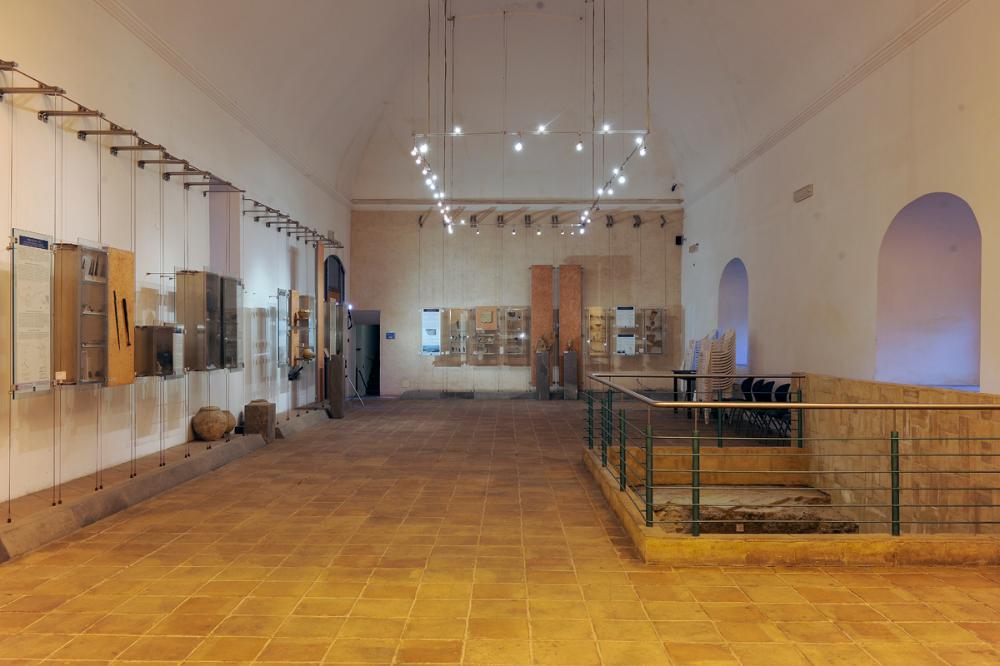
The fortress of Civitella is the most important and visited historical monument in the region. We must also mention the city of Chieti for its superb Roman ruins, its churches and museums (such as the National Archaeological Museum of Abruzzo: do not leave Abruzzo without seeing the Warrior of Capestrano), but also Teramo, Vasto, Lanciano, Manoppello, Ortona, Atri, Giulianova, Sulmona, L’Aquila and many towns and villages with interesting monuments, museums, castles and churches. Loreto Aprutino still gives the sensation of a medieval village, with buildings of remarkable architectural value. But it is the church of Santa Maria in Piano, near Loreto, that maintains the most important artistic heritage, as one of the most interesting examples of 15th century art in Abruzzo.
The richness of Abruzzo in terms of history and faith translates into a rich array of religious feasts and festivals. Every month of the year there are celebrations, organized throughout Abruzzo and the fantastic natural setting is a perfect backdrop for these events.