


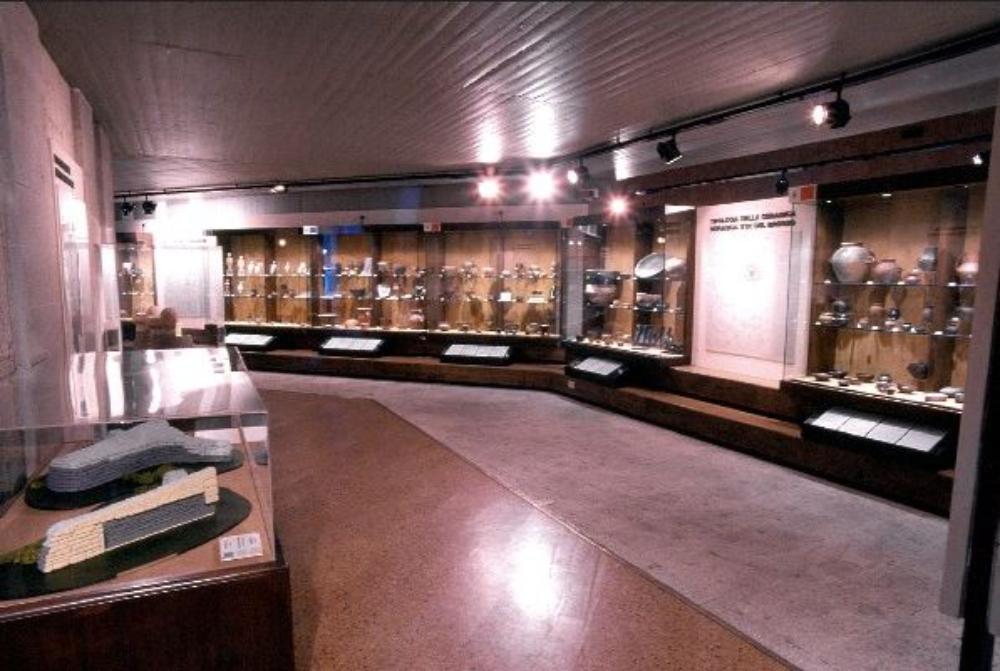

I piani superiori del National Archaeological Museum of Cagliari display materials according to topographical criteria, illustrating the most important archaeological sites present in the provinces of Cagliari and Oristano.
The chronological route begins with the exhibition of artifacts related to the cultures of the Neolithic, Eneolithic, and early Bronze Age, coming from some of the main sites, such as the rock shelter of Su Carroppu di Sirri (Carbonia) or the residential and funerary settlement of Cuccuru s’Arriu (Cabras), with stone statuettes of female deities; numerous materials are related to the Eneolithic cultures of Ozieri, Filigosa, Monte Claro, Abealzu, the Bell Beaker culture.
Of exceptional importance and interest is the collection of small bronzes that present a rich variety of depictions: warriors armed with bow or sword, chieftains, female deities, offering figures, women and men at work, but also animal representations, among which the bull and the deer prevail. They testify to the social and religious public organization as well as the daily life of the Nuragic civilization.
The subsequent phases of Phoenician colonization and Punic domination, between the 8th and 3rd centuries BC, are well represented by the reconstruction of the Tofet of Tharros (Cabras) and by materials coming from the sites of Nora (Pula), Monte Sirai (Carbonia), and Sant’Antioco.
From the Roman era are the black-gloss ceramics, thin-walled, Italic, Gallic, African, glass, and oil lamps. Some lead ingots that bear the name of the emperor under whom they were produced are interesting. Noteworthy are the Punic goldsmithing and Byzantine jewelry.



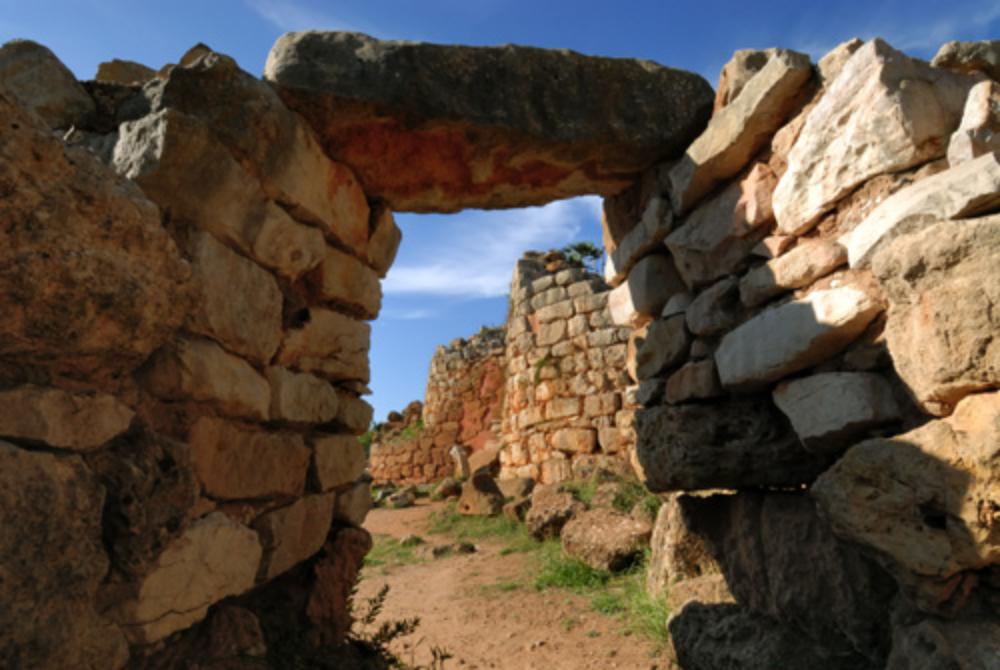
 sino ad epoca bizantina (VIII secolo d.C.), attraverso i materiali delle antiche collezioni museali.)