

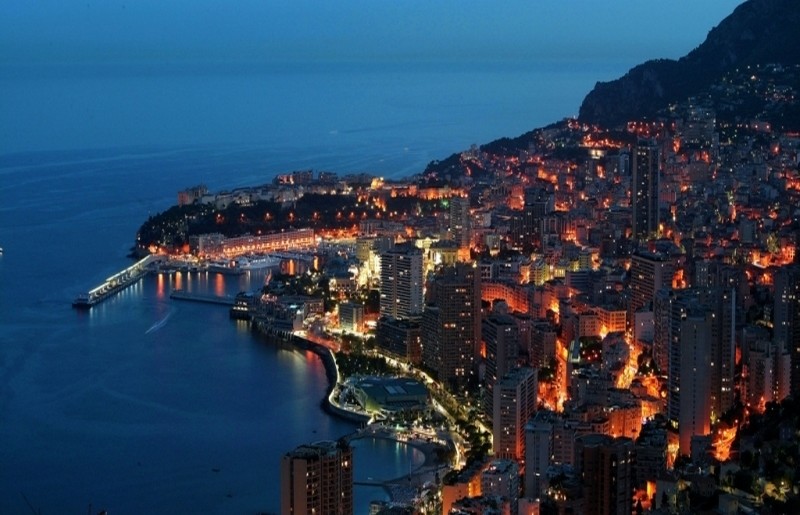

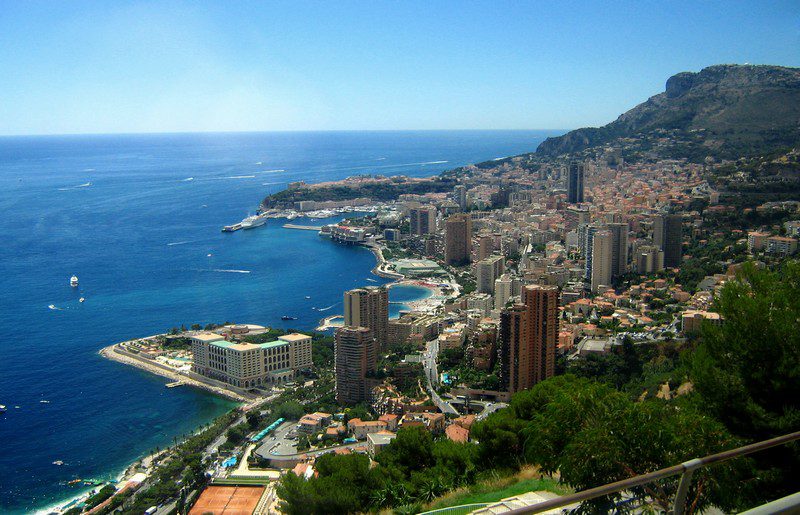
The Principality of Monaco entered the modern era, proud of its economic, financial, and construction boom, despite this having forever altered its original characteristics, consecrating it to a babelic concrete flow.
Instead of cliffs and Mediterranean scrub, there are Fifth Avenue-like skyscrapers, built close to each other, taller and more imposing, so much so that, already in the mid-1970s, one of the first to complain about the impossibility of sunbathing on the beach after three in the afternoon was precisely Princess Grace. An urbanization that did not even spare the sea, stealing space with large platforms on which the Fontvieille and Larvotto complexes were built.
Today, native Monegasques are no more than 5,000, while residents number about five times that. All united by the highest per capita income in the world and a very high cost of living.
The fortunes of today’s Principality of Monaco, already possession of the Grimaldi family since 1419, began in 1856 when the Société des Bains de Mer et de Cercle des Etranges was created (of which the family is still the majority shareholder), owning most of the beaches, managing hotels like the Hermitage and Monte Carlo Beach, the Casino, and various nightclubs. A significant role in promoting trade and tourism.
In 1865, another very important feat was achieved: the abolition of customs borders with the consent of France. Shortly after, the inauguration of the Casino took place, which until a few decades ago represented one of the main sources of income, so much so that, with its proceeds, the construction of the Cathedral and the Oceanographic Museum was financed. In 1869, the flourishing coffers led the rulers to grant residents exemption from land, personal, and movable contributions, consecrating the Principality as a tax haven.
The twentieth century saw massive industrialization, focusing especially on trade, construction, tertiary sectors, and tourism, including congress tourism.
Where to Eat in Monaco
The refinement of the environment requires a jacket and tie. A place very popular with the locals is Rampoldi, on avenue des Spélugues, near the casino, with creative cuisine clearly inspired by French style; while those who prefer the brasserie style are spoiled for choice: from the fashionable Beef Bar, to number 42 of Jean-Charles Rey to the timeless Orange Verte, on avenue Princesse Grace 40 to Le Neptune Plage, on the Larvotto beach.
Profile of the Principality of Monaco
- Country: Principality of Monaco
- Area: 1.95 Km²
- Capital: Monaco
- Population: 36,000 inhabitants
- Language: French
- Religion: the majority is Catholic
- Form of Government: constitutional monarchy
Information about the Principality of Monaco
- Currency: euro
- International dialing code: +377
- International car plate: MC
- Driving side: right
- Entry documents: Identity Card or Passport
- Vaccination required: NN
- Electric current: 220 volts AC 50 HZ
- Measurement units: metric decimal
- Time zone: same time as Italy
- Fixed date holidays: January 1: New Year’s Day; January 26: Holy Devotion; March-April: Easter Monday; May 1: Labor Day; May: Ascension; May 31: Prince Albert’s Day; June: Whit Monday; June: Corpus Christi; August 15: Assumption of Mary; November 1: All Saints’ Day; November 19: Prince Rainier’s Birthday; December 8: Immaculate Conception; December 24: Christmas Eve; December 25: Christmas; December 31: New Year’s Eve
- Climate: temperate Mediterranean climate, with mild winters and hot but dry summers
- Average temperatures: the annual average temperature is around 16°C
- Transport: The Nice Côte d’Azur international airport, 22 kilometers from Monaco, connects the Principality with major cities worldwide. By train: All international trains stop at Monte Carlo station: the Ligure train connecting Marseille and Milan, the “Blue Train” connecting Paris and Ventimiglia, the TGV (high-speed train) between Nice and Paris all have connections with the Principality
- Airports: Nice Côte d’Azur international airport, distance 22 km