


Il Fife Coastal Path walk is part of both the “North Sea Trail” routes, located in various northern European countries, and Scotland’s Great Trails. Located in southeast Scotland, the path starts from Kincardine and ends at Newburgh, passing through Burntisland, Fife Ness, and St. Andrews, following a route that extends entirely along the coast.
Divided into 9 daily stages for a total of about 117 kilometers, the Fife Coastal Path is a combination of history, archaeology, religion, and geology. Along the journey, you can admire the beautiful Scottish industrial and military heritage, as well as many architectural works, together with a stunning coastal landscape. An ideal place to unwind freely, also given the presence of several small trails perfect for impromptu excursions.
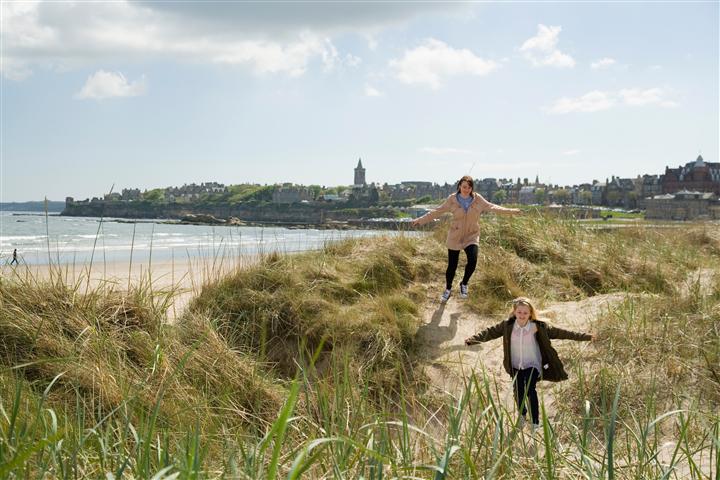
You will find yourself admiring the former coal mining towns, the small fishing villages of the East Neuk of Fife, the university town of St. Andrews, and the numerous beaches and majestic cliffs of the North Sea. A walk that will offer you gentle emotions whether you are seeking adventure or relaxation.
Points of Interest on the Fife Coastal Path
- St. Andrews Castle: these are the ruins of the Castle of the Archbishops of St. Andrews, dating partly back to the 13th century. Its position right on the North Sea is evocative.
- Newark Castle: the ruins of Newark Castle, also known as St Monans Castle, are now unstable and absolute caution is recommended when visiting.
- MacDuff Castle: Scotland is famous for its many castles; MacDuff Castle is the ruins of another ancient 11th-century castle.
- Wemyss Caves: the Wemyss caves host the largest number of Pictish carvings (a pre-Celtic tribe) in the world.
- St. Bridgets Kirk, Dalgety Bay: ancient medieval church now in ruins dating back to 1178.
- Fort Rail Bridge: distinctive red railway bridge located 14 km west of Edinburgh.
- St Cyrus National Nature Reserve: wonderful cliffs and sand dunes protecting the meadows of St Cyrus, with the North Sea overseeing; this is the St Cyrus nature reserve.
Information Sheet:
- Country: Scotland
- Reference website for the Fife Coastal Path
- Length in kilometers: 188
- GPX: n.d.
- KMZ: n.d.



