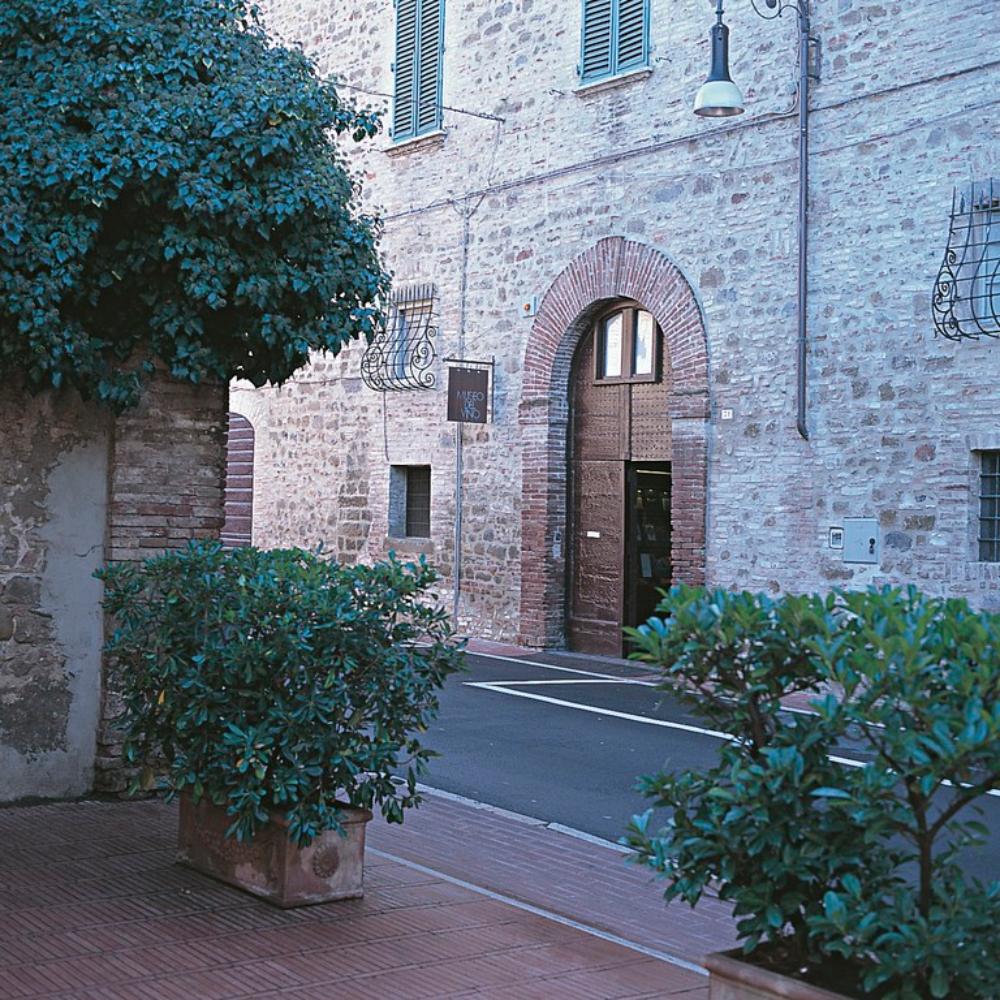


La collection is housed in five rooms of the renovated building of the Episcopal Seminary in the center of Terni, near the cathedral. The building was once the seat of the diocesan Seminary. It was built and frescoed by Cardinal Francesco Angelo Rapaccioli in the mid-Seventeenth century but today no traces of the original frescoes remain. The building was established with its own autonomy compared to the nearby Bishop’s Palace, to which it was connected by a gallery, still visible today, with a coffered ceiling and mural paintings. The Diocesan Museum houses in its rooms several works of sacred art from churches, chapels, oratories, convents, and monasteries present in the territory of the diocese. You can admire paintings, altarpieces, plastic works, and liturgical objects that testify to the vivacity and artistic diversity of the territory. The diocesan and capitular museum was established with the primary goal of safeguarding, usability, and enhancement of the historical, artistic, and cultural heritage of the diocese of Terni-Narni-Amelia. Housed in the rooms of the building, the museum is divided into two sections: the first testifies to the religious patronage of the diocese from the fifteenth to the seventeenth century, the second to the presence of contemporary artists in the territory. Among the paintings to mention the altarpiece depicting the Madonna with Child and Saints by the Flemish painter Martin Stellaert, the Circumcision by Livio Agresti, made in 1560, and the Resurrection of Lazarus attributed to the workshop of Guercino. A section of the museum is dedicated to contemporary sacred art and collects several pictorial and sculptural works created by internationally renowned artists who in recent years have had patronage relationships with the diocese. Soon to open is a section dedicated to textiles and one to goldsmithery.
Information on the Diocesan and Capitular Museum
Via XI Febbraio, 4
05100 Terni (Terni)
0744 546563
[email protected]
https://www.diocesitna.it
Source: MIBACT