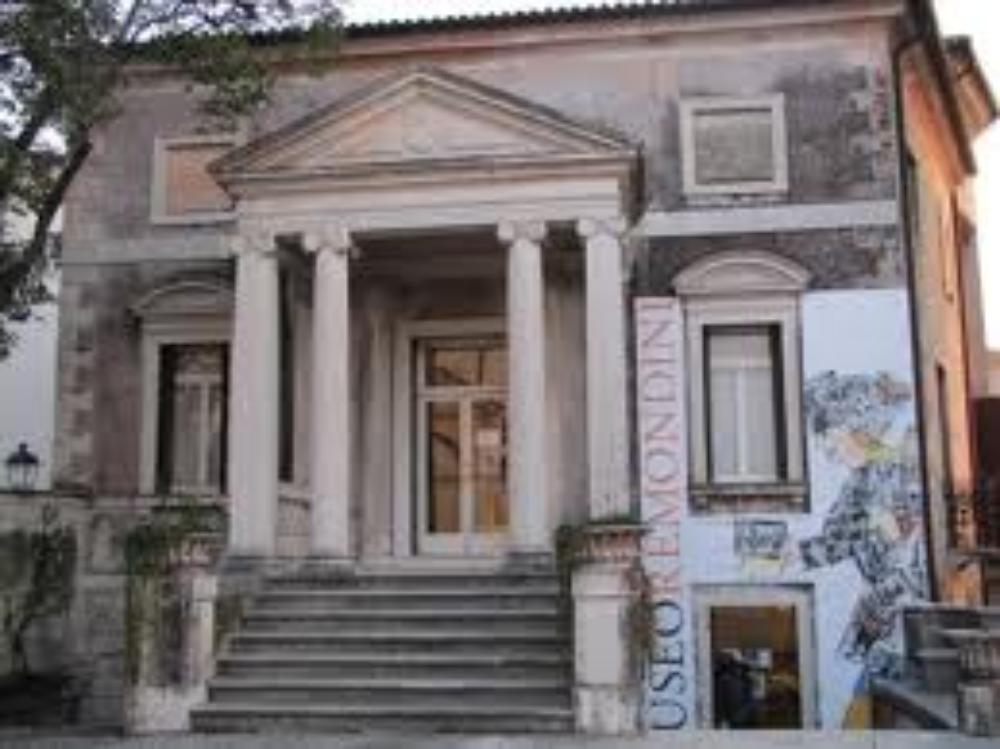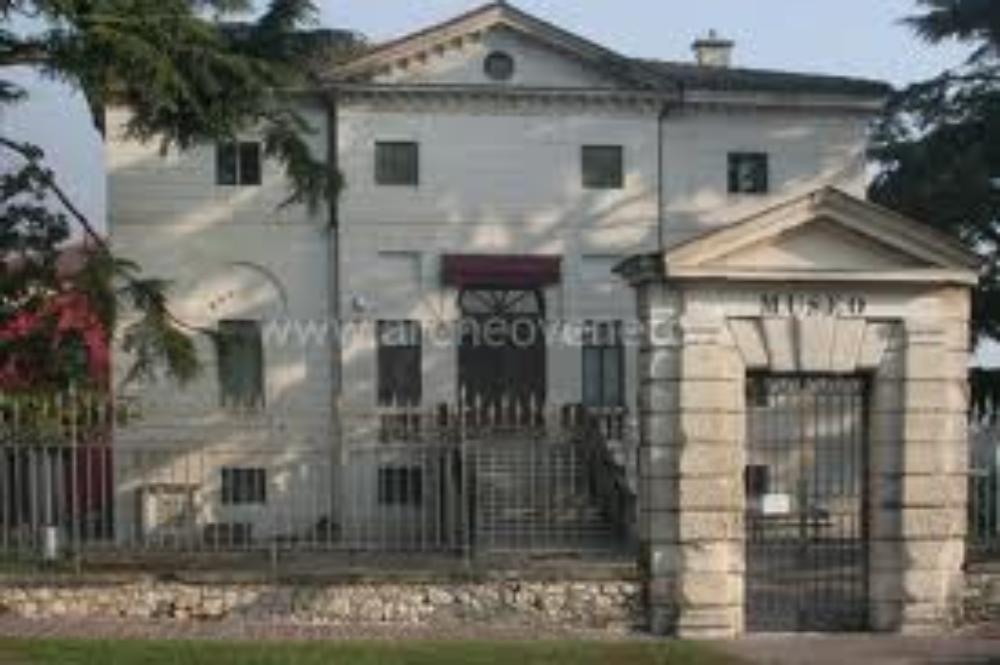


The Museum, exhibition and coordination center of the Agno-Chiampo Museum System, presents a significant selection of archaeological and naturalistic artifacts from the System’s territory.
The archaeological section is divided into five rooms. In room A, dedicated to prehistory, are exhibited the oldest materials found so far in the territory of the Museum System: flint artifacts from the Neolithic and Bronze Age, a copper dagger blade from an Early Bronze Age tomb in Montecchio Maggiore, and settlement materials from the Late and Final Bronze Age from Montecchio Maggiore and Castelgomberto.
Room B is dedicated to the hill settlements of the Iron Age. From Trissino come pottery and tools that testify to the lively economic life of the village; the archaeological documentation relating to Montecchio Maggiore includes, in addition to settlement materials, ritual deposits with rich offerings and a votive lamina with a stamped warrior figure.
Room C hosts grave goods from Celtic tombs of Montebello Vicentino, with pierced belt hooks and weapons and artifacts from the Romanization period from Montebello Vicentino and Montecchio Maggiore, both localities affected by the passage of the Via Postumia.
Room D accommodates testimonies from Roman times: materials from rural settlements that document daily life and domestic and productive activities, two epigraphic monuments from Montecchio Maggiore and from Costo di Arzignano, and the funerary equipment of the late Roman necropolis of Carpane in Montecchio Maggiore. Finally, a 5th-century AD tomb from Cava Poscola, belonging to an Eastern Germanic knight in the service of the Roman Empire, buried with weapons and part of his horse.
Room E houses finds from the Lombard age: male and female burial equipment from Montecchio Maggiore, S. Urbano, Arzignano, and Castelgomberto, with beautiful specimens of weapons, belt elements decorated with agemina, combs, and armlets.
The naturalistic section is structured as follows:
Room 1: gems of Vicenza. Exhibition of many samples from the territory and illustration of the various stages of the processing that leads from raw mineral to gem.
Room 2: minerals of Vicenza. The most significant specimens of the collection are exhibited based on the rocks in which they are usually found: magmatic, sedimentary, metamorphic.
Room 3: international fossil crustaceans. With samples from the famous German deposit of Solnhofen, from the American continent and Oceania, from Lebanon and various European locations.
Corridor room: Italian fossil crustaceans. Samples from various Italian regions: Friuli, Sardinia, Tuscany, etc.
Room 4: fossil crustaceans of Veneto. About 100 pieces collected and prepared by the Museum’s collaborators. They often preserve the original three-dimensional structure. Sculpture on the stratigraphy of the Chiampo middle valley highlighting the crab levels.
Room 5: geology of the Agno and Chiampo valleys. The geological history of the territory is retraced, showing its most significant fossils. In the center of the room is displayed the Oligocene ‘fossil forest’ found in Castelgomberto during excavations carried out by the Museum in 2004.
Corridor room: showcase dedicated to Giovanni Meneguzzo, extraordinary geological guide from Montecchio.
Room 6: Monte Nero. Various aspects of this relief are exhibited here: geology, botany, and zoology. A model helps to visualize the peculiarities of the place, known since the 1700s for the presence of zeolites.
Information about Museum of Archaeology and Natural Sciences
Piazza Marconi, 15
36075 Montecchio Maggiore (Vicenza)
0444492565
[email protected]
Source: MIBACT