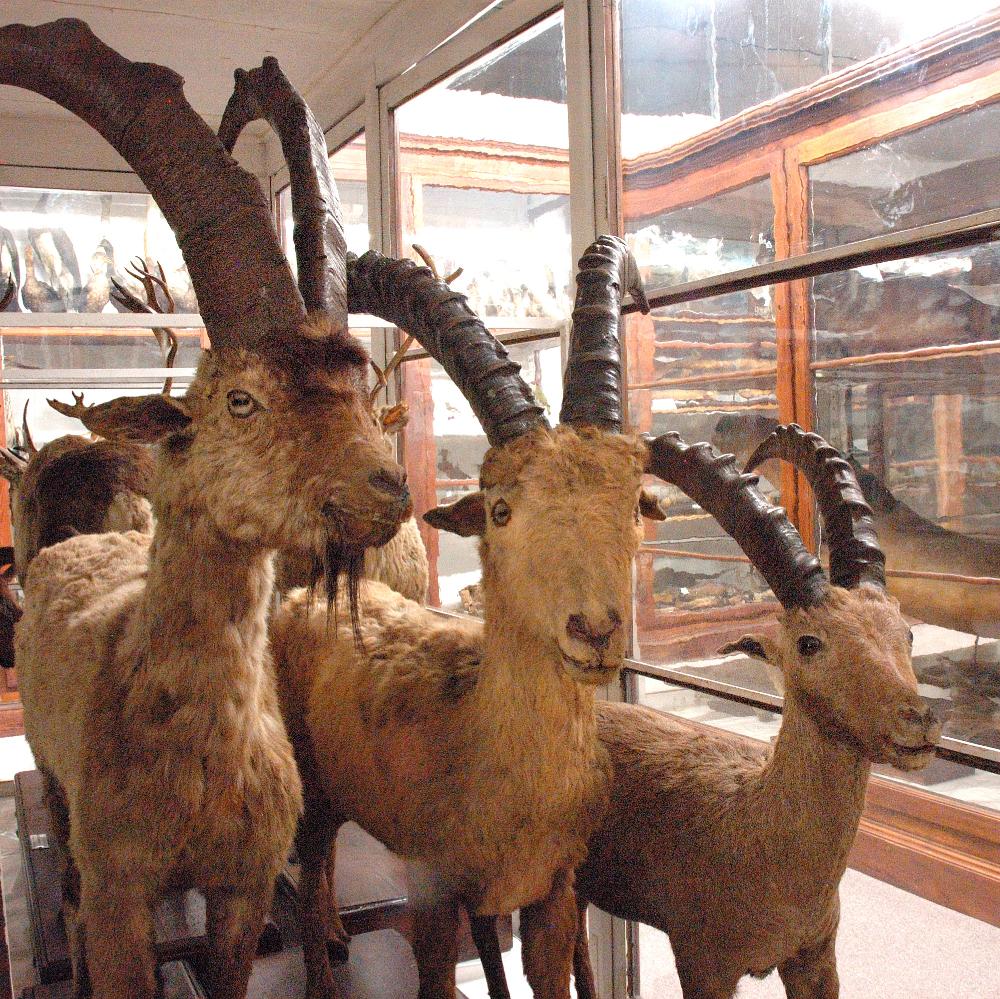


The Museum is located inside the central university building, overlooking the courtyard of the fallen, the ancient medical courtyard of the University.
Inaugurated in 1936, it preserves manuscripts, printed texts, scientific instruments, anatomical and naturalistic preparations that constitute a testimony to the history of the University from its medieval origins.
Dating back to the second half of the 18th century – when, following the reforms desired by the Empress of Austria Maria Theresa, the University of Pavia became one of the most advanced scientific centers in Europe – are the original cores of the main collections, the physics section, gathered around the instruments of Alessandro Volta’s old laboratory, and the medicine section, heir to the anatomical collections that Antonio Scarpa had organized precisely in the premises that currently house the Museum.
In the medicine section, divided into three rooms, instruments and preparations are kept that refer to the activity of Antonio Scarpa’s anatomical school and to the natural history museum of Lazzaro Spallanzani, both arrived in Pavia at the end of the 18th century, to the advances in the field of surgery and clinic through the 19th and 20th centuries, with figures such as Luigi Porta and Carlo Forlanini, and to the activity of the scientific school founded by Camillo Golgi, the first Italian to win – in 1906 – the Nobel Prize for Medicine thanks to the development of a histological method that laid the foundations of modern neuroscience
In the physics section, Alessandro Volta’s Physics Cabinet has been reconstructed, which was originally located on the first floor, overlooking the legal portico, in rooms adjacent to the Physical Theater.
Under Volta’s direction, starting from 1778, the Cabinet was equipped with the newest instruments for teaching and research and became a place admired by numerous Italian and foreign visitors. A second room houses the instruments used by Volta’s successors during the nineteenth century.
The Museum also preserves an archive that covers a chronological span from the beginning of the 15th to the 20th century. The documentation, particularly interesting with regard to the history of medicine, constitutes an important integration of what is preserved at the State Archive of Pavia (the University’s ancient archive) and at the Historical Archive of the University.
Information on the Museum for the History of the University of Pavia
Strada Nuova, 65
27100 Pavia (Pavia)
0382 984707
[email protected]
https://musei.unipv.it/msu/
Source: MIBACT