

Il Museo Civico di Montagnana (established in 1980) is located in the Castle of S. Zeno, the oldest core of the city’s fortifications (1242, construction of the great mastio of Ezzelino da Romano; in the following century the Carraresi expanded the Castle, completing the famous city walls). The I Room houses materials from the prehistoric and protohistoric age. The oldest evidence dates back to the late Neolithic and Eneolithic periods (end of the 4th-3rd millennium BC). The most substantial and significant archaeological evidence of ancient Montagnana comes from the locality of Borgo S. Zeno, a protohistoric settlement dating between the end of the Bronze Age and the beginning of the Iron Age (12th-8th century BC). The later phase of the Iron Age is documented by the burial goods of a rich male tomb. Here is attested the Celtic custom of burying the deceased with their weapons and tools of the trade: a sword with its sheath, a spearhead, a large knife, a shear.
The Roman age – in the second room – is documented by numerous archaeological remains, from the Augustan period to the late imperial period, belonging to rustic villas and necropolises, which attest to a scattered population across the territory, often situated on river hills of Atesine origin. More relevant and of great value are however the funerary monuments and burial furnishings; particularly rich are the grave goods, referring to a family necropolis of members of the gens Vassidia, probably landowners of the area. Among the stone monuments, the large white marble stele stands out, decorated in bas-relief and with a long inscription on the visible face.
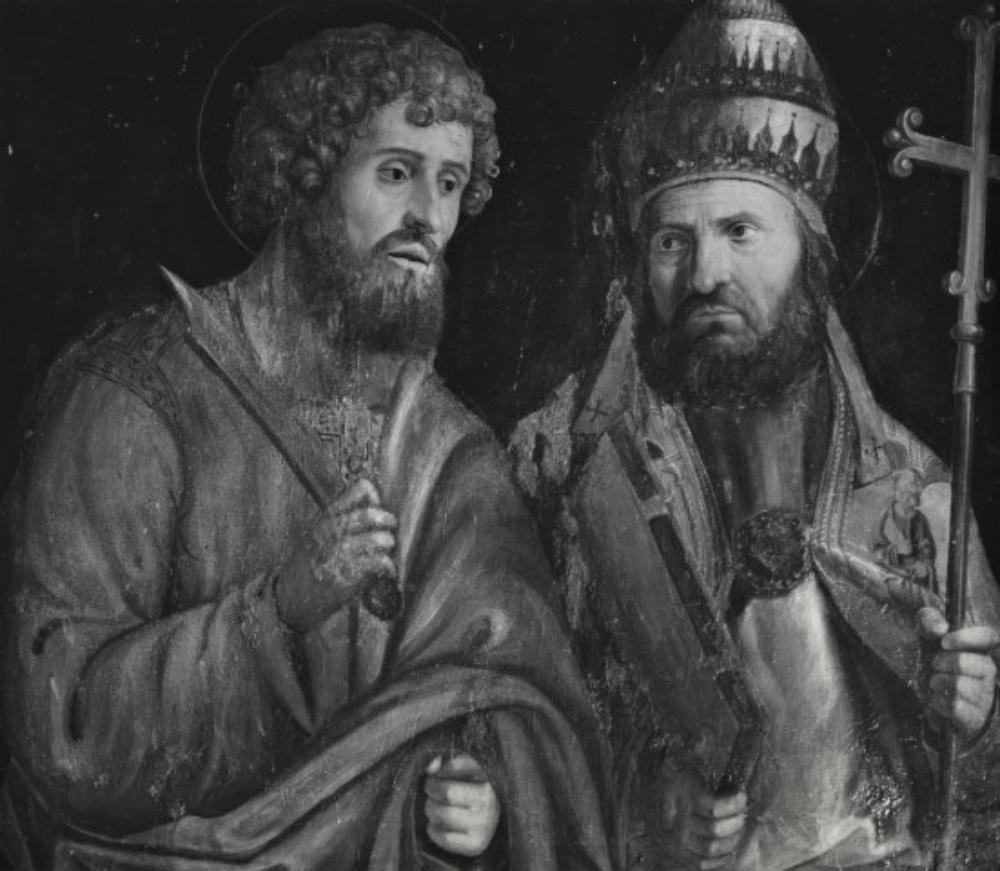
The Medieval and Modern Section is made up of three different groups of materials, all related to the history and buildings of the walled city. Among the 14th-century paintings (IV Room) a “Madonna enthroned and Saints Prosdocimus and Justina”, which reveals a skilled execution quality in the wake of the lessons of Altichiero da Zevio; then a Charity by Alessandro Varotari, called il Padovanino, and a late canvas by the Atestino Antonio Zanchi (17th and 18th century).
The collection of ceramics (III and IV Room) is consistent, offering a panorama through fragments of Montagnana production and its relations with the neighboring artistic centers, Legnago, Este, and Padua, products from the late Carrarese period (14th century) and later (Renaissance graffito).
The Musical Section includes materials donated to the native Municipality of Montagnana mainly by the heirs of tenors Giovanni Martinelli (1885-1969) and Aureliano Pertile (1885-1952), famous protagonists of the opera theater of the first half of the twentieth century. Aureliano Pertile was recalled to La Scala by Arturo Toscanini in 1922, his always preferred interpreter in works by Donizetti, Bellini, Verdi, Auber, Massenet, Puccini, Mascagni, Respighi, Wolf-Ferrari, up to Wagner and Mussorgsky, demonstrating a rare eclecticism. Giovanni Martinelli was called by Puccini himself to perform his La Fanciulla del West at the Teatro S. Carlo in Naples, in 1911; the following year, debuting at London’s Covent Garden with Tosca, he was hailed as “a new Caruso”. He was then continuously engaged from 1913 to 1945 at the Metropolitan Opera House in New York. The documents preserved at the Museo Civico di Montagnana consist of original photographs, posters, and other testimonies of the activity of the two great singers. Of particular interest is a collection of stage costumes worn by Martinelli.
Information about Museo Civico di Montagnana
Piazza Trieste, 15
35044 Montagnana (Padua)
0429804128
[email protected]
https://www.comune.montagnana.pd.it
Source: MIBACT