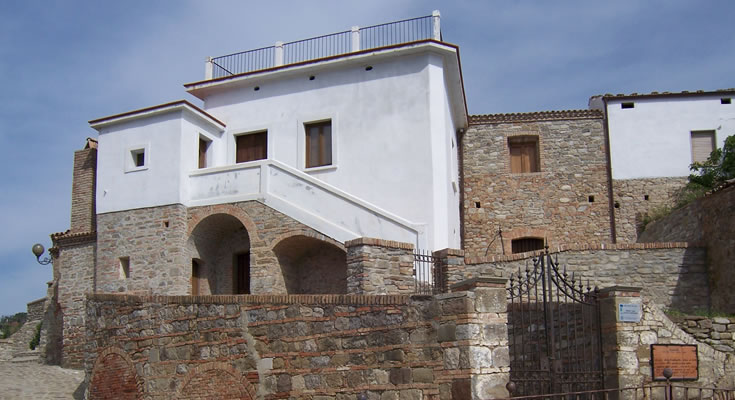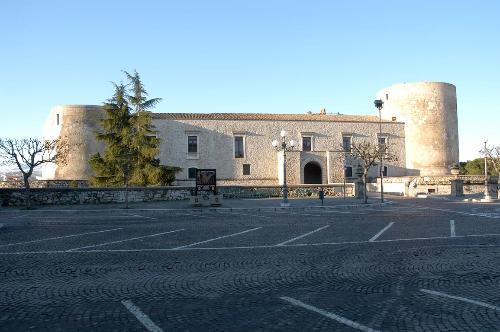


Il museo, housed in the semi-underground walkways of the Aragonese castle built in 1470 by Pirro del Balzo, is particularly dedicated to the Latin colony of Venusia, founded in 291 B.C. It illustrates the earliest phases of human presence in the territory of Venosa, evidenced by a homo erectus femur fragment (about 300,000 years ago), one of the oldest found in Europe. Coins, architectural decoration elements, and ceramics allow to define and follow the political and cultural history of the Roman city up to the later phases. In the epigraphic section, the collection of funerary and public inscriptions is exhibited; the latter document important works carried out by magistrates of Venusia. The collection of inscribed cippi in the Oscan language is interesting; in nearby Bantia (Banzi), during the 1st century B.C., they composed an augural templum: an open, consecrated space where omens were taken through the flight of birds. Epigraphs and figured arcosolia testify to the establishment of an important Jewish community that, between the 4th and 9th centuries A.D., buried its dead within catacombs adjacent to the Christian ones.
Information about the National Archaeological Museum of Venosa
Piazza Castello – Castello Pirro del Balzo
85029 Venosa (Potenza)
097236095
[email protected]
https://www.archeobasilicata.beniculturali.it
Source: MIBACT