


Mykonos (in Greek Μύκονος and in Italian Mìcono) is flanked by the islands Tinos and Syros to the northwest, while to the south it is supported by the islands Paros and Naxos. The characteristic that most distinguished Mykonos from other Greek islands long ago was the generous hospitality it offered especially to the homosexual community. Over time, the island has then welcomed any other form of tolerance. Today this exclusively ‘alternative’ character has somewhat diminished compared to the fortunate ’80s and ’90s, but Mykonos has still preserved its charming aspect of a cosmopolitan island.
Every year, thousands of visitors land here at any time of the year. The tourist fortune of Mykonos is due, among other things, to its warm climate, especially in Mykonos Town. Furthermore, the summer period is characterized by the absence of rainfall, although one must remember the significant temperature fluctuation that occurs during the nighttime hours, especially in peripheral areas. Another defining element of summer in Mykonos is the meltemi, a dry and cool wind that generally has a low intensity, although sea storms are not uncommon.
Landing in Mykonos, by means of the airport that connects the island with mainland Greece and the rest of Europe, you are literally drawn in by the landscape into which you are catapulted. A dream come true. The symbolic images of the island (and the rest of the Cyclades) so admired in magazines and tourist sites now materialize before your eyes: shining white houses, charming windmills, and intriguing narrow alleys.



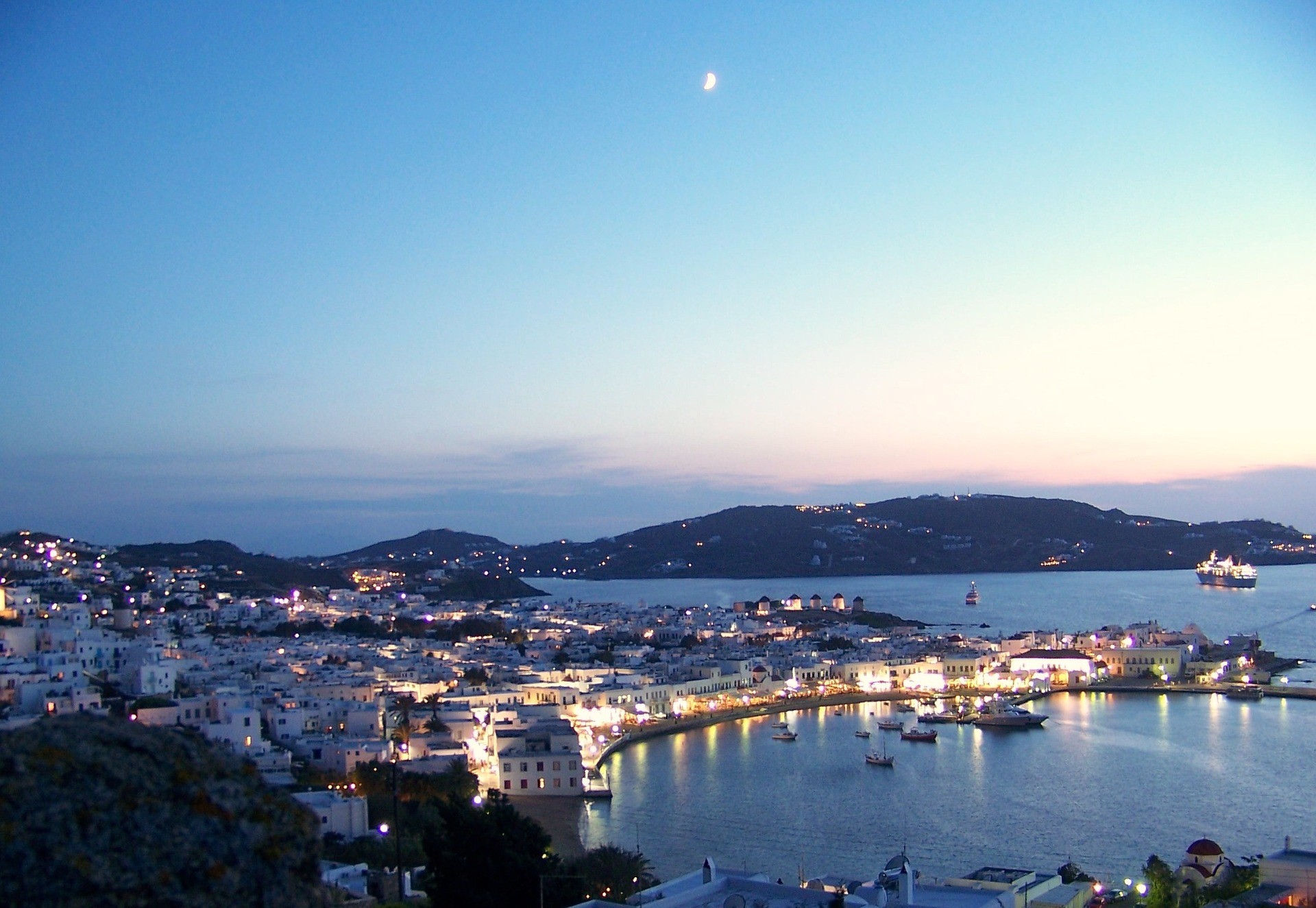

, but it certainly stands out among them all for its postcard-perfect landscape.)