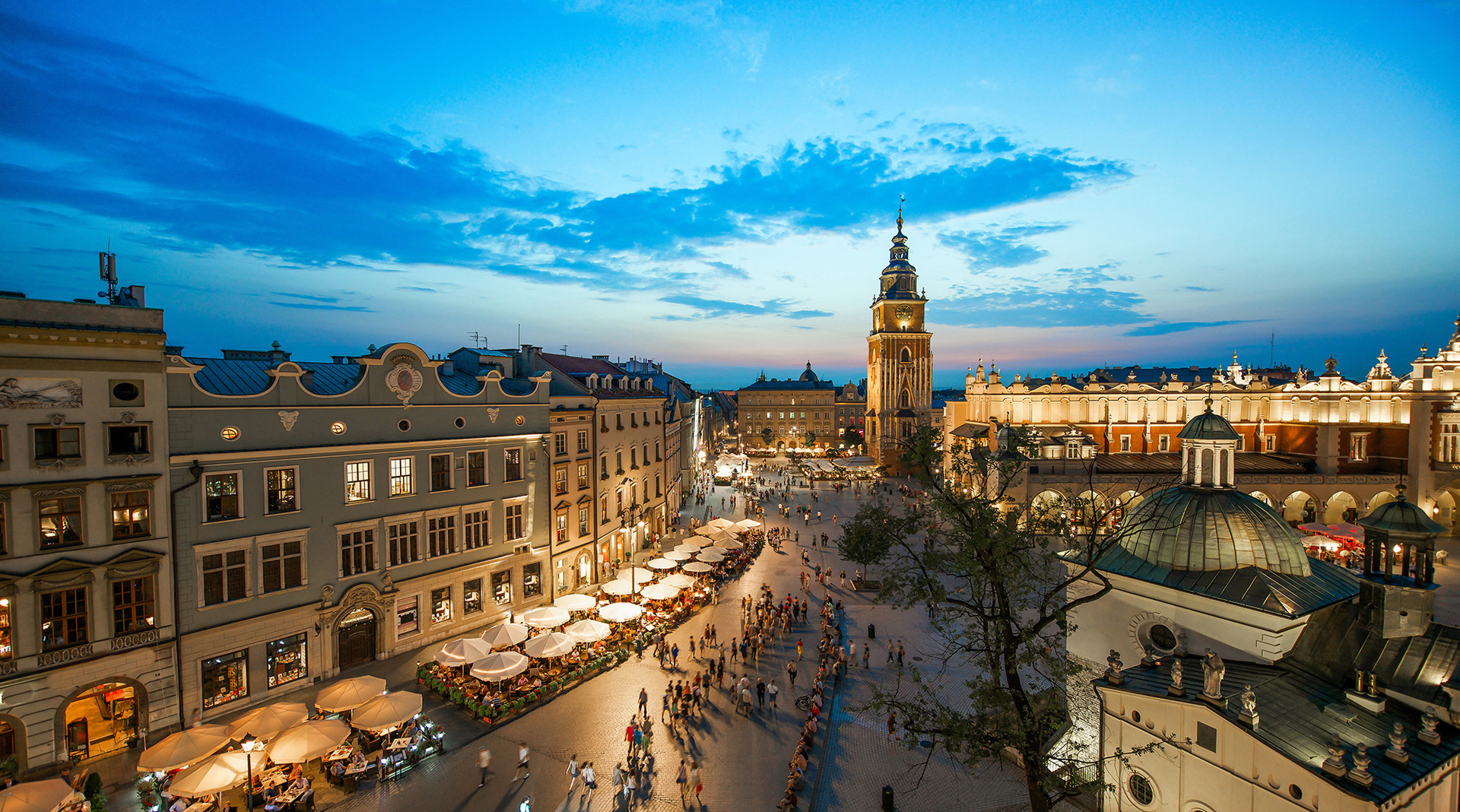
The Polish city welcomes tourists to its large Market Square (one of the largest in Europe), which is a very lively center both during daytime and nighttime. Here you can admire the surrounding bourgeois buildings including the House of the Seven Electors, the House of the Golden Sun as well as Jaś and Małgosia (Hansel and Gretel). The heart of the square is developed around the Cloth Hall and the Town Hall, a unique example of Gothic and Renaissance architecture in Europe.
From the large square, you move on to Ostrów Tumski, the oldest part of Wrocław consisting of a group of islands on the Oder river. Here you are fascinated by the ancient atmosphere of the borough, the castle, the waters of the Oder, and the wonderful architectures such as the Gothic cathedral of St. John the Baptist and the Church of the Holy Cross.
Not to be missed is certainly the Centennial Hall (Hala Stulecia), considered one of the greatest monuments built in the 20th century so much so that in 2006 it was inscribed on the UNESCO World Heritage List. Adjacent to the Hall is an amazing multimedia fountain, consisting of 300 water jets and 800 lights. In winter the fountain transforms into a huge ice skating rink.
If you want a deep contact with nature, you can go to the Park Wschodni or Szczytnicki Park, located in the eastern part of Wrocław, where you can take relaxing and rejuvenating walks. The main attraction of Szczytnicki Park is the Japanese Garden, with interesting examples of Japanese architecture and a splendid floral composition changing depending on the season.
Those who love museum culture can visit the various galleries in the city, such as the Racławice Panorama (ul. Purkyniego 11), the national museum, the contemporary museum, the architectural museum, and the ethnographic museum.
For evening leisure and entertainment, there are theaters, bars, restaurants, and pubs (mostly located in the old town center and the market square) where you can taste beer and many other local specialties.
The Polish city hosted some matches of the European Football Championship in 2012, while in 2016 it was the European Capital of Culture.