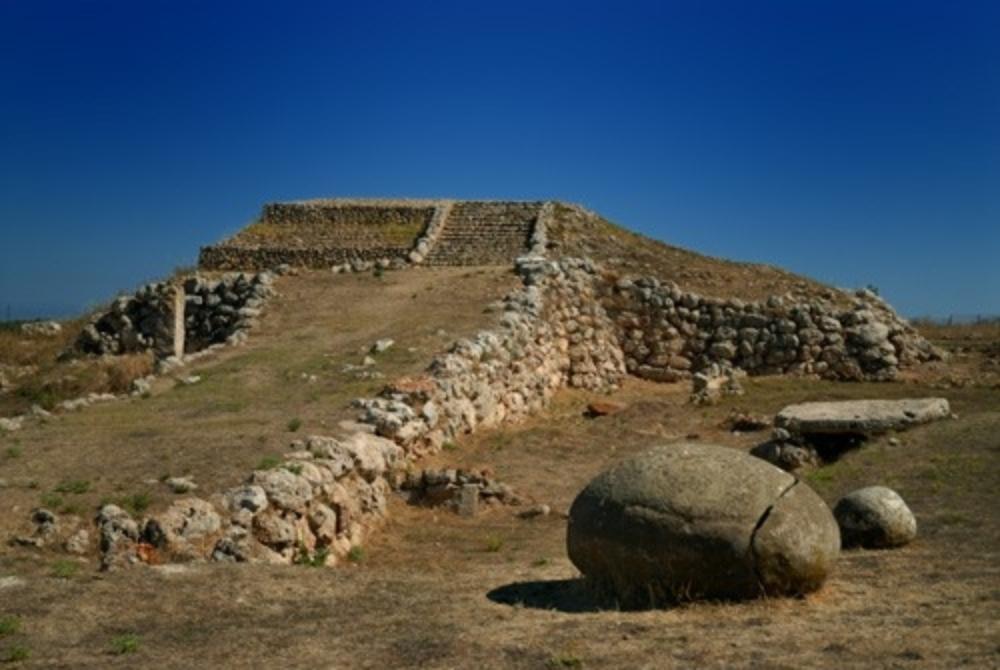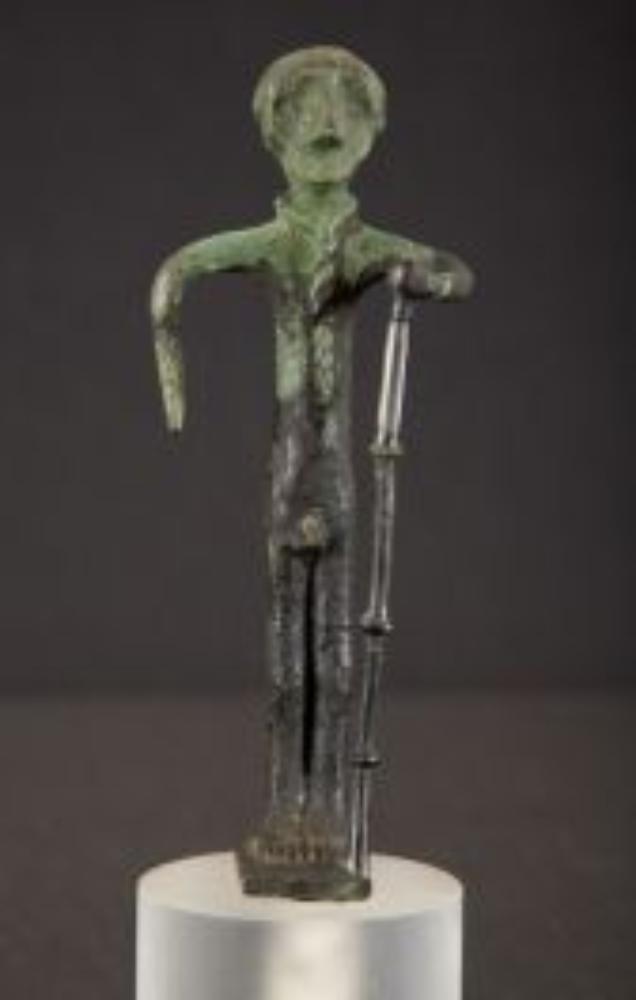


La necropoli di Anghelu Ruyu, located in the immediate hinterland of Alghero, is the largest and most important prehistoric necropolis in northern Sardinia. It dates back to a period between the Late Neolithic and the Early Bronze Age (about 3200-1800 BC) and consists of 38 domus de janas (literally “witches’ houses” or “fairies’ houses”), rock-cut chambers mainly used for burials but also for holding funeral ceremonies. The tombs, carved into limestone sandstone, are located in two different areas and have, as was typical in Sardinia, a very irregular distribution. They feature a floor plan composed of several rooms, except for one tomb with a single-cell plan. Access to the tombs is either by shaft, vertical and oblique, or by descending dromos (corridor), almost always with steps at the entrance. The latter are mainly characterized by rooms with a symmetrical and regular layout, while the shaft tombs often have irregular floor plans. The tombs have flat ceilings and well-smoothed walls rich in details. In the dromos tombs, many architectural or decorative elements depict the rites and cults of the pre-Nuragic populations, as well as aspects of their daily life. Among these are cup marks carved into the ground intended to hold offerings and funeral meals; sculpted or incised decorations that reproduce the environments of the houses inhabited by the deceased; false doors, of Eastern origin, symbolizing the door to the afterlife; sculpted heads and bull horns, protecting the sleep of the departed. The tombs held from a minimum of two to a maximum of thirty individuals and were sealed with large stone slabs. Various grave goods have been recovered here—mainly consisting of vases, mother goddess statuettes, weapons, and necklace elements—belonging to the different prehistoric cultures of the area, from the Ozieri culture to the Bonnanaro culture.
Information on Anghelu Ruyu Archaeological Area
07041 Alghero (Sassari)
329 4385947
silt.coop@tiscali.it
https://www.coopsilt.it
Source: MIBACT