


La forme de gouvernement du Canada représente sa dualité culturelle : une démocratie parlementaire qui est aussi une monarchie constitutionnelle, dirigée par la reine Elizabeth II (bien que cette dernière n’ait qu’une fonction purement formelle).
Depuis des siècles, toile de fond de flux migratoires impressionnants, le Canada est devenu au fil du temps une nation multiethnique avec deux langues officielles : l’anglais et le français. Parmi les pays économiquement les plus avancés au monde, les tentatives de se démarquer de l’incorporation culturelle américaine ont été nombreuses et, encore aujourd’hui, beaucoup des efforts des Canadiens sont orientés vers la recherche d’une identité nationale propre. Environ 60 % de la population née au Canada est d’origine britannique, les Français représentent environ 35 % et seulement 3 % sont des autochtones, dont le territoire autonome du Nunavut a été proclamé en 1999 pour leur protection.
What to see in Canada
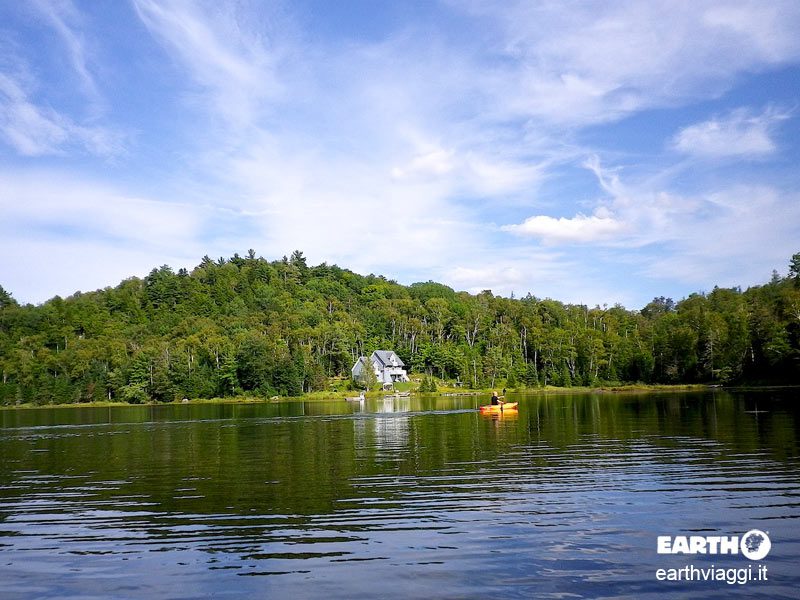
The whole country can be said to be of great scenic interest: almost entirely flat, except for the Rocky Mountains and the Arctic Cordillera, Canada has the largest amount of lakes and inland waters of any country in the world (the Great Lakes and Niagara Falls are among its best attractions).
With a constant focus on ecological themes, it is ideal for hiking enthusiasts who will have the opportunity to visit the numerous national parks and admire the vast spectacle of steppes, valleys, and fjords. But Canada is not just the “Country of the Maple Leaf”: Toronto, Vancouver and Montreal, the three main cities, offer visitors, in a strongly European echo, cultural and recreational opportunities of rare elegance and originality.
Canada Fact Sheet
- Country: Canada
- Area: 9,984,670 Km²
- Capital: Ottawa
- Population: 32.5 million inhabitants
- Language: English and French
- Religion: the majority are Catholic and Protestant
- Form of Government: federal republic that is part of the British Commonwealth
- Major Cities: Ottawa, Montreal, Quebec, Calgary, Edmonton, Winnipeg, Mississauga, Vancouver, Hamilton
Information about Canada
- Currency: Canadian Dollar (1 euro = 1.5446 CAD)
- International dialing code: +1
- International vehicle registration code: CND
- Driving side: right
- Entry documents: Passport
- Vaccination required: No
- Electric current: 110/120V 60 Hz A,B (adapter needed)
- Unit of measurement: metric decimal
- Time zone: from -4.30 to -9 hours compared to Italy; Canada has 6 time zones
- Fixed-date holidays: January 1: New Year’s Day; March-April: Good Friday; March-April: Easter; March-April: Easter Monday; Monday preceding May 25: Victoria Day; July 1: Canada Day; 1st Monday of September: Labour Day; 2nd Monday of October: Thanksgiving; November 11: Remembrance Day; December 25: Christmas; December 26: Boxing Day
- Climate: due to its size, the country has several types of climate, ranging from polar in the north, allowing visits only during the short period from June to August, to the milder climate of Ontario and Quebec where cold, snowy winters (the Blizzard) are followed by mild summers with pleasant temperatures despite some rain. Elsewhere in the country, the climate ranges from humid and rainy along the coasts to cold and unpredictable in the Rocky Mountains, to continental in the prairies, with strong temperature variations between seasons and between day and night.
- Average temperatures: from -10°C to 25°C annually; the climate varies significantly from east to west and even more sharply depending on altitude and proximity to the sea or lakes
- Transport: National airlines: Air Canada and Air Transat; others flying to and from Canada: American Airlines, Lufthansa, British Airways, KLM, Alitalia, Iberia, and others.
- Airports: International airports in Calgary, Edmonton, Ottawa, Gander, Montreal, Toronto, Vancouver, Halifax, Quebec




. To the East it is washed by the Atlantic Ocean, to the West by the Pacific, and to the North by the Arctic Ocean.)