

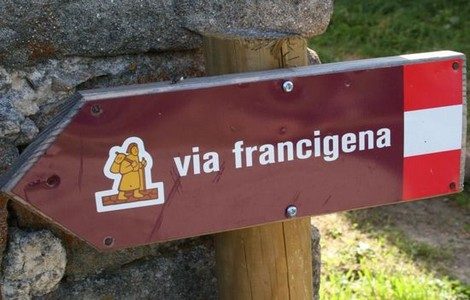
Il cammino della Via Francigena extends along a route from Canterbury to Rome. The history of the journey is linked to Archbishop Sigeric, who in the distant year 990 AD decided to undertake a trip to visit Rome from the Pope.
The Archbishop, during the return trip, noted the 79 stages completed, which today are part of the historic path. Canterbury and Rome are only the initial and final steps of a 2000 km journey, crossing seven Italian regions, including Lazio, Tuscany, Emilia, Liguria, Lombardy, Piedmont, and Aosta Valley, then crossing the majestic Alps, passing through Switzerland and France, before crossing the Channel and reaching the English city.
An itinerary that has much to tell both culturally and historically, where you will never be bored by the beauty of the Italian landscape, the majesty of the Alps, and the picturesque Swiss and French panoramas.
Also known as Rome routes, the paths of the Via Francigena vary, and it can also be considered Via Francigena the stretch south of Rome crossing the regions of Campania, Basilicata, and Apulia to land towards Jerusalem, on that “holy land” journey testified by the pilgrimage completed by the Icelandic Benedictine monk Nikulás da Munkaþverá in the distant year 1152. As can be seen, therefore, the Via Francigena is a real journey through time that brings with it stories of wars, conquests, and pilgrims who wrote an important page of this historic route.
Points of interest:
- Monteriggioni: A characteristic village in the province of Siena located in the “Montagnola Senese,” Monteriggioni is a corner of history preserved intact over the centuries.
- San Gimignano: Its village is well known and much loved, as it has managed to preserve itself, leaving its charm intact.
Information sheet:
- Country: United Kingdom/France/Switzerland/Italy
- Official website of the Via Francigena
- Length in kilometers: 2000
- GPX: n.d.
- KMZ: n.d.