Palazzo Ducale and the Gonzaga
The Gonzaga family (lords, marquises, and finally dukes of the city of Mantua) made it their residence from 1328 to 1707, when the last duke, Ferdinando Carlo, was forced into exile.
The palace, initially composed of buildings from different periods, took on an organic form in the second half of the 16th century, when it became a single imposing architectural complex of 35,000 square meters. Under Austrian rule, some court rooms were adapted as representative spaces, and during the reign of Maria Theresa of Austria, the building took on the name Palazzo Reale.
Mantova Ducal Palace
The Ducal Palace of Mantua was a reference point for art history with the arrival of Pisanello in Mantua already in the early 15th century, and later with the presence of Andrea Mantegna. After being abandoned in the 19th century, the Ducal Palace has been the subject of restorations since the beginning of the 20th century and has become a state museum.
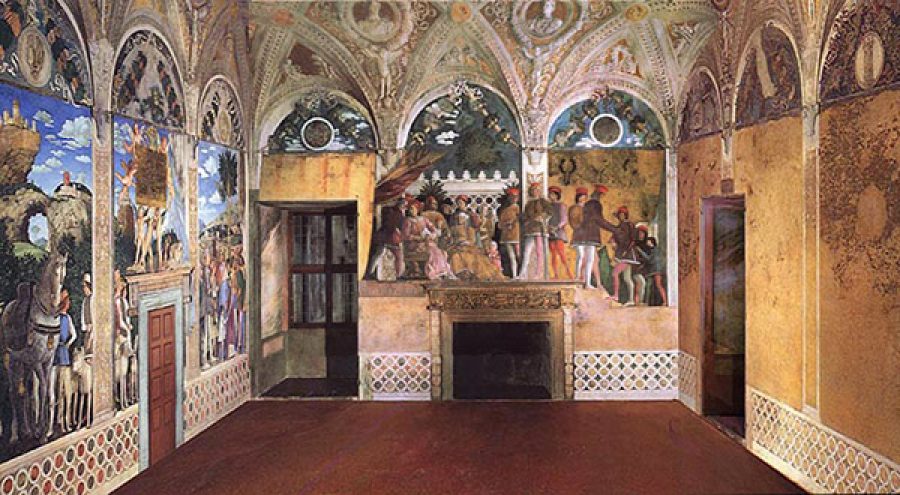
In addition to the painting gallery, the archaeology and sculpture sections, the apartments and the Castle of San Giorgio are of notable importance, where the famous “Room of the Newlyweds” frescoed by Mantegna can be found, depicting scenes of the Gonzaga family’s life.
Useful Information about the Ducal Palace of Mantua
Access to the Castle and the Room of the Newlyweds is limited to 1,500 people per day, therefore entry will be allowed until all available seats are filled. Free entry Sundays do not accept reservations.
A guided tour service with fixed schedule departures at 10:00, 11:00, 12:00, 15:00, and 16:00 will be available. The guided tour service costs €5.00 per person and can be booked at the entrance directly at the ticket office.
Where the Ducal Palace Museum is located
Piazza Sordello, 40 – 46100 Mantua Tel. 0376.352100 – Email: [email protected]