

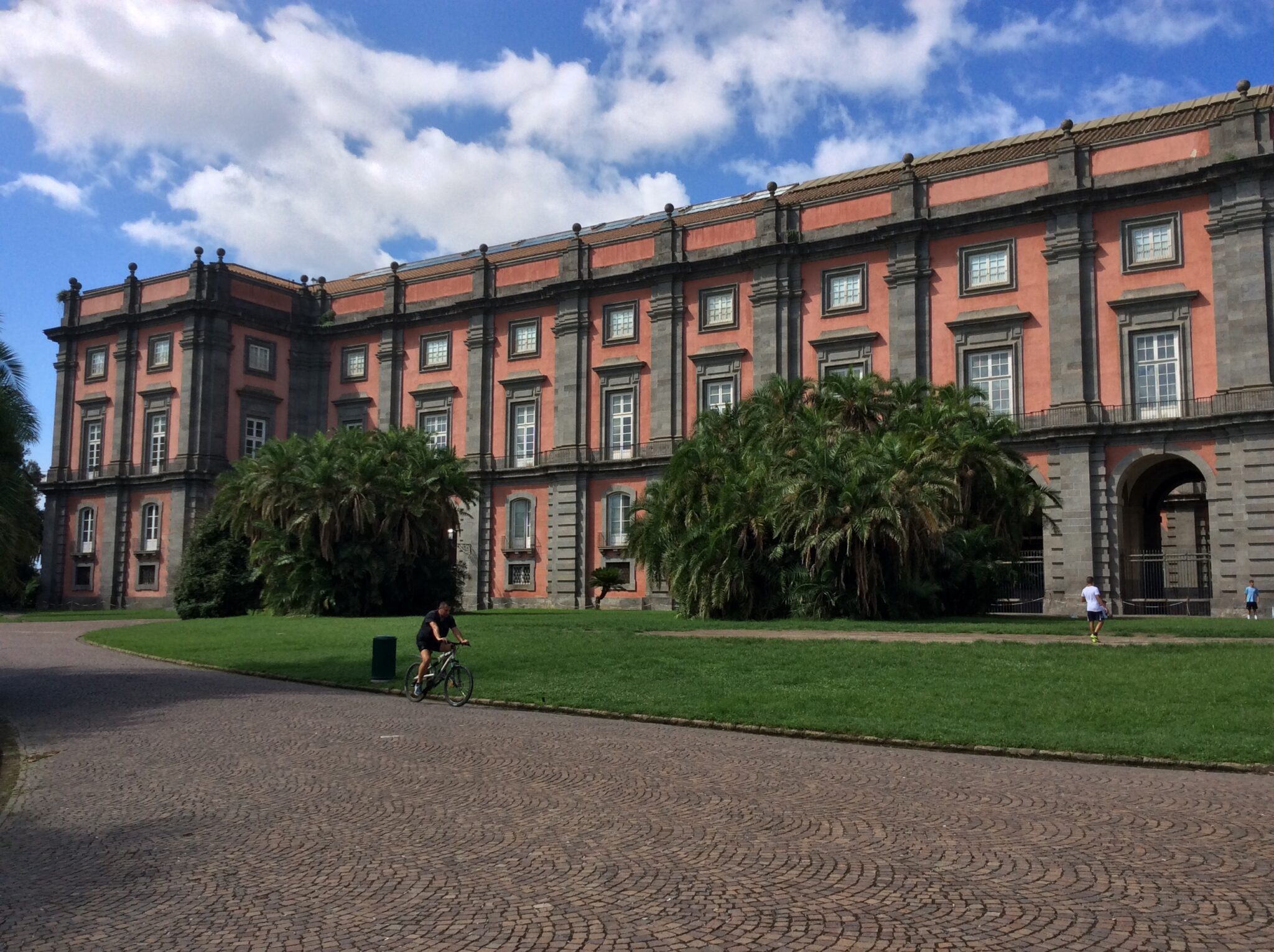

At the beginning of the 20th century, the palace of Capodimonte became the residence of the dukes of Aosta, then, in 1920, it was transferred to the national property. After the war, it was designated as a museum which was inaugurated in 1957, following renovation works and the transfer of medieval and modern art collections previously exhibited in the National Archaeological Museum of Naples.
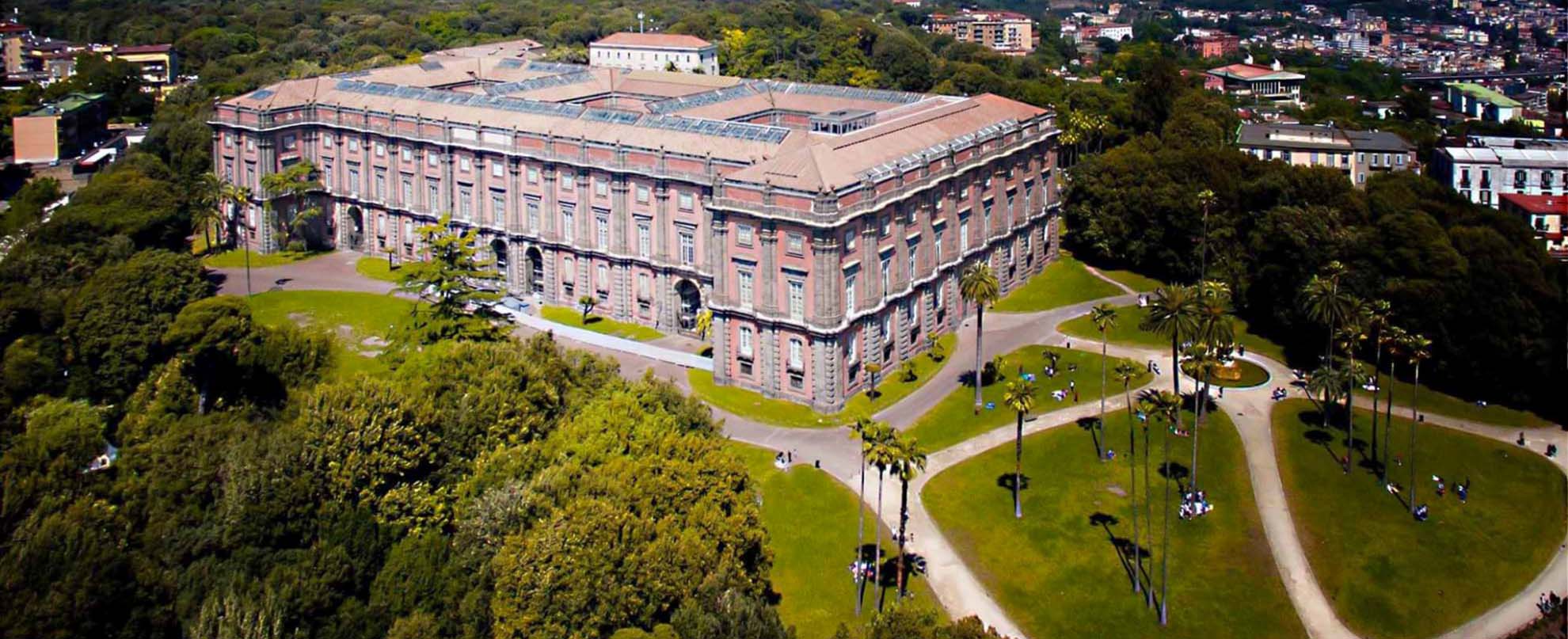
In the austere rectangular building, with three internal courtyards, the collections, about 20,000 objects, are distributed over three floors.
Main Floor of Capodimonte
The main floor houses, in the southern wing, the Historical Apartment, a reflection of the taste of the sovereigns who succeeded each other on the throne of Naples – from Charles of Bourbon to his son Ferdinand, including the Napoleonic period with the Murat couple, who furnished it with French furniture – arranged in monumental rooms (the Cradle Room, the Festive Hall, the Camuccini Hall) and more intimate spaces (the Porcelain Sitting Room, created between 1757 and 1759 for the Royal Palace of Portici by the Royal Factory of Capodimonte and moved here in 1866, and the Pompeian-style Bedroom).
In the opposite wing, the Farnese Gallery hosts the extraordinary collection started by Paul III, expanded in Parma and Piacenza by the ducal branch of the family and later inherited by Charles of Bourbon.
The collection of paintings, sculptures, drawings and artistic treasures occupies 23 rooms, in chronological order, organized by schools: to the great Italian schools from the 1400s to the 1600s is added a large core of Flemish painting, the Velletri collection of Cardinal Stefano Borgia, and the art objects gathered as in a “cabinet of curiosities.”
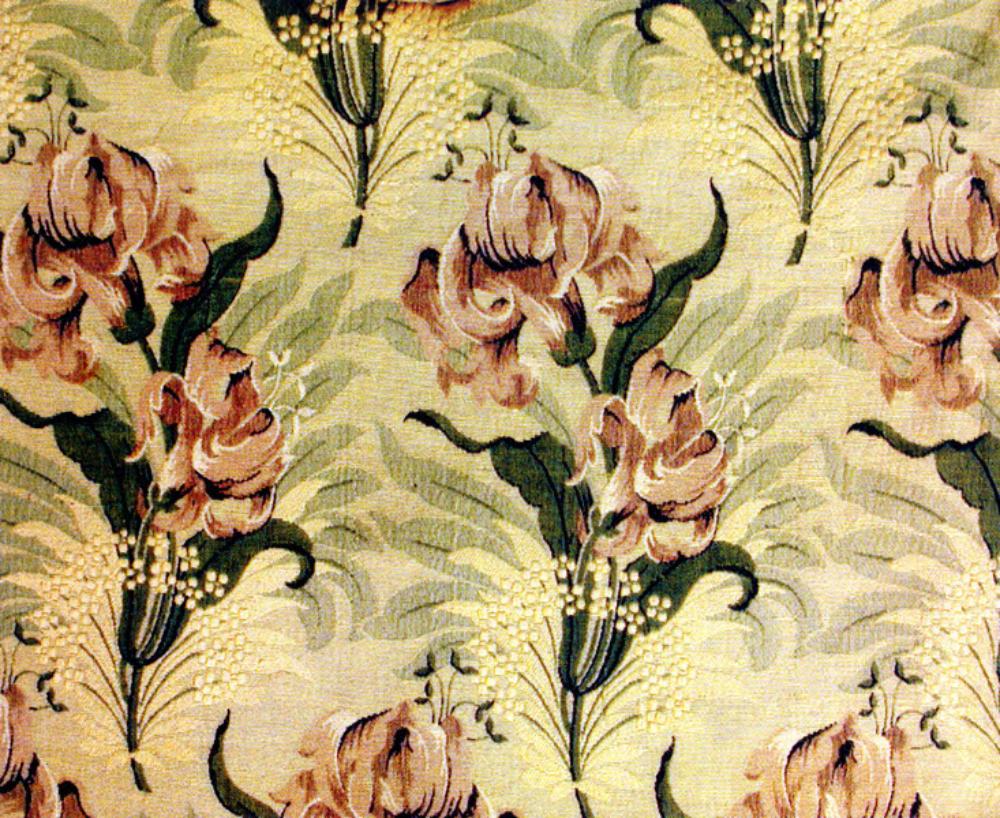
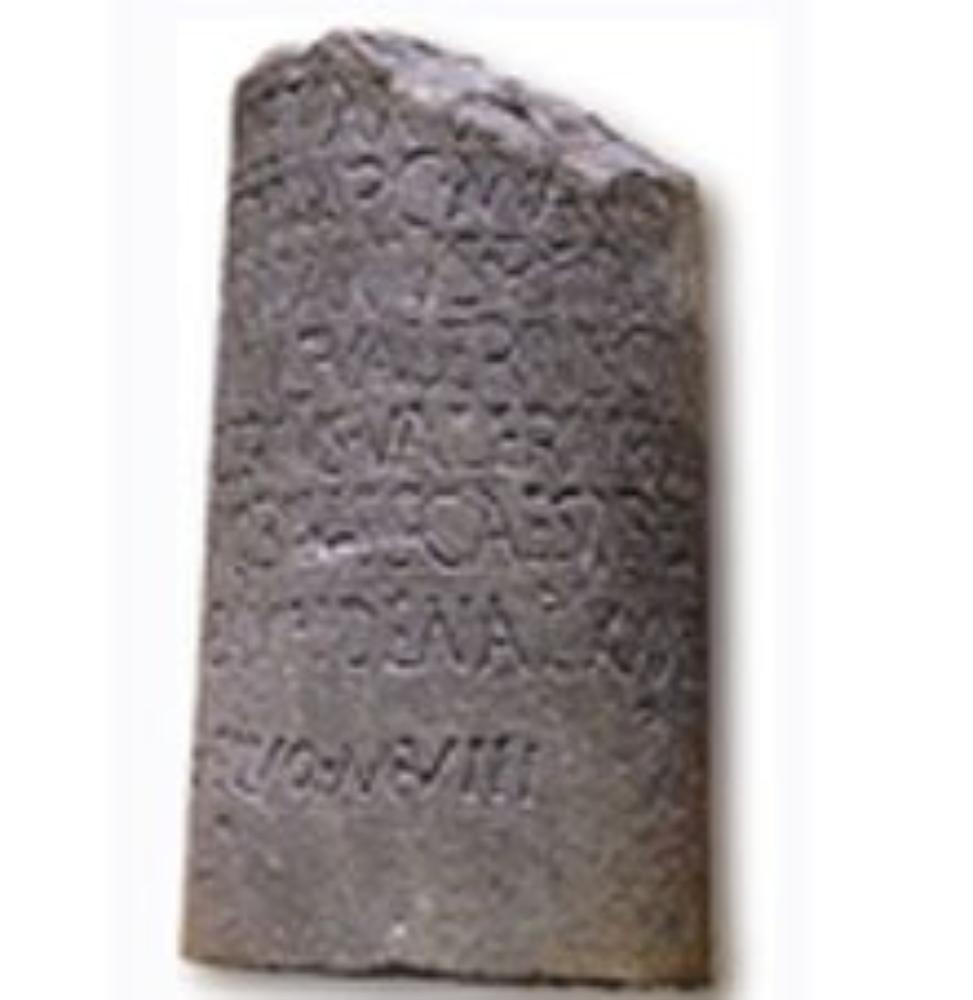
Completing the route are the Porcelain Gallery, with precious specimens from the Royal Factories of Capodimonte and Naples, the Farnese Armory and the eclectic, late 19th-century De Ciccio Collection with maiolica, porcelain, Venetian glass, ivories, enamels, sacred vestments, fabrics, silver, bronze sculptures, Sicilian shepherd figurines, and archaeological finds.
Second Floor Capodimonte
On the second floor, the Neapolitan Gallery gathers a vast heritage, partly coming from the most important religious complexes of Naples and its province, illustrating the evolution of art in Naples from the 17th to the 18th century.
Four rooms are then dedicated to the d’Avalos collection, with the rich series of Flemish tapestries, paintings, embroideries, miniatures, prints and weapons gathered by the Marquis of Pescara Alfonso II and his family, while the 19th-century Gallery exhibits examples of artistic production in post-unification southern Italy, to which works by non-Neapolitan and foreign masters have been added.
Between the second and third floors is the Contemporary Art collection, constituted starting from 1978, when Alberto Burri, following a solo exhibition, left one of his works (the Large Black Cretto), to which works by many other artists have been added, from Warhol to Kounellis, from Paladino to Sol Lewitt, to Michelangelo Pistoletto, Daniel Buren, Joseph Kosuth.
Drawings and Prints Cabinet
From the southern courtyard, through the Hexagonal Stairway, access is gained to the Drawings and Prints Cabinet. Here are preserved 2,500 sheets and 25,000 prints, originating from the original Farnese core, as well as drawings by Emilian, Florentine, Genoese, Venetian, Roman, and Neapolitan authors, ending with the masterpieces of the graphic works collection, about 20,000 specimens, mainly prints, distributed in 227 volumes, one of which is dedicated to the drawings of Count Firmian, acquired by the Bourbons in 1782.
Information on Capodimonte Museum
Via Miano 2 80131 Naples – Tel. 081.7499111 – 081.749915 – 848.800288
Capodimonte Museum Ticket
€ 12 full price
€ 8 reduced for visitors aged between 18 and 25
The museum is free: for minors under 18 years
€ 8 reduced for visitors aged between 18 and 25
The museum is free: for minors under 18 years
Capodimonte Museum and park opening hours
The Capodimonte Museum is open every day except Wednesday from 8:30 a.m. to 7:30 p.m. The last admission allowed is at 6:30 p.m. Closure operations of the Museum and visitors’ exit begin at 7:00 p.m. The museum is closed every Wednesday, on January 1st and December 25th. The Capodimonte Forest is closed on December 25th, January 1st, and Easter Monday on April 17th.