
Il Museo Nazionale Archeologico di Taranto is one of the most important in Italy and was established in 1887. The Museum has been housed since its inception in the former Convent of the Alcantarine Friars, built in the mid-18th century and, following enlargement works in the mid-20th century, the adjacent northern wing of the Ceschi Wing. Since 1998, renovation works have begun that led to the partial reopening of the Museum to the public, which took place on December 21, 2007.
From December 22, 2013, the new exhibition sections of the Museum dedicated to the Roman city, the late antique and early medieval city up to the Byzantine refoundation of the 11th century AD have been reopened to the public.
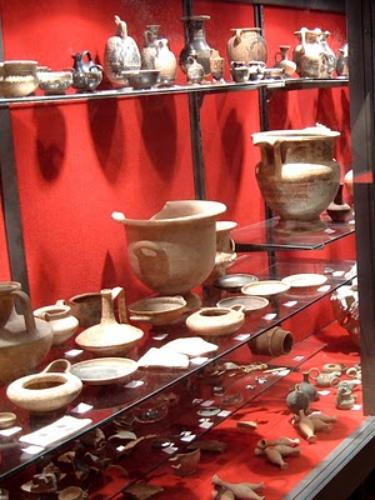
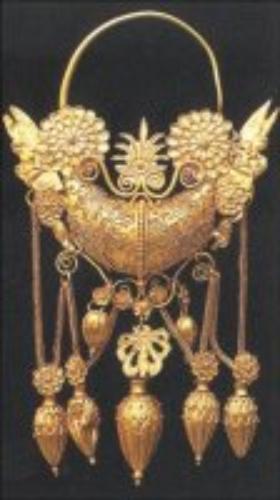
In addition to the already visitable spaces, all integrated with the display of new artifacts (funerary monuments, figured vases, mosaics, painted plasters, furnishings), new rooms dedicated to the rich documentation of Tarantine productions and Roman age imports will be available, as well as the varied grave goods of the city’s necropolis, from the conquest by Q. Fabio Massimo in 209 BC to the 3rd century AD. In the showcases stand out the beautiful goldsmith works, enriched by glass pastes and colored stones, polychrome terracottas still of Greek tradition, bones, ivories, and especially imported colored glasses that characterize cremation burials of the imperial age, up to the fragments of exceptional elegance of a marble sarcophagus with a naval assault scene.
The section dedicated to the city from late antiquity to the Byzantine age offers extensive documentation of the mosaic floors of public and private buildings, with geometric and polychrome figured motifs and materials from recent stratigraphic excavations (Villa Peripato, Palazzo delli Ponti, Cathedral of S. Cataldo) that have provided significant data for the reconstruction of the ancient center in these chronological phases. In the last room, funerary inscriptions of Jews, Christians, and Muslims are also included, documenting the presence in Taranto of peoples of different cultures and religions between the 4th and 11th centuries AD.
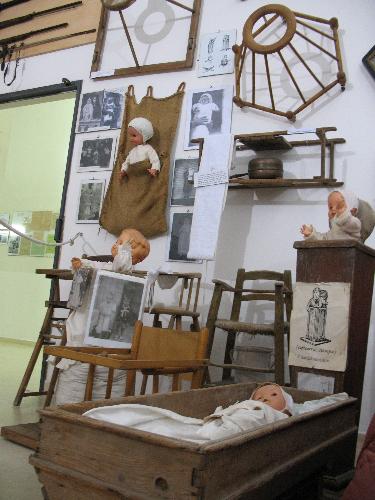
The section dedicated to the history of the Museum has been completely renewed, with the reconstruction of period settings from the time of Q. Quagliati and C. Drago and with the exhibition of purchases and donations received by the Museum from the late nineteenth century to today, featuring imported and locally produced figured vases, looted from archaeological sites in the Apulian territory, that had ended up in foreign museums and are now returned to public enjoyment at MARTA.
A new exhibition setting has also been reserved for the paintings donated by Monsignor Ricciardi to the Museum at the beginning of the 20th century, in a mezzanine space overlooking Room IX.
Information about the National Archaeological Museum of Taranto
Via Cavour, 10
74100 Taranto (Taranto)
0994532112
[email protected]
Source: MIBACT